NASM Specifications
author: Lucia Liu
2025-07-23
NASM Specifications
Fasteners play a vital role as the core component of structural connections. In order to ensure the reliable operation of parts under complex working conditions such as high loads, high vibration, and extreme temperatures, the United States has developed a series of stringent industry standards, including the widely known MS Specifications (Military Standard) and the subsequent extension of the NASM Specifications (National Aerospace Standard Metric).

What is NASM Specifications?
NASM stands for National Aerospace Standard - Metric, often referred to as the “National Aerospace Standard - Metric Series”. It is a series of standards based on the traditional NAS (National Aerospace Standards) that have been developed in response to the trend toward metric and international manufacturing. These standards are specifically for fasteners such as screws, nuts, washers, pins, rivets, etc. in aerospace and military grade equipment.
NASM stands for National Aerospace Standard - Metric, often referred to as the “National Aerospace Standard - Metric Series”. It is a series of standards based on the traditional NAS (National Aerospace Standards) that have been developed in response to the trend toward metric and international manufacturing. These standards are specifically for fasteners such as screws, nuts, washers, pins, rivets, etc. in aerospace and military grade equipment.
Compared to traditional imperial NAS or MS Specifications, NASM converts all geometric dimensions, mechanical properties, and tolerance units into an internationally recognized metric system, making it easier for international companies to standardize purchasing, processing, and quality control.
Difference and Inheritance between NASM and MS Specifications
Before understanding NASM, it is necessary to understand its “ Predecessor” - MS Specifications. MS Specifications (Military Standards) are technical specifications for military products established by the U.S. Department of Defense in the early days, covering a large number of common parts, including standard bolts, nuts, washers, pins, bearings, springs, etc. These standards provide the basis for military aircraft, weaponry, and equipment. These standards provide a uniform technical basis for military aircraft, weaponry, communications equipment, etc.
Before understanding NASM, it is necessary to understand its “ Predecessor” - MS Specifications. MS Specifications (Military Standards) are technical specifications for military products established by the U.S. Department of Defense in the early days, covering a large number of common parts, including standard bolts, nuts, washers, pins, bearings, springs, etc. These standards provide the basis for military aircraft, weaponry, and equipment. These standards provide a uniform technical basis for military aircraft, weaponry, communications equipment, etc.
Nomenclature & Examples of NASM Specifications
The nomenclature of the NASM standard follows uniform rules for easy reference and identification. Its basic naming format is:
The nomenclature of the NASM standard follows uniform rules for easy reference and identification. Its basic naming format is:
NASM + numeric number + (optional) additional characters
Among them:
NASM denotes the standardized system
Numeric number for product or type (e.g., washers, screws, pins, etc.)
Additional letters/numbers are used to identify additional information such as head type, material, coating, etc.
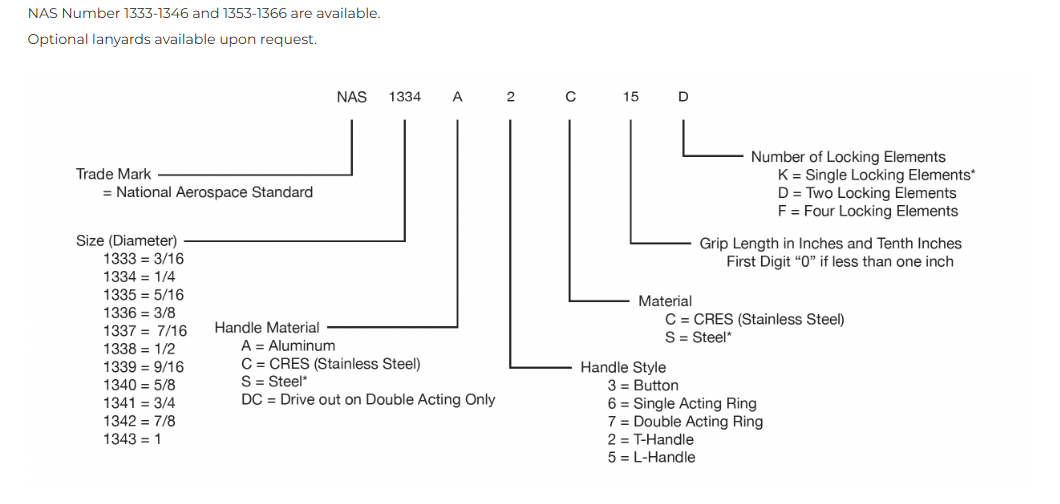
Examples of common NASM specifications:
NASM 20995: Cotter pin series, formerly MS20995, commonly used for shaft locking.
NASM 20995: Cotter pin series, formerly MS20995, commonly used for shaft locking.
NASM 35333: Aerospace flat washers, commonly used in structural assembly connections.
NASM 25027: Hexagon socket head cap screws, used in aero-engine housings
NASM 82496: Hexagonal flange nut, one of the high-strength fasteners.
Meet tough aerospace challenges with fasteners crafted to NASM specifications—ready for immediate global delivery.
Indexing Plungers for Machining Fixtures
Heavy Duty Indexing Plungers
Related Article
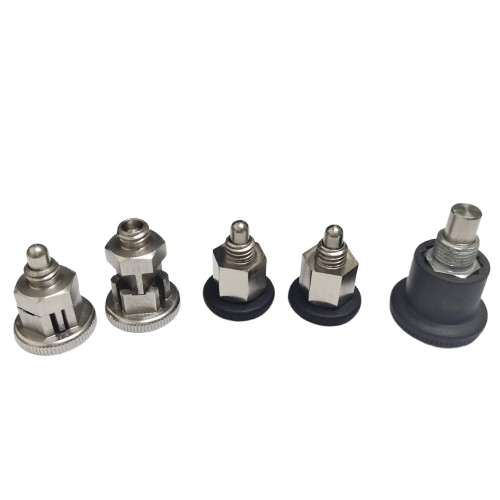
Explore the application of stainless steel materials for customizing mini indexing plungers based on specific operational environments and suitable spaces.
How To Make A Mini Indexing Plunger
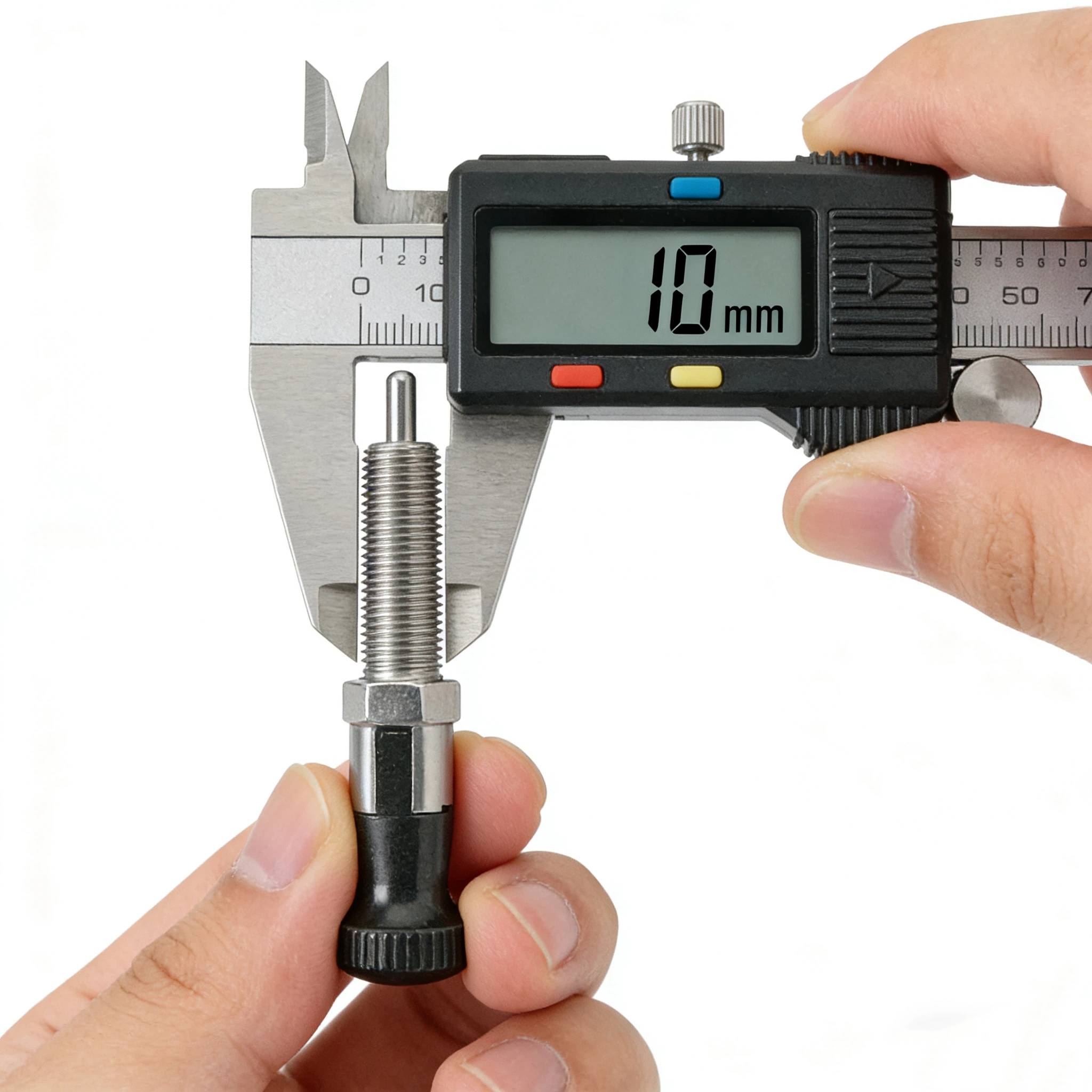
Discover how to choose correct size for indexing elements with confidence. Get precise recommendations that improve positioning accuracy, durability, and overall system performance.
How To Choose Correct Size For Indexing Elements