What Are Fasteners
What Are Fasteners?
Fasteners are essential components used to join or secure two or more objects together. They are widely used in industries such as construction, automotive, aerospace, machinery, and electronics. Fasteners come in various types, materials, and designs, each serving specific applications based on strength, durability, and environmental resistance.
1. Definition and Purpose of Fasteners
A fastener is a mechanical device that holds or secures parts together, either temporarily or permanently. Some fasteners, like screws and bolts, can be removed and reused, while others, such as rivets, create a permanent bond.
Fasteners play a crucial role in ensuring structural integrity, safety, and efficiency in various mechanical and industrial applications.
2. Types of Fasteners
Fasteners come in many shapes and sizes, with different mechanisms for joining materials. The most common types include:
1) Bolts and Nuts
- Bolts: Require a nut to fasten components together. They provide a strong, adjustable connection.
- Nuts: Work with bolts to secure materials and prevent loosening.
2) Screws
- Used to secure objects by threading into a material.
- Common types: wood screws, machine screws, self-tapping screws, and drywall screws.
3) Washers
- Distribute load and reduce friction between fastener components.
- Prevent loosening caused by vibration.
4) Rivets
- Permanent fasteners used in aerospace, construction, and automotive industries.
- Installed by deforming one end to create a secure bond.
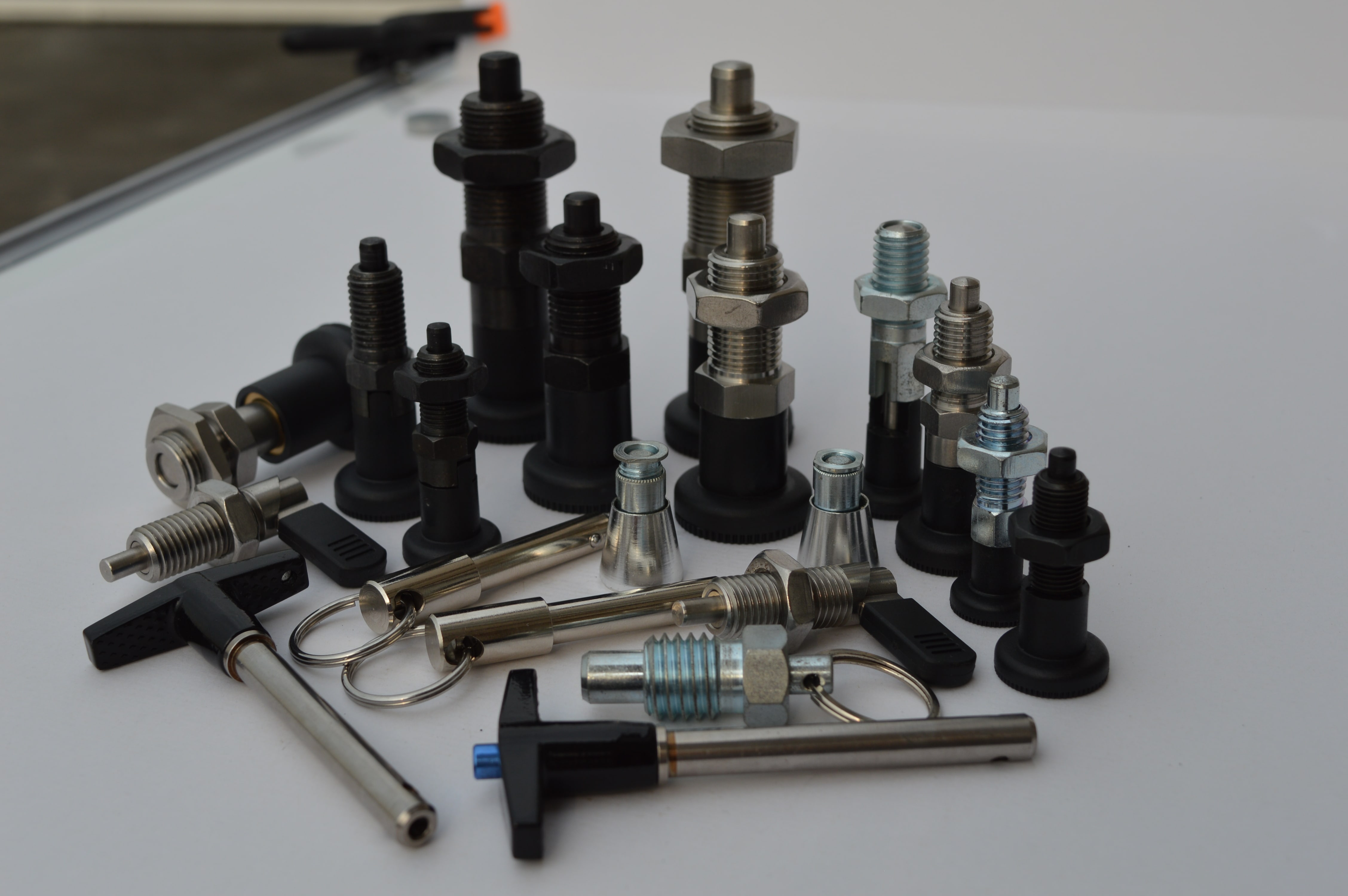
5) Pins
- Used for positioning and securing components in machinery and structures.
- Types include quick release pins, cotter pins, and spring pins.
6) Clips and Clamps
- Hold components together without threading.
- Commonly used in automotive and electrical applications.
3. Materials Used for Fasteners
Fasteners are made from different materials depending on the required strength, corrosion resistance, and environmental conditions.
- Steel: Strong and durable, widely used in industrial applications.
- Stainless Steel: Corrosion-resistant, ideal for outdoor and marine environments.
- Aluminum: Lightweight and resistant to corrosion, used in aerospace and electronics.
- Brass: Provides good conductivity and corrosion resistance, commonly used in electrical applications.
- Titanium: Strong, lightweight, and corrosion-resistant, used in high-performance applications.
4. Applications of Fasteners
Fasteners are used in a variety of industries and products, including:
Construction – Buildings, bridges, and infrastructure projects rely on fasteners for structural stability.
Automotive & Aerospace – Vehicles and aircraft require durable fasteners to withstand vibration and stress.
Machinery & Equipment – Fasteners secure moving parts and structural components.
Electronics – Small screws and clips hold circuit boards and components in place.
Furniture Manufacturing – Screws, bolts, and nails are essential for assembling furniture.
5. Choosing the Right Fastener
When selecting a fastener, consider the following factors:
Load Capacity – Ensure the fastener can handle the required strength and weight.
Material Compatibility – Prevent corrosion and ensure durability by choosing the right material.
Environmental Conditions – Select stainless steel or coated fasteners for outdoor use.
Ease of Installation & Removal – Choose quick-release or tool-free fasteners for easy maintenance.
Discover high-quality metric fasteners and learn what fasteners are—essential components for secure, reliable connections in construction, manufacturing, and more.
How Do Pin Fasteners Work
Related Article