What Is A Cnc Machine
What Is a CNC Machine? An In-Depth Exploration
Introduction to CNC Machines
In the rapidly evolving world of manufacturing, automation is the key to precision, productivity, and innovation. One of the most critical technologies powering modern industry is the CNC machine, short for Computer Numerical Control machine. These machines have revolutionized manufacturing by replacing manual operations with programmable commands, ensuring consistency and accuracy in production.

A Brief History of CNC Technology
CNC technology traces its origins back to the 1940s and 1950s when early prototypes of numerically controlled machines were developed. Originally designed for aerospace applications, CNC machines have since evolved with the advent of computers and software, leading to more versatile and accessible systems across industries—from automotive to electronics and even custom artwork.
How CNC Machines Work
At the core of a CNC machine is a computer system that interprets G-code, a programming language that dictates the machine's movements. Operators input a design into the machine via CAD (Computer-Aided Design) software, and the CAM (Computer-Aided Manufacturing) software translates it into code.
CNC machines follow this code to control various components—cutters, drills, or lathes—across multiple axes. Depending on the complexity of the design, machines may operate on 2, 3, 4, or even 5 axes.
Types of CNC Machines
CNC technology is not limited to one type of machine. Below are the most common types:
1. CNC Milling Machines
These machines use rotary cutters to remove material. They can perform a variety of tasks such as drilling, slotting, and cutting complex shapes with extreme precision.
2. CNC Lathes
Lathes rotate the workpiece on a spindle while a stationary cutting tool removes material. Ideal for creating cylindrical parts, CNC lathes ensure high accuracy in turning operations.
3. CNC Routers
Similar to milling machines but generally used for softer materials such as wood, plastic, and foam. They are widely used in cabinetry and sign-making.
4. CNC Plasma Cutters
These machines use a high-powered plasma torch to cut through metals. CNC plasma cutters are known for their speed and ability to cut thick materials.
5. CNC Laser Cutters
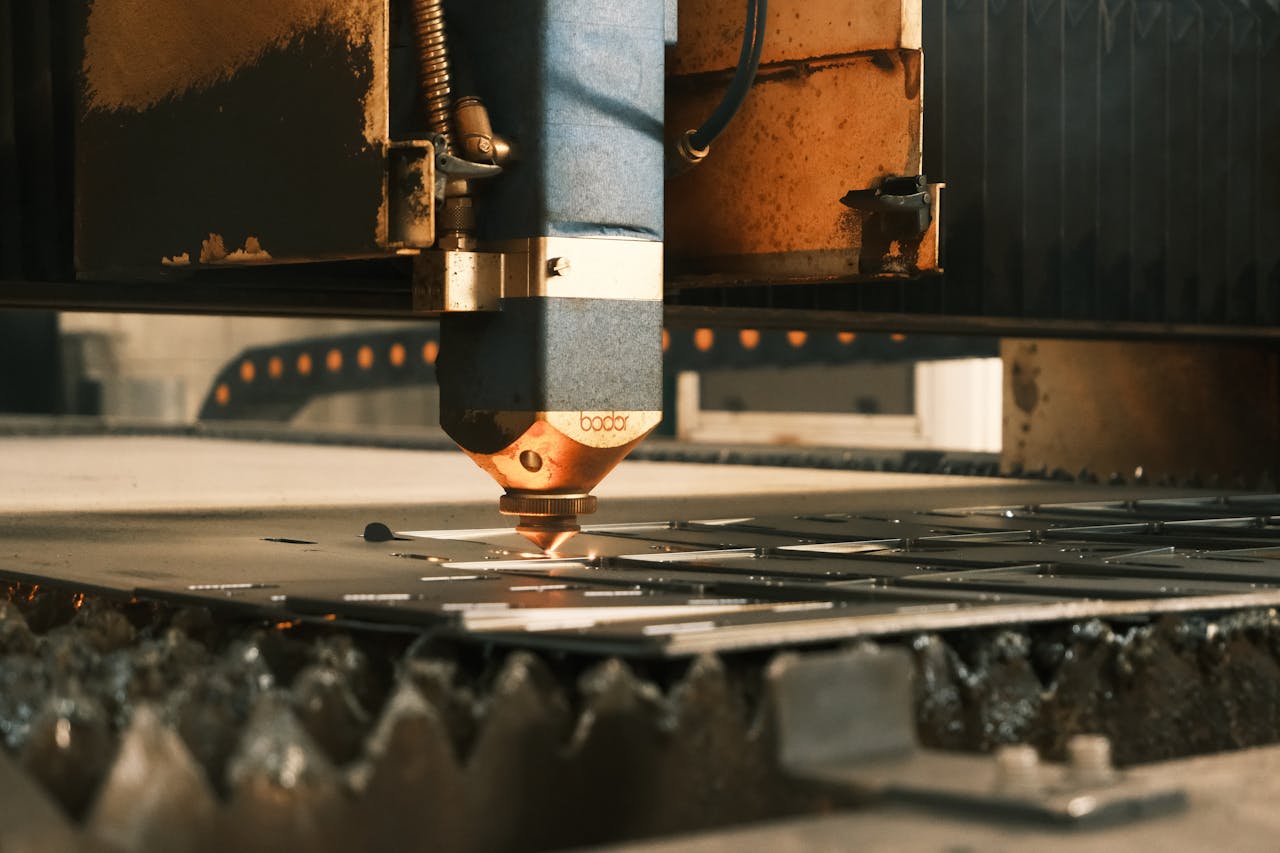
Using high-powered lasers, these machines are highly precise and commonly used for engraving, cutting sheet metal, and marking components.
6. CNC EDM (Electrical Discharge Machines)
EDM machines remove material from a workpiece using electrical discharges (sparks). They are typically used in mold-making and complex part creation.
7. CNC Grinders
Grinders use an abrasive wheel to smooth or finish surfaces. CNC versions are used in precision applications such as bearing and gear manufacturing.
Key Components of a CNC Machine
Every CNC machine, regardless of type, includes essential components that contribute to its function:
-
Controller: The brain of the machine, where G-code instructions are processed.
-
Drive System: Motors and actuators that move the machine along programmed paths.
-
Feedback System: Sensors that provide real-time data to ensure precise movement.
-
Machine Bed/Frame: Provides support and stability.
-
Spindle: Rotates cutting tools at varying speeds.
Materials Used in CNC Machining
CNC machines can work with a wide range of materials, including:
-
Metals: Aluminum, steel, titanium, brass, copper.
-
Plastics: ABS, nylon, PTFE, acrylic.
-
Composites: Carbon fiber, fiberglass.
-
Wood: Hardwood, softwood, MDF.
Advantages of CNC Machining
CNC machining offers a host of benefits that make it a preferred method in manufacturing:
-
Precision: High repeatability and accuracy, down to microns.
-
Consistency: Every product is identical, reducing variability.
-
Speed: Faster than manual machining, especially for large-volume production.
-
Flexibility: Easily adaptable to design changes.
-
Reduced Labor Costs: Automated operations minimize the need for manual intervention.
Applications Across Industries
CNC machines are vital across various sectors:
-
Aerospace: High-performance parts with tight tolerances.
-
Automotive: Engine components, transmission parts, custom modifications.
-
Medical: Surgical instruments, implants, prosthetics.
-
Electronics: Enclosures, heat sinks, PCB prototypes.
-
Consumer Goods: Watches, jewelry, custom décor.
-
Construction: Architectural components, structural supports.
Challenges in CNC Machining
Despite their numerous benefits, CNC machines also present some challenges:
-
High Initial Costs: Setup and machinery can be expensive.
-
Skilled Labor Requirement: Operators need training in software and maintenance.
-
Complex Programming: Advanced parts may require intricate G-code generation.
-
Tool Wear and Maintenance: Requires regular calibration and monitoring.
The Future of CNC Technology
As industries evolve, so too does CNC technology. Key future trends include:
1. Integration with AI and IoT
CNC machines are increasingly integrated into smart factory systems where real-time data helps optimize performance, predict maintenance needs, and reduce downtime.
2. Hybrid Manufacturing
Combining CNC with additive manufacturing (3D printing) offers unprecedented flexibility and efficiency.
3. Miniaturization and Micro-Machining
The demand for smaller, more intricate components is driving the development of micro-CNC machines for applications like electronics and medical devices.
4. Cloud-Based CNC Programming
Remote monitoring, programming, and diagnostics are becoming more feasible through cloud platforms.
How to Choose the Right CNC Machine
When selecting a CNC machine, consider:
-
Material Type
-
Production Volume
-
Precision Requirements
-
Budget
-
Workpiece Size
-
Software Compatibility
Consulting with manufacturers and analyzing your production goals can help determine the best fit.
Training and Skill Development
Operating a CNC machine requires knowledge in areas such as:
-
CAD/CAM software
-
Machine setup and operation
-
Maintenance protocols
-
Safety standards
Many vocational schools, online platforms, and manufacturers offer CNC training programs to meet the growing demand for skilled operators.
Discover what a CNC machine is—a precise and automated tool for manufacturing custom parts in industrial, automotive, and machinery applications. Learn how CNC technology enhances production and quality.
CNC machines are at the forefront of modern manufacturing, enabling companies to meet the demand for fast, precise, and complex part production. As technology continues to advance, CNC machining will remain a cornerstone of innovation in both traditional and emerging industries. Whether you’re a manufacturer, engineer, or entrepreneur, understanding CNC technology is essential to thrive in the age of automation.
Do Carbon Steel Rust
Stainless Steel Quick Release Pins
Related Article