How To Choose The Best Positive Locking Fasteners Size For Your Project
How To Choose The Best Positive Locking Fasteners Size For Your Project
Table of Contents
1. Prepare Any Measurement Tools You Have
2. Selecting the Appropriate Ball Locking Pin Diameter
3. Consider thermal expansion and contraction factors of materials
4. FAQ
1. Prepare Any Measurement Tools You Have
2. Selecting the Appropriate Ball Locking Pin Diameter
3. Consider thermal expansion and contraction factors of materials
4. FAQ
When choosing the ball lock pin, we're always concerned about if the size fit with the holes. A lot of people either re-drill the holes or buy a washer to make it perfectly fit when the pin isn't the right size for their project. In this article, we can help you to choose the perfect sizes for you as reference.
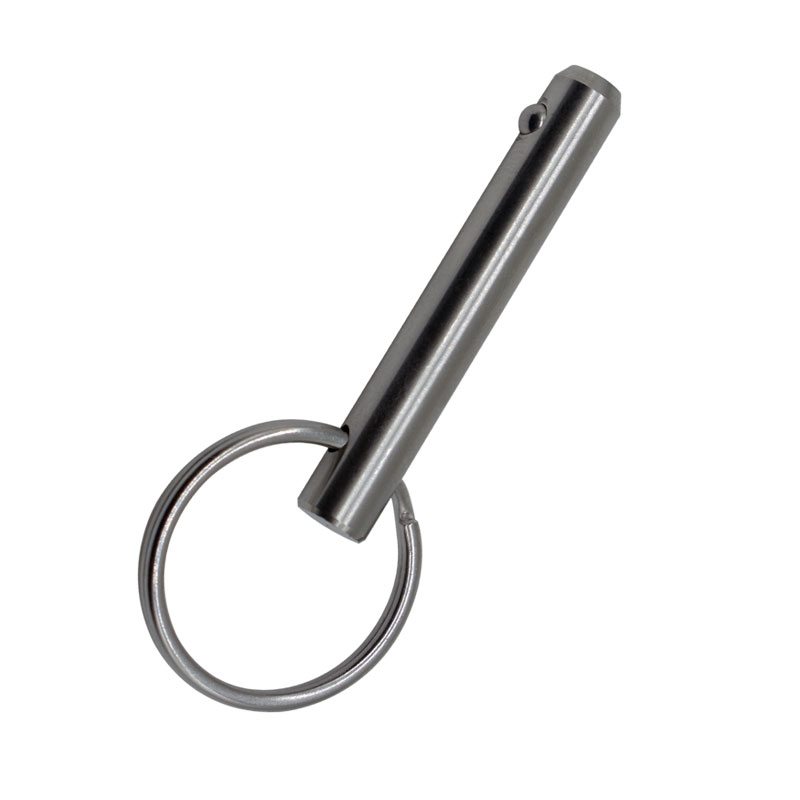
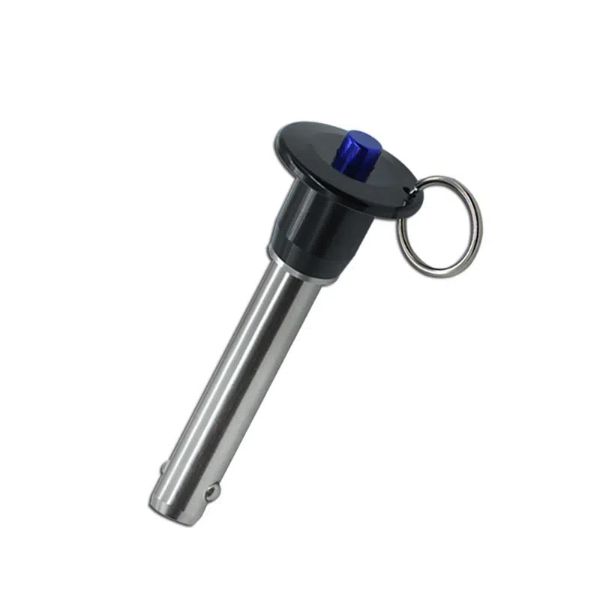

1. Prepare Any Measurement Tools You Have
To accurately measure hole diameters, the following tools are recommended:
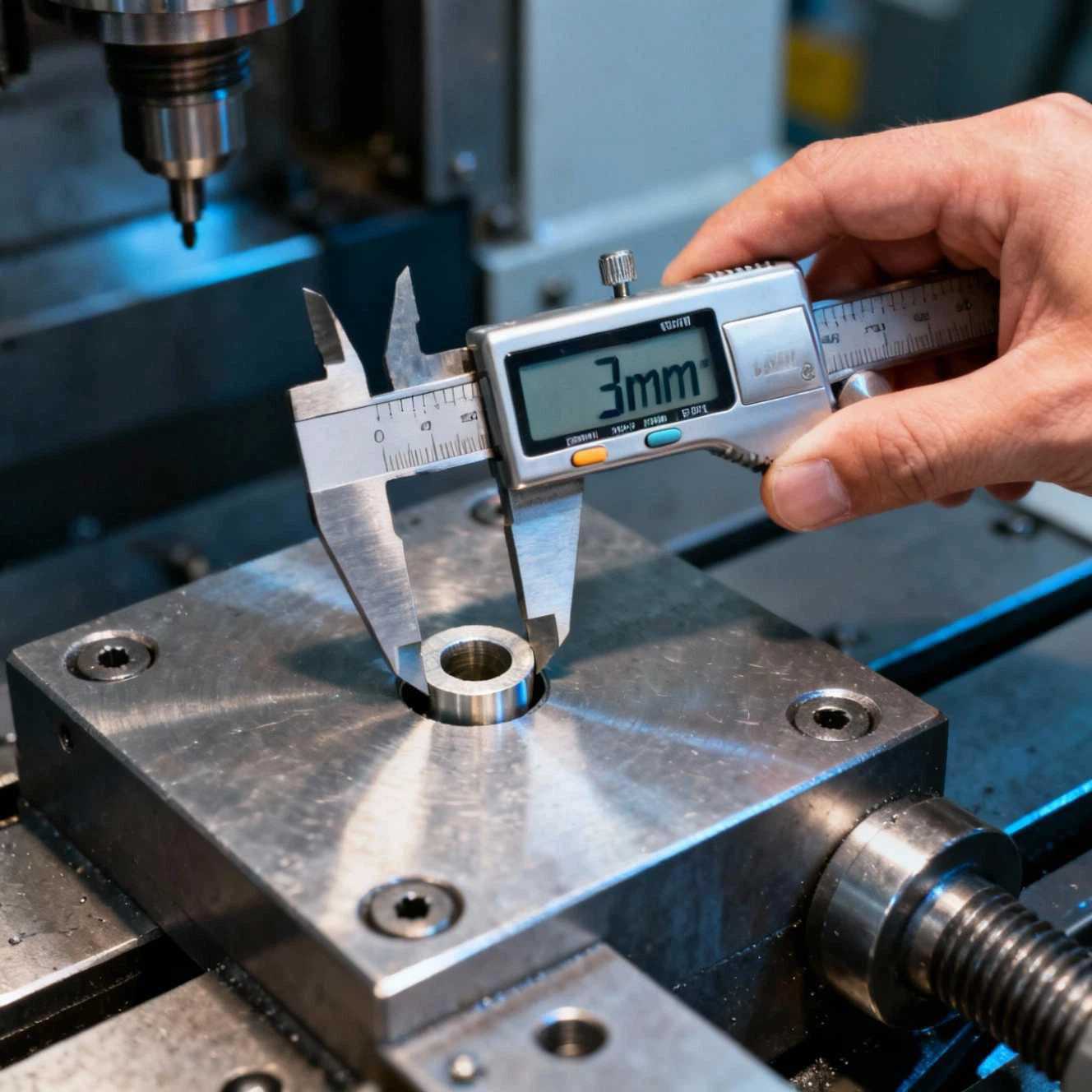
1. Vernier Caliper — Accuracy up to 0.02mm, suitable for most industrial applications;
2. Inside Micrometer — For high-precision measurements;
3. Plug Gauge — Verifies whether a hole meets pass/fail dimensions and conforms to tolerance standards;
4. Cleaning Cloth and Degreaser — Cleans hole walls before measurement to prevent oil contamination from affecting accuracy.
1. Vernier Caliper — Accuracy up to 0.02mm, suitable for most industrial applications;
2. Inside Micrometer — For high-precision measurements;
3. Plug Gauge — Verifies whether a hole meets pass/fail dimensions and conforms to tolerance standards;
4. Cleaning Cloth and Degreaser — Cleans hole walls before measurement to prevent oil contamination from affecting accuracy.
2.Selecting the Appropriate Ball Locking Pin Diameter
1. Understand the Pin-to-Hole Diameter Matching Principle
Generally, the ball locking pin diameter should be slightly smaller than the hole diameter.
• Recommended clearance range: 0.02mm–0.10mm;
• For applications involving vibration or frequent disassembly/reassembly, slightly increase the clearance;
• For high-precision positioning applications, select a smaller clearance.
Example:
Bore diameter of 10.00mm → Recommended ball locking pin diameter: 9.90mm–9.98mm.
1. Understand the Pin-to-Hole Diameter Matching Principle
Generally, the ball locking pin diameter should be slightly smaller than the hole diameter.
• Recommended clearance range: 0.02mm–0.10mm;
• For applications involving vibration or frequent disassembly/reassembly, slightly increase the clearance;
• For high-precision positioning applications, select a smaller clearance.
Example:
Bore diameter of 10.00mm → Recommended ball locking pin diameter: 9.90mm–9.98mm.
3.Consider thermal expansion and contraction factors of materials
• Stainless steel and brass exhibit slight expansion at high temperatures;
• If equipment operates in high-temperature environments, appropriately increase the clearance between pins and holes;
• For plastic components, due to their higher thermal expansion coefficient, calibrate and match dimensions at room temperature.
• Stainless steel and brass exhibit slight expansion at high temperatures;
• If equipment operates in high-temperature environments, appropriately increase the clearance between pins and holes;
• For plastic components, due to their higher thermal expansion coefficient, calibrate and match dimensions at room temperature.
The locking mechanism of the ball locking pin relies on the locking ball engaging with the bore wall, making the protrusion length of the locking ball critical.
• Standard protrusion length: 0.3–0.6 mm
• Standard protrusion length: 0.3–0.6 mm
Selecting the correct ball locking pin diameter for a project hinges on two core principles: precise hole diameter measurement and proper clearance control.
Regarding material selection:
• Stainless steel ball locking pins suit environments requiring high corrosion resistance and strength;
• Brass ball locking pins meet conductive and wear-resistant needs;
• Aluminum handle ball locking pins offer lightweight, rust-proof properties, ideal for manual equipment or non-metallic structures.
Through scientific measurement and proper matching, not only can smooth fastener installation be ensured, but the stability and service life of connected components can also be significantly enhanced.
Regarding material selection:
• Stainless steel ball locking pins suit environments requiring high corrosion resistance and strength;
• Brass ball locking pins meet conductive and wear-resistant needs;
• Aluminum handle ball locking pins offer lightweight, rust-proof properties, ideal for manual equipment or non-metallic structures.
Through scientific measurement and proper matching, not only can smooth fastener installation be ensured, but the stability and service life of connected components can also be significantly enhanced.
FAQ
Q: What standard sizes do you have for ball locking pin?
A: We have 3 16 quick release pin, 5 16 quick release pin, 3 16 quick release pin, 5 16 quick release pin,3 8 quick release pin,7 16 quick release pin
Q: What's your MOQ for ordering ball lock pins?
A: 100-200
Q: What standards do your quick release ball lock pins comply with?
A: Our ball pins follow with nasm17986, ms17990 and ms17984 quick release pin
Simplify your workflow with ball detent pins — the most reliable positive locking fasteners for quick installation and removal.
How Does Spring Ball Detent Work
What Are The Applications For Long Return Index Plunger