17 4 Stainless Steel Properties
author: Lucia Liu
2025-08-04
17 4 Stainless Steel Properties
17-4 Stainless Steel Properties: Detailed Analysis
Among various stainless steel materials, 17-4 stainless steel offers significant comprehensive advantages. It combines high mechanical properties with excellent corrosion resistance, along with good heat treatment stability and machinability, making it suitable for a wide range of industrial environments.
Among various stainless steel materials, 17-4 stainless steel offers significant comprehensive advantages. It combines high mechanical properties with excellent corrosion resistance, along with good heat treatment stability and machinability, making it suitable for a wide range of industrial environments.
Superior Mechanical Properties
17-4 stainless steel is renowned for its high strength, with tensile strength and yield strength exceeding those of common austenitic stainless steels (such as 304 or 316). After heat treatment (e.g., H900 condition), its tensile strength can exceed 1100 MPa, and hardness can reach HRC 38-44. This high strength makes it particularly outstanding in aerospace, military, and precision equipment manufacturing applications.
17-4 stainless steel is renowned for its high strength, with tensile strength and yield strength exceeding those of common austenitic stainless steels (such as 304 or 316). After heat treatment (e.g., H900 condition), its tensile strength can exceed 1100 MPa, and hardness can reach HRC 38-44. This high strength makes it particularly outstanding in aerospace, military, and precision equipment manufacturing applications.
Excellent corrosion resistance
Although 17-4 stainless steel belongs to the martensitic stainless steel category, its corrosion resistance remains exceptionally good, particularly in mildly corrosive environments (such as atmospheric, steam, or freshwater conditions). Compared to carbon steel or low-alloy steel, it offers a significant advantage in terms of corrosion resistance. Additionally, in certain non-extreme environments, its corrosion resistance approaches that of 304 stainless steel, making it suitable for most industrial applications.
Although 17-4 stainless steel belongs to the martensitic stainless steel category, its corrosion resistance remains exceptionally good, particularly in mildly corrosive environments (such as atmospheric, steam, or freshwater conditions). Compared to carbon steel or low-alloy steel, it offers a significant advantage in terms of corrosion resistance. Additionally, in certain non-extreme environments, its corrosion resistance approaches that of 304 stainless steel, making it suitable for most industrial applications.
Excellent heat treatment properties
One of the key characteristics of 17-4 stainless steel is its ability to enhance strength and hardness through precipitation hardening heat treatment. Common heat treatment conditions include H900, H1025, and H1150, among others, with slight variations in performance parameters across different conditions, allowing selection based on specific requirements. After heat treatment, dimensional changes are minimal, and processing stability is strong, making it highly suitable for manufacturing precision components.
One of the key characteristics of 17-4 stainless steel is its ability to enhance strength and hardness through precipitation hardening heat treatment. Common heat treatment conditions include H900, H1025, and H1150, among others, with slight variations in performance parameters across different conditions, allowing selection based on specific requirements. After heat treatment, dimensional changes are minimal, and processing stability is strong, making it highly suitable for manufacturing precision components.
Wide range of processing and application fields
In addition to its excellent mechanical properties and corrosion resistance, 17-4 stainless steel also has good machinability. It can be processed through conventional methods such as cutting, drilling, and turning, and it also has good weldability. After welding, the material can be restored to its original strength through appropriate heat treatment, making it widely used in welded structural components.
In addition to its excellent mechanical properties and corrosion resistance, 17-4 stainless steel also has good machinability. It can be processed through conventional methods such as cutting, drilling, and turning, and it also has good weldability. After welding, the material can be restored to its original strength through appropriate heat treatment, making it widely used in welded structural components.
Application Examples
Due to its outstanding performance, 17-4 stainless steel is widely used in the following industries:
Due to its outstanding performance, 17-4 stainless steel is widely used in the following industries:
- Aerospace: Used for manufacturing aircraft structural components, turbine blades, fasteners, etc.
- Oil and Gas: Suitable for offshore platforms, oil pipelines, pumps, valves, and other equipment requiring high strength and corrosion resistance
- Food Processing: Used for manufacturing knives, conveying equipment, and corrosion-resistant structural components
- Medical Devices: Used in the production of surgical instruments, dental tools, and precision parts
- Chemical Equipment: Used in the production of corrosion-resistant pump bodies, seals, flanges, and other components
As evidenced by the above applications, 17-4 stainless steel is a highly practical industrial material capable of meeting performance requirements across various industrial environments.
In summary, 17-4 stainless steel not only outperforms most stainless steel materials in terms of strength and hardness but also excels in corrosion resistance and heat treatment performance. With its high cost-effectiveness and reliable performance, 17-4 stainless steel has become the material of choice for many high-end manufacturing industries. For industrial product manufacturers seeking high performance and reliability, 17-4 stainless steel is undoubtedly a trustworthy material option.
Engineered for performance — 17 4 stainless steel properties include high hardness, corrosion protection, and easy fabrication.
Medical Grade Adjustable Indexing Plungers
Prevents Vibration Loosening: Securely Locked Fasteners
Related Article
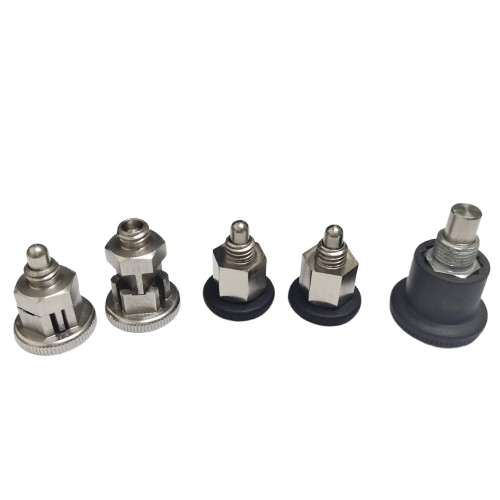
Explore the application of stainless steel materials for customizing mini indexing plungers based on specific operational environments and suitable spaces.
How To Make A Mini Indexing Plunger
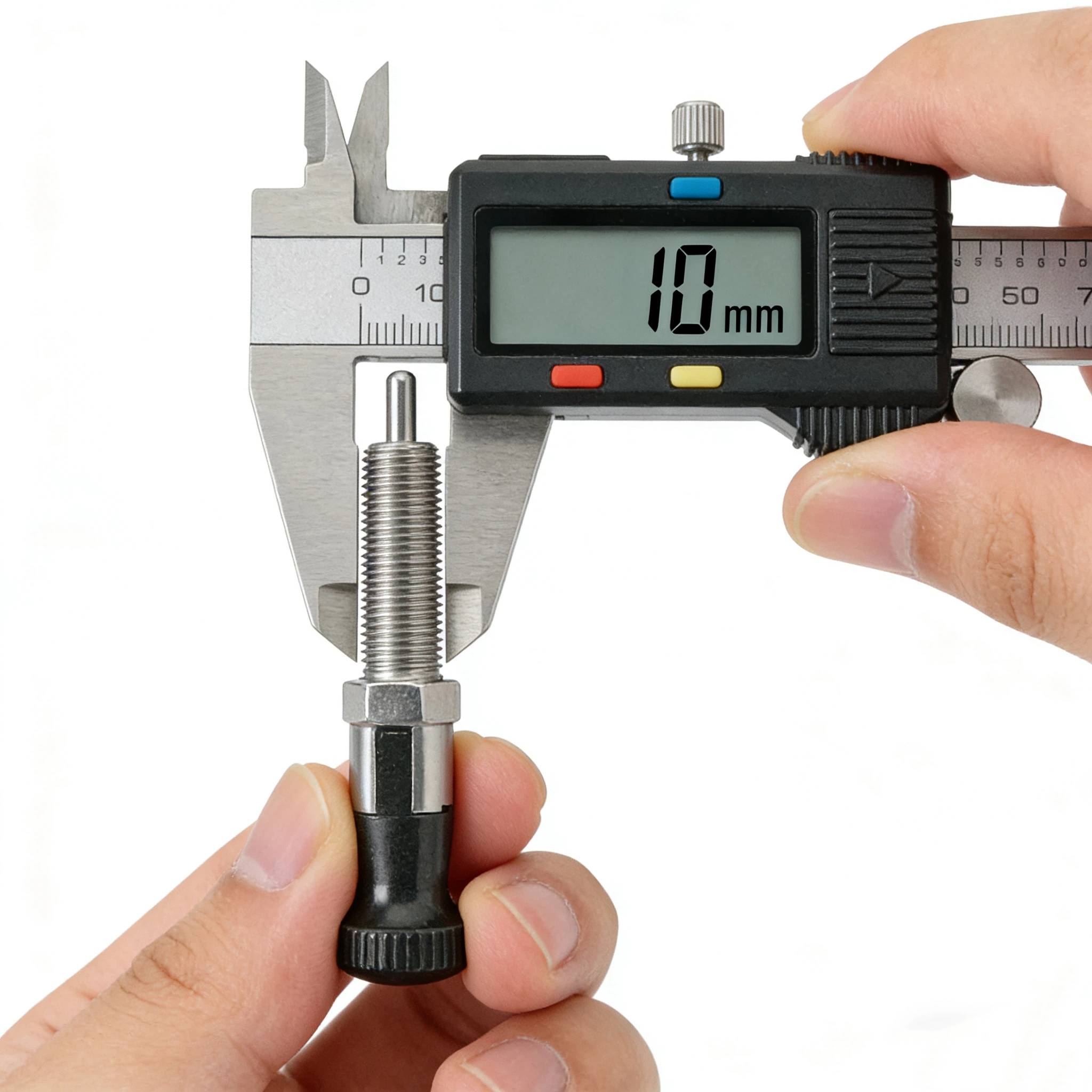
Discover how to choose correct size for indexing elements with confidence. Get precise recommendations that improve positioning accuracy, durability, and overall system performance.
How To Choose Correct Size For Indexing Elements