316 Stainless Steel Density
author: Lucia Liu
2025-07-30
316 Stainless Steel Density
In modern manufacturing, the performance of materials directly determines the reliability and service life of products. This is particularly true in precision industries, mechanical processing, shipbuilding, and chemical engineering, where corrosion-resistant, high-strength, and durable metallic materials are of utmost importance. As a premium choice among industrial materials, 316 stainless steel stands out for its exceptional density and strength, making it the top pick for high-demand applications. This article will delve into the importance of 316 Stainless Steel Density and explore the structure and performance of stainless steel ball lock pins.
What is 316 stainless steel?
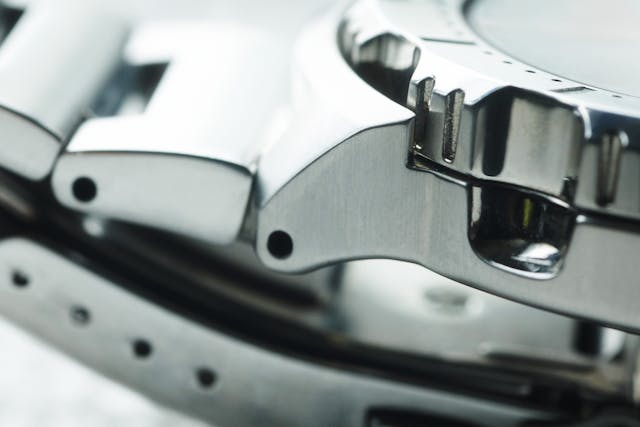
316 stainless steel is a high-performance austenitic stainless steel that outperforms common 304 stainless steel in terms of corrosion resistance due to the addition of 2%–3% molybdenum. 316 stainless steel not only performs well in acidic and alkaline environments but is also particularly suitable for high-humidity, high-salt marine climates and environments involving contact with chemicals. It is widely used in chemical equipment, food machinery, medical devices, ship parts, and other fields.
316 stainless steel is a high-performance austenitic stainless steel that outperforms common 304 stainless steel in terms of corrosion resistance due to the addition of 2%–3% molybdenum. 316 stainless steel not only performs well in acidic and alkaline environments but is also particularly suitable for high-humidity, high-salt marine climates and environments involving contact with chemicals. It is widely used in chemical equipment, food machinery, medical devices, ship parts, and other fields.
What is the density of 316 stainless steel?
The density of 316 stainless steel is an important parameter for measuring the relationship between its mass and volume. Its standard density is approximately:
The density of 316 stainless steel is an important parameter for measuring the relationship between its mass and volume. Its standard density is approximately:
7.98 g/cm³ (grams per cubic centimeter)
7,980 kg/m³ (kilograms per cubic meter)
Density is an important reference parameter for designers when conducting structural calculations, load analysis, and logistics transportation.
After understanding the density of 316 stainless steel, we need to delve deeper into its material properties, particularly its specific performance in industrial applications:
1. Excellent corrosion resistance
Due to its molybdenum content, 316 stainless steel exhibits significantly higher resistance to chloride ions (Cl⁻) compared to 304 stainless steel. This makes 316 highly suitable for environments with high corrosion risks, such as marine, chemical, and pharmaceutical industries, effectively preventing metal rusting and corrosion perforation.
Due to its molybdenum content, 316 stainless steel exhibits significantly higher resistance to chloride ions (Cl⁻) compared to 304 stainless steel. This makes 316 highly suitable for environments with high corrosion risks, such as marine, chemical, and pharmaceutical industries, effectively preventing metal rusting and corrosion perforation.
2. Good strength and ductility
316 stainless steel has a high tensile strength (≥515 MPa) and excellent toughness, maintaining stability under heavy loads or impact conditions. These properties make 316 material highly safe and durable when manufacturing high-stress components such as mechanical fasteners and structural parts.
316 stainless steel has a high tensile strength (≥515 MPa) and excellent toughness, maintaining stability under heavy loads or impact conditions. These properties make 316 material highly safe and durable when manufacturing high-stress components such as mechanical fasteners and structural parts.
3. Excellent thermal processing and welding performance
316 stainless steel is suitable for welding and heat treatment, making it ideal for manufacturing complex structures. Its excellent processability also facilitates the custom production of precision parts, particularly those requiring high precision in mechanical assemblies.
316 stainless steel is suitable for welding and heat treatment, making it ideal for manufacturing complex structures. Its excellent processability also facilitates the custom production of precision parts, particularly those requiring high precision in mechanical assemblies.
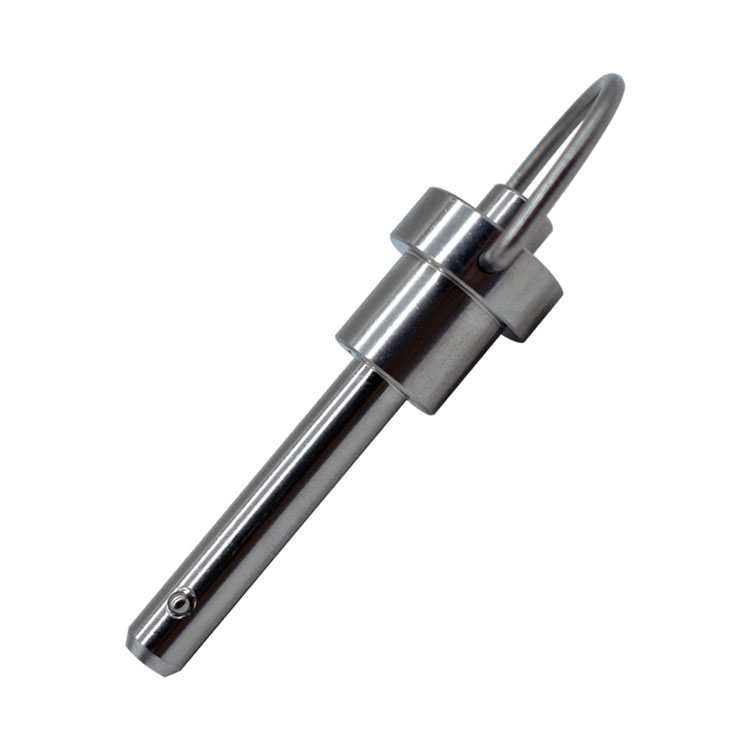
Performance and Structural Analysis of Stainless Steel Ball Lock Pins
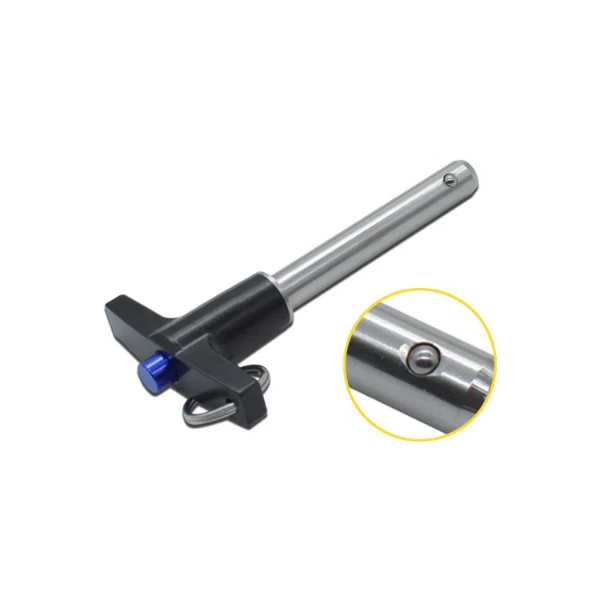
In industrial applications, quick positioning and secure connections are key to improving assembly efficiency and equipment stability. The stainless steel ball lock pin is an efficient and safe connection component that achieves this. It uses a button to control the extension and retraction of the lock ball, enabling quick insertion and removal as well as secure locking. It is widely used in mechanical manufacturing, tooling fixtures, aerospace equipment, and ship components.
In industrial applications, quick positioning and secure connections are key to improving assembly efficiency and equipment stability. The stainless steel ball lock pin is an efficient and safe connection component that achieves this. It uses a button to control the extension and retraction of the lock ball, enabling quick insertion and removal as well as secure locking. It is widely used in mechanical manufacturing, tooling fixtures, aerospace equipment, and ship components.
Structural Composition of the Stainless Steel Ball Lock Pin
Pin Body: The main load-bearing component, typically made of 316 stainless steel or 17-4 stainless steel, featuring high strength and corrosion resistance.
Pin Body: The main load-bearing component, typically made of 316 stainless steel or 17-4 stainless steel, featuring high strength and corrosion resistance.
Lock Ball: A spherical locking element embedded at the front end of the pin body to achieve locking functionality, made of high-hardness stainless steel.
Button and Spring Assembly: Controls the movement of the lock ball, enabling convenient and rapid assembly and disassembly operations.
The Perfect Combination of Ball Lock Pin and 316 Stainless Steel
The combination of 316 stainless steel material and stainless steel ball lock pin achieves an optimal balance between precision, strength, and corrosion resistance. Especially in connection tasks that require high precision, high strength, and high corrosion resistance, the use of ball lock pins optimized based on 316 stainless steel density design can significantly improve the overall performance and safety factor of the connection components.
The combination of 316 stainless steel material and stainless steel ball lock pin achieves an optimal balance between precision, strength, and corrosion resistance. Especially in connection tasks that require high precision, high strength, and high corrosion resistance, the use of ball lock pins optimized based on 316 stainless steel density design can significantly improve the overall performance and safety factor of the connection components.
Additionally, the appropriate density ensures that the stainless steel ball lock pin possesses sufficient strength without being overly bulky, thereby improving the mechanical flexibility and ease of assembly. With precise 316 stainless steel density, our ball lock pin offers high load-bearing capacity, anti-rust strength, and quick installation.
17-4PH Stainless Steel Ball Locking Pins
Ball Locking Pins for Industry
Related Article
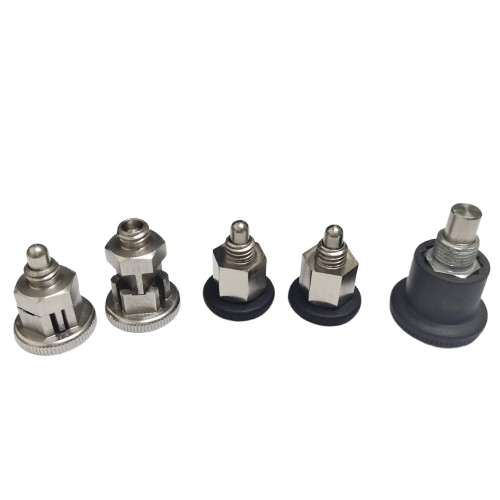
Explore the application of stainless steel materials for customizing mini indexing plungers based on specific operational environments and suitable spaces.
How To Make A Mini Indexing Plunger
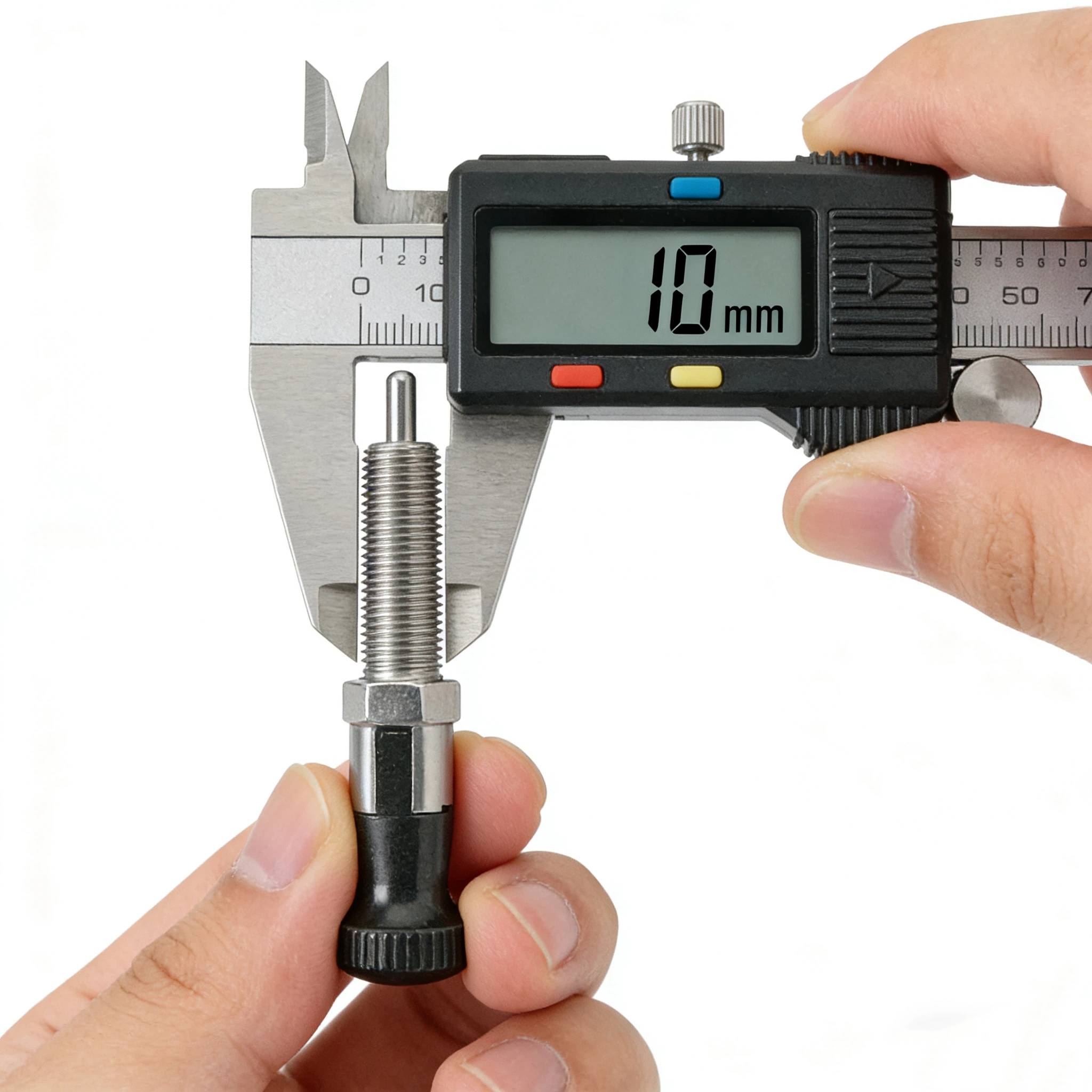
Discover how to choose correct size for indexing elements with confidence. Get precise recommendations that improve positioning accuracy, durability, and overall system performance.
How To Choose Correct Size For Indexing Elements