Ball Bearing Lock Mechanism
Ball Bearing Lock Mechanism: Precision, Security, and Industrial Application
Introduction to Ball Bearing Lock Mechanisms
The Ball Bearing Lock Mechanism is a precision-engineered device that utilizes spring-loaded ball bearings to secure components in place. Known for its durability, quick-release function, and high load-bearing capacity, this mechanism is a staple in various industrial applications, from aerospace and automotive manufacturing to heavy machinery, medical devices, and consumer electronics.
In this comprehensive article, we will explore the structure, operation, advantages, types, applications, and technological advancements of ball bearing lock mechanisms. We will also highlight selection criteria, maintenance practices, and future market trends.
What Is a Ball Bearing Lock Mechanism?
A ball bearing lock mechanism typically consists of:
-
A main shaft or pin that houses spring-loaded ball bearings
-
A locking groove or detent where the balls can engage
-
A button or handle that releases internal pressure, allowing the balls to retract
-
Springs that maintain outward pressure on the balls until retracted
The principle is simple yet effective: when the ball bearings are pushed outward into a groove or hole, they hold the mechanism securely in place. To release it, the user pulls or presses a release trigger, retracting the balls and allowing movement.

Working Principle and Mechanical Operation
The mechanism operates on the principle of radial force. The ball bearings, under spring pressure, expand outward into a matching detent or groove. This outward pressure ensures that the pin or component cannot be withdrawn unless the balls are retracted by an intentional user action.
There are three basic operational steps:
-
Insertion: The ball bearing pin is inserted into a hole or socket.
-
Engagement: Balls expand into the locking groove, preventing backward movement.
-
Release: Pressing the release button draws the balls inward, allowing retraction.
This creates a secure yet quickly disengageable joint—ideal for systems where frequent connection and disconnection are needed without tools.
Types of Ball Bearing Lock Mechanisms
1. Quick Release Pins with Ball Lock
The most common application, featuring a pin with retractable ball bearings for fast installation and removal. Common in aerospace and sports equipment.
2. Detent Pins
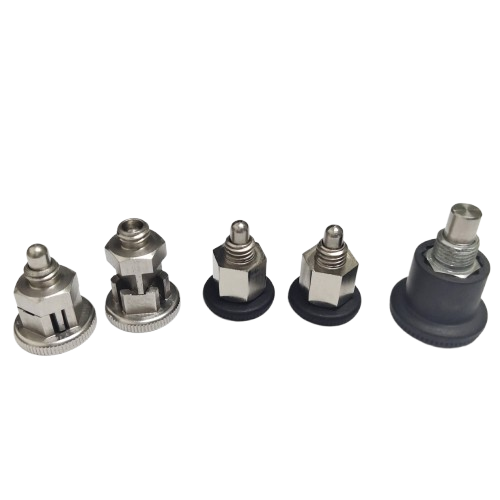
These have spring-loaded balls at the end of a shaft, offering a simple locking feature that doesn't require a secondary retention system.
3. Push-Button Ball Lock Pins
Feature a button on the head that retracts the balls for insertion/removal. Offers additional safety and control in high-vibration environments.
4. Double-Acting Ball Lock Mechanisms
Found in high-security or heavy-load applications, these require two simultaneous actions to release the lock.
Materials and Surface Treatments
Ball bearing lock mechanisms are manufactured from a variety of materials to meet different environmental and mechanical demands:
-
Stainless Steel: Offers corrosion resistance for marine, food, and medical industries.
-
Carbon Steel (Plated): Provides strength and cost-effectiveness for industrial use.
-
Aluminum: Lightweight, corrosion-resistant, ideal for aviation and portable applications.
-
Plastic/Polymer Components: Used in light-duty or consumer-focused applications.
Surface treatments such as zinc plating, black oxide, and anodizing are commonly applied to enhance corrosion resistance and reduce wear.
Industrial Applications
Ball bearing lock mechanisms are widely used across industries due to their strength and versatility:
Aerospace
Used in aircraft seat adjustment, cargo fasteners, and tool-less maintenance access panels. Reliability under extreme conditions is key.
Automotive
Common in adjustable seating, removable panels, and test rig setups where frequent removal is needed.
Construction and Heavy Equipment
Quick-connect locking pins allow fast and secure assembly of scaffolding, supports, or modular equipment.
Medical Devices
Employed in equipment where hygiene, precision, and easy disassembly are required.
Consumer Products
Used in fitness equipment, camera mounts, and outdoor gear where quick setup and breakdown are valued.
Advantages of Ball Bearing Lock Mechanisms
1. High Holding Strength
The mechanism can handle substantial axial loads depending on material and design.
2. Quick Engagement and Release
Tool-less operation reduces downtime and enhances usability.
3. Enhanced Safety
The locking mechanism prevents accidental disengagement due to vibration or impact.
4. Long Service Life
Durable design ensures thousands of cycles with minimal wear.
5. Versatile Design Integration
Can be customized for various mounting styles, release methods, and load directions.
Selection Criteria
To select the correct ball bearing lock mechanism for your application, consider the following factors:
-
Load Capacity: Determine the required holding strength for your application.
-
Material Compatibility: Choose appropriate materials for environmental exposure and mechanical demands.
-
Engagement Depth: Select a size that ensures secure locking without overloading.
-
Release Style: Push-button, pull-ring, or twist-knob depending on the user interface required.
-
Certifications: Look for compliance with ISO, RoHS, or industry-specific standards.
Maintenance and Inspection Tips
To ensure reliability and extend the service life of ball bearing lock mechanisms:
-
Regular Cleaning: Especially in dirty or corrosive environments, clean the pin and ball bearings with compressed air or mild solvents.
-
Lubrication: Use light machine oil periodically to reduce friction and prevent rust.
-
Visual Inspections: Look for signs of wear, rust, or deformation.
-
Spring Check: Test the spring tension of the ball bearings to ensure positive engagement.
-
Replacement Schedule: In high-use scenarios, follow manufacturer guidelines for part replacement.
Customization and OEM Integration
Many suppliers offer custom options for ball bearing lock mechanisms to suit unique OEM requirements:
-
Custom Handle Shapes – T-handle, L-handle, button head, or ring handle.
-
Color Coding – For quick identification or brand matching.
-
Knurled Grips – For enhanced grip and control.
-
Extended Lengths or Pin Diameters – For specialized equipment dimensions.
-
Laser Etching – Part numbers, logos, or safety information.
OEM partnerships are common in aerospace, military, and medical sectors where precision and branding are vital.
Global Manufacturing and Standards
Ball bearing lock mechanisms are produced globally by precision machining and stamping manufacturers. Key markets include:
-
North America – Aerospace-grade products with tight tolerances.
-
Europe – High-quality products following DIN/ISO standards.
-
Asia – Cost-effective mass production with growing technological sophistication.
Common international standards include:
-
ISO 898-1 – Mechanical properties of fasteners
-
DIN EN ISO 23429 – Locking devices for machinery
-
ASME/ANSI B18 – General fastener designations
Manufacturers like Mocayo Precision Technology provide international customers with high-quality locking mechanisms tailored to industrial and OEM needs.
Future Trends and Innovations
1. Smart Integration
Integration of sensors or smart electronics into locking mechanisms to monitor engagement status in real time.
2. Lightweight Materials
New composite materials being developed for aerospace and robotic use.
3. Tool-Free Safety Mechanisms
Enhanced locking systems that don’t require manual tools while meeting strict safety standards.
4. Modular Fastening Systems
Ball lock mechanisms becoming part of modular designs in automation and robotics.
As manufacturing becomes more automated and portable systems more prevalent, the need for precise, tool-less locking mechanisms will only grow.
Explore **ball bearing lock mechanisms**, offering secure, smooth, and reliable locking for doors, cabinets, and industrial equipment. Durable and efficient, they ensure precision and safety in every application.
The Ball Bearing Lock Mechanism is a proven, efficient, and safe solution for fast and reliable locking across countless industries. Its design offers a blend of precision, convenience, and durability that engineers and technicians have come to rely on.
Whether you're designing aerospace components or modular machinery, incorporating a high-quality ball bearing locking system ensures secure operation with the flexibility of quick engagement and release. As industries evolve, innovations in materials, design, and smart integration will further solidify this mechanism’s role in the next generation of mechanical engineering.
Pin Pull Spring Loaded Pull Pin
Spring Loaded Pull Pin Latch
Related Article