Ball Spring Plunger Enables Precision Alignment: The Unsung Hero in Professional 3D Printing
author: Fiona Yang
2025-11-13
Ball Spring Plunger Enables Precision Alignment: The Unsung Hero in Professional 3D Printing
Table of Contents
--------------Delivering Repeatable Accuracy for Advanced Additive Manufacturing
The Critical Need for Precision in 3D Printing
As 3D printing evolves from prototyping to end-use part production, the demand for dimensional accuracy and repeatability has never been higher. A key challenge lies in the printer's mechanical structure—specifically, ensuring that components like tool heads, print beds, and modular attachments maintain perfect alignment through thousands of printing cycles. Even minor shifts or vibrations can introduce layer shifting, ghosting, and other artifacts that compromise part quality, driving the need for a simple yet reliable mechanical solution.
As 3D printing evolves from prototyping to end-use part production, the demand for dimensional accuracy and repeatability has never been higher. A key challenge lies in the printer's mechanical structure—specifically, ensuring that components like tool heads, print beds, and modular attachments maintain perfect alignment through thousands of printing cycles. Even minor shifts or vibrations can introduce layer shifting, ghosting, and other artifacts that compromise part quality, driving the need for a simple yet reliable mechanical solution.
The Ball Spring Plunger's Micro-Adjustment Capability
The ball spring plunger addresses this precision challenge with an elegantly simple mechanism. Its internal spring exerts consistent pressure on a precision ball bearing, creating a controlled, repeatable force. When pressed against a machined surface or detent, this force automatically seats components into their exact position, eliminating slop and play. This self-aligning action provides a vibration-resistant, positive location that remains stable throughout the printing process, yet allows for quick disassembly when maintenance or reconfiguration is required.
The ball spring plunger addresses this precision challenge with an elegantly simple mechanism. Its internal spring exerts consistent pressure on a precision ball bearing, creating a controlled, repeatable force. When pressed against a machined surface or detent, this force automatically seats components into their exact position, eliminating slop and play. This self-aligning action provides a vibration-resistant, positive location that remains stable throughout the printing process, yet allows for quick disassembly when maintenance or reconfiguration is required.
Application in Next-Generation 3D Printers
This technology is being integrated into critical areas of printer design:
This technology is being integrated into critical areas of printer design:
-
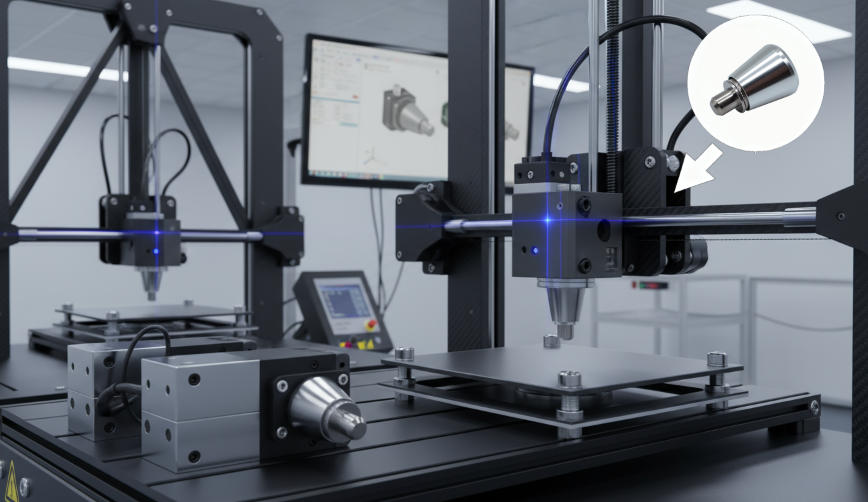
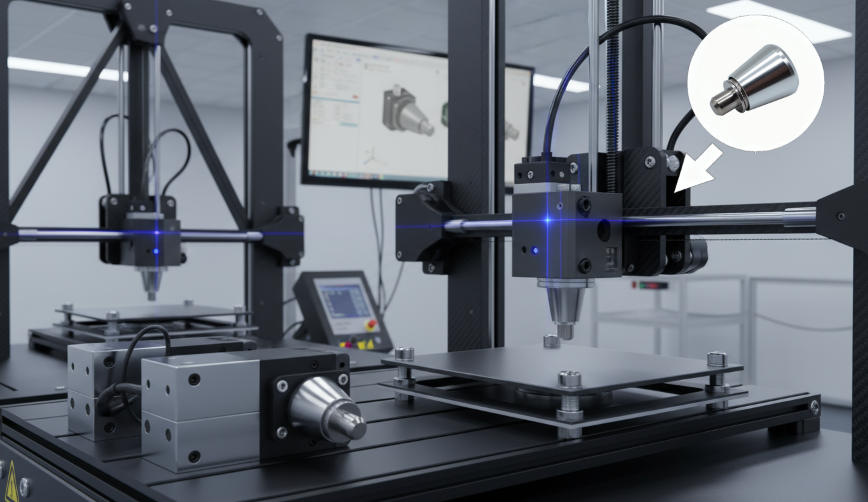
Modular Nozzle Systems: Enables quick-swap hotend assemblies to click securely into perfect alignment, ensuring consistent filament path and thermal performance across different nozzle types.
-
Removable Print Plates: Allows build plates to be precisely located and held firm during printing, while still permitting effortless removal for part post-processing.
-
Frame and Gantry Alignment: Provides micro-adjustment capabilities for squaring printer frames and aligning linear motion components, crucial for achieving true Cartesian movement.
FAQ
Question 1:
How does the ball spring plunger improve print quality over standard screws?
Answer:
It eliminates mechanical play by constantly compensating for tolerance variations, preventing the subtle shifts that cause layer inconsistencies and surface artifacts.
How does the ball spring plunger improve print quality over standard screws?
Answer:
It eliminates mechanical play by constantly compensating for tolerance variations, preventing the subtle shifts that cause layer inconsistencies and surface artifacts.
Question 2:
Are these components suitable for high-temperature environments near hotends?
Answer:
Yes, high-temperature variants made from stainless steel with high-temp lubricants maintain performance in heated chambers up to 200°C.
Are these components suitable for high-temperature environments near hotends?
Answer:
Yes, high-temperature variants made from stainless steel with high-temp lubricants maintain performance in heated chambers up to 200°C.
Question 3:
What maintenance do these ball spring plunger require in a dust-prone printing environment?
Answer:
Virtually maintenance-free. The sealed design prevents contamination from dust and debris, with an occasional wipe-down being sufficient for most applications.
What maintenance do these ball spring plunger require in a dust-prone printing environment?
Answer:
Virtually maintenance-free. The sealed design prevents contamination from dust and debris, with an occasional wipe-down being sufficient for most applications.
Various Types of Spring Loaded Devices From Mocayo
What Is Indexing Plunger Latch Mechanisms
Related Article
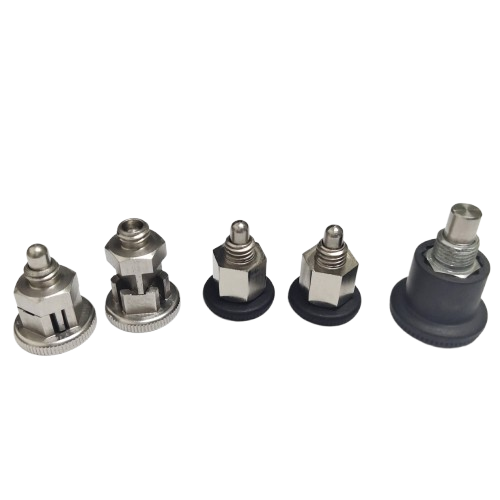
Explore the application of stainless steel materials for customizing mini indexing plungers based on specific operational environments and suitable spaces.
How To Make A Mini Indexing Plunger
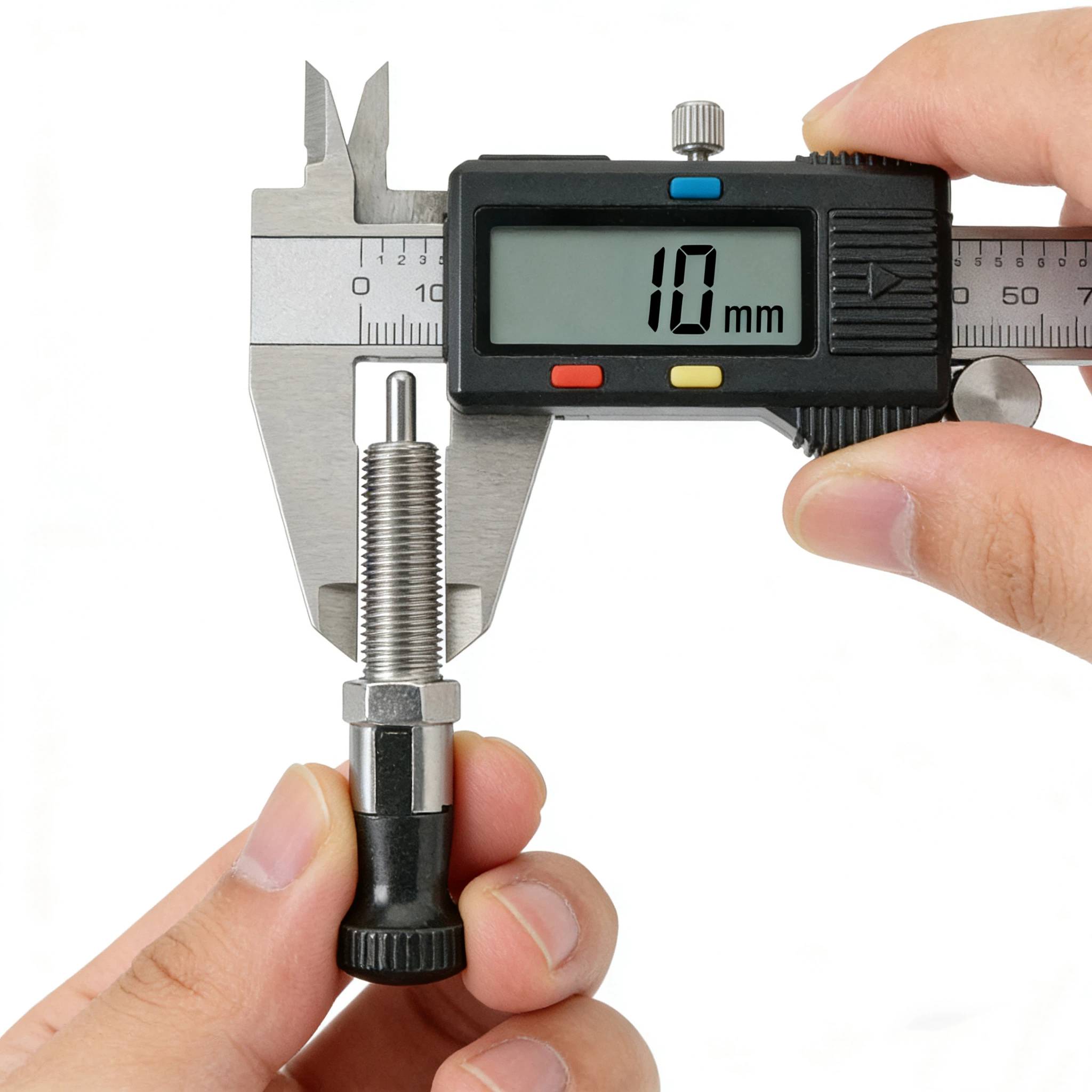
Discover how to choose correct size for indexing elements with confidence. Get precise recommendations that improve positioning accuracy, durability, and overall system performance.
How To Choose Correct Size For Indexing Elements