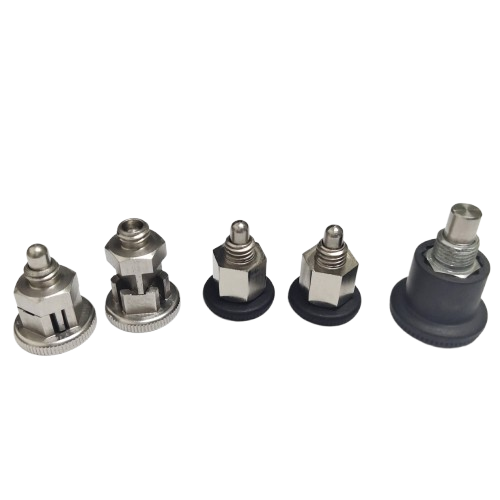
How Do You Make Stainless Steel-Choice of Different Ball Locking Pins
How Do You Make Stainless Steel – Choice of Different Ball Locking Pins
1. Understanding the Stainless Steel Manufacturing Process: From Raw Materials to Precision Output
How do you make stainless steel? This is not just a question of metallurgy, but one of exact engineering. At Mocayo, our metallurgical experts emphasize that premium stainless steel begins with meticulous raw material composition: by adding 18–20% chromium to an iron base, a passive protective film is formed; 8–12% nickel is then used to stabilize the austenitic structure, and 2–3% molybdenum significantly enhances pitting resistance.
Our internal data show that by using the AOD (Argon Oxygen Decarburization) refining method, carbon content can be precisely controlled to below 0.03%, while reducing sulfur and phosphorus impurities by over 50%. These steps are critical to ensuring stainless steel's long-term stability and corrosion resistance—especially important when producing high-precision components such as Ball Locking Pins.
In terms of surface finishing, Mocayo’s electropolishing techniques ensure a mirror-like surface roughness of Ra ≤ 0.2μm. For medical applications, our passivation treatment meets FDA salt spray standards after 168 hours of testing. One medical device manufacturer reported that parts made with our stainless steel process had three times the service life in saline environments.
2. Engineering-Based Selection System for Ball Locking Pins
In industrial fastening applications, choosing the right Ball Locking Pins is a decision based on technical precision. Mocayo’s engineering team proposes the "LEC" selection principle—Load, Environment, and Cost—a method already adopted by multiple Fortune 500 companies.

Material Performance Matrix
-
Standard Conditions: 304 stainless steel (optimal cost-performance ratio)
-
Corrosive Environments: 316L stainless steel (5x resistance to chloride corrosion)
-
Heavy Load/Wear: 440C martensitic stainless steel (HRC 58–60)
Application-Specific Matching
-
Food Processing: Requires electropolished surface (Ra ≤ 0.4μm)
-
Marine Engineering: Recommends Super Duplex 2507 (PREN ≥ 40)
-
High Temperature: 310S stainless steel (heat resistance up to 1150°C)
Lifecycle Cost Analysis
Though 316L may initially cost 35% more than 304, case studies reveal that its lifecycle cost is actually 45% lower in chemical environments. A petrochemical client reported:
-
Maintenance intervals extended from 3 months to 2 years
-
Replacement frequency reduced by 70%
-
Unplanned downtime losses cut by 90%
Clearly, How do you make stainless steel and how you select the right Ball Locking Pin are questions deeply intertwined with performance and cost.
3. Mocayo’s Full Range of Ball Locking Pins and Technological Innovations
Standard Product Lines
-
MOX Economic 304 Series
HRC28–32 hardness, black oxide surface treatment
Excellent for general-purpose industrial fixtures
Typical Use: Automated production line positioning

-
MSX Medical 316L Series
ASTM F138 compliant, Ra 0.2μm mirror finish
Integrated antibacterial design, FDA/CE dual certification
Client Case: Robotic surgical joint components

High-Performance Solutions
-
MTX Reinforced 440C Series
Vacuum quenching + cryogenic treatment at -196°C
Dynamic load capacity: 8 tons, 3x wear resistance improvement
Successfully Used In: Wind turbine pitch systems

Customized Engineering Services
Mocayo offers:
✓ Non-standard size processing (Φ1mm–Φ50mm)
✓ Special thread design (self-locking/anti-loosening)
✓ 72-hour rapid prototyping
✓ Full material traceability
One semiconductor client adopted our Φ2mm micro 316L Ball Locking Pins, achieving ±0.005mm wafer positioning accuracy while reducing particle contamination by 90%.
4. Comprehensive Technical Support and Quality Assurance
Scientific Selection Support
-
Working Condition Diagnosis (free on-site assessment)
-
Load Calculations (professional simulation software)
-
Material Matching (comparative solution proposals)
-
Sample Verification (accelerated lab testing)
Installation and Maintenance Standards
-
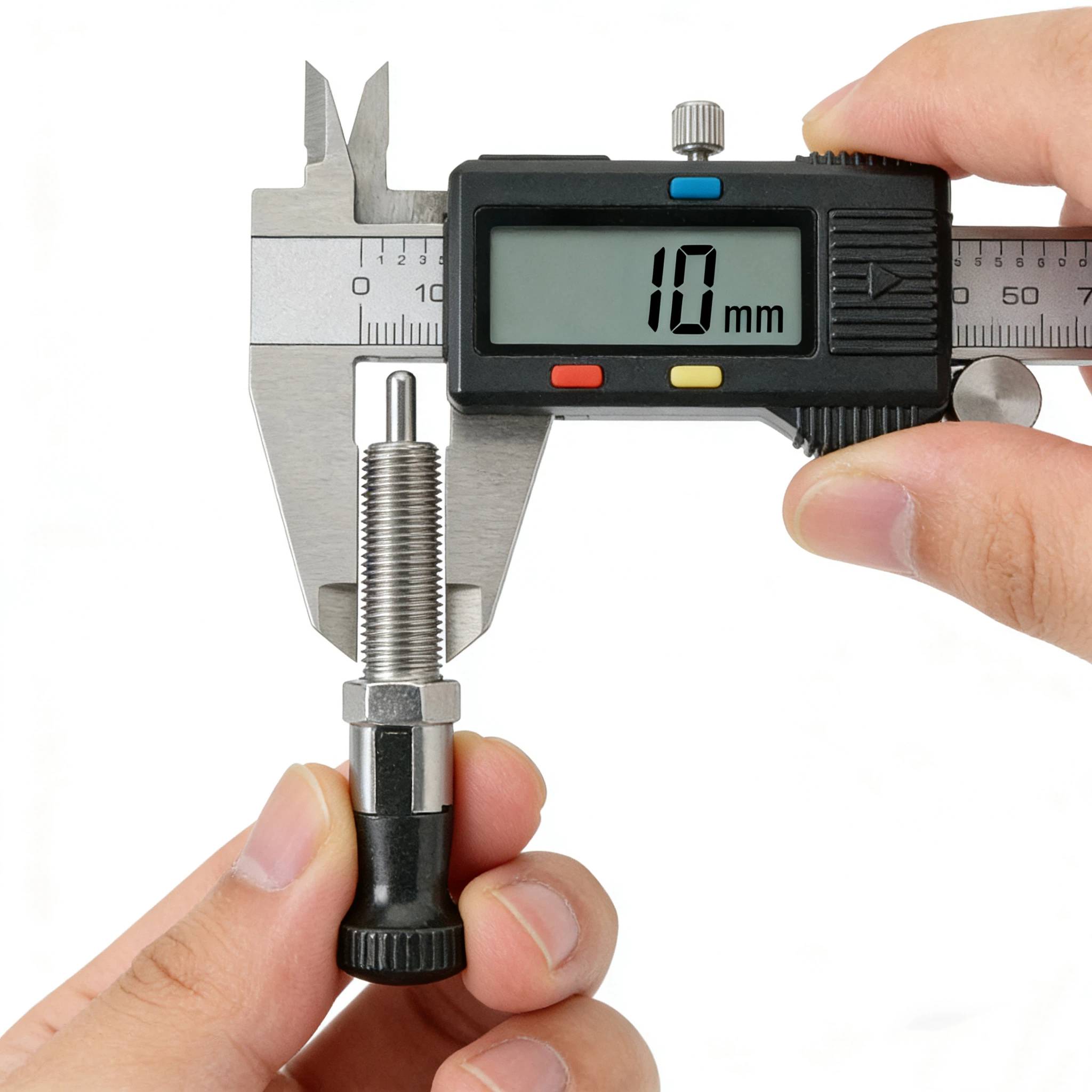
Torque Control
M6: 5–7 N·m
M8: 12–15 N·m
Complete torque handbook provided -
Lubrication Management
Food-grade: NSF H1 grease
High-temperature: Molybdenum disulfide-based lubricants
Vacuum use: Solid film lubricants
Robust Quality Management
-
Raw Materials: SGS-certified
-
Processing: 100% hardness inspection
-
Final Product: Full CMM dimensional inspection
-
Certifications: ISO 9001 / 13485 / AS9100
Mocayo’s expert team provides:
★ Free failure analysis
★ Preventive maintenance planning
★ Full lifecycle cost optimization
★ 24-hour emergency response
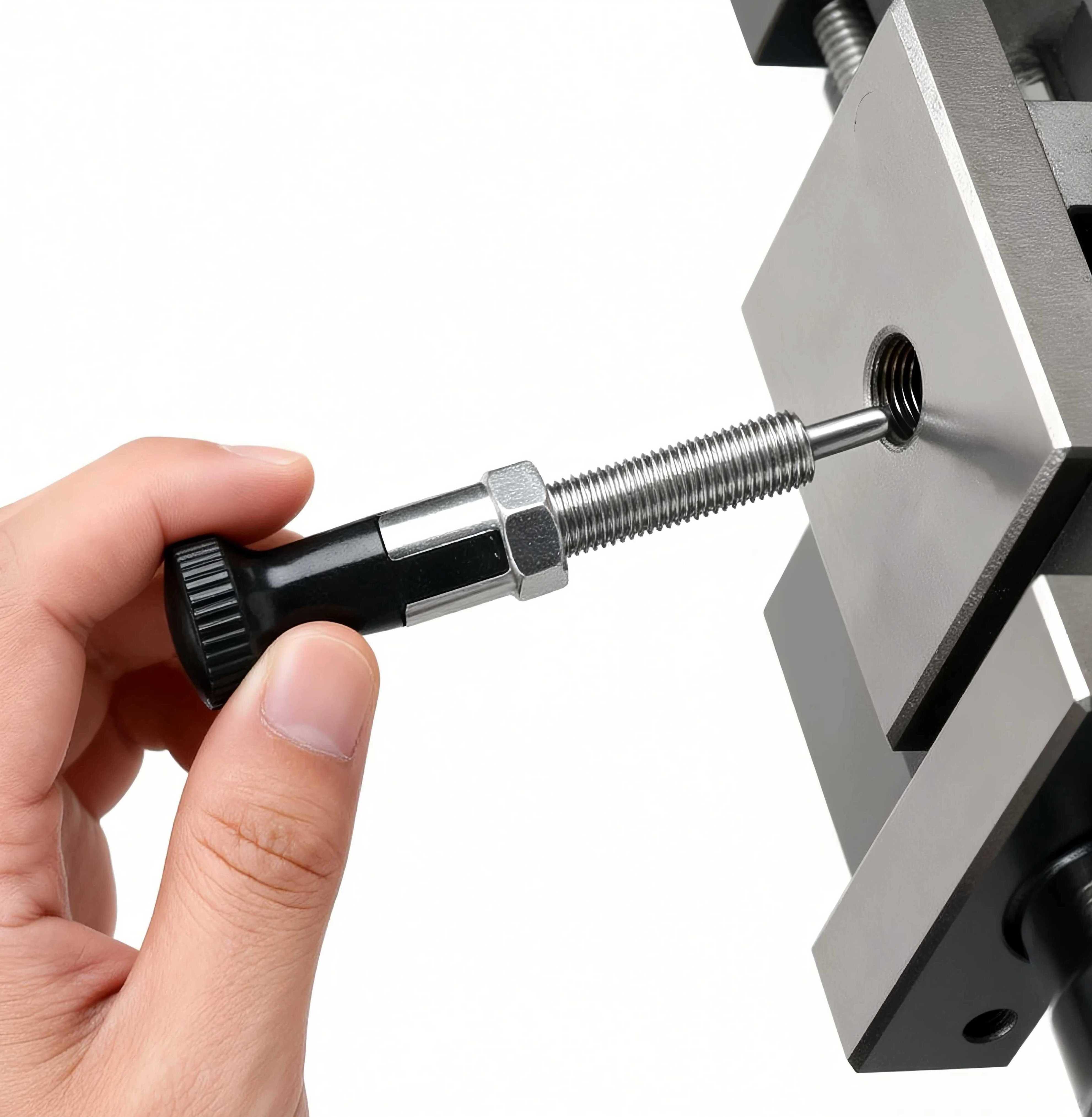
How Do You Make Stainless Steel & Ball Locking Pins?Stainless steel is made by alloying iron with chromium (10-30%). Ball locking pins, crafted from this durable material, ensure secure, vibration-resistant fastening in industrial applications.
By applying systematic selection and professional servicing, our Ball Locking Pins help clients achieve:
→ 30–50% improvement in positioning accuracy
→ 40–60% reduction in maintenance cost
→ 25–35% increase in overall equipment efficiency
What Is Computer Numerical Control-Custom Cnc Part For Machine Solutions
What Is Cnc System-How Mocayo Process Your Cnc parts
Related Article