How To Determine Thread Size-The Application Of Indexing Plunger Thread Size
How To Determine Thread Size – The Application of Indexing Plunger Thread Size
In the world of precision mechanical assembly, the quality of threaded connections directly impacts the positioning accuracy and service life of indexing plungers. Understanding how to determine thread size is crucial when selecting the proper indexing plunger for any given application. This article explores the thread standard systems, selection methodology, and advanced solutions offered by Mocayo.

1. Thread Standard Systems and Key Technical Parameters
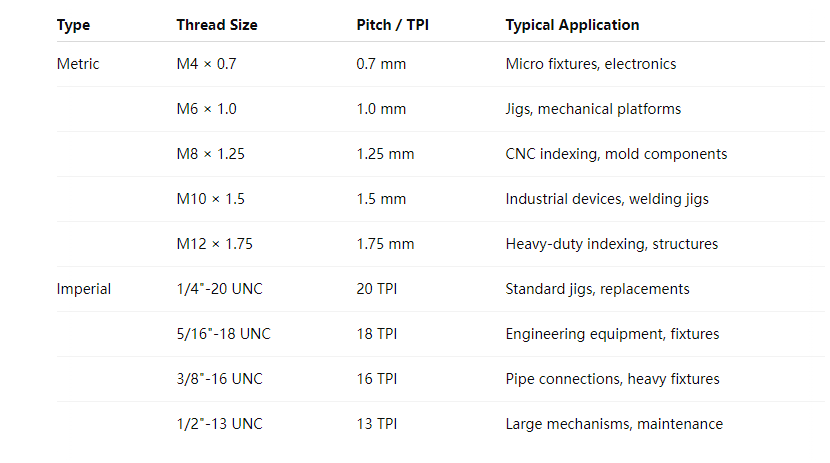
In industrial practice, two main thread standards are predominantly used: the metric system (M series) and the imperial system (UNC/UNF).
-
Metric threads use pitch (P) as the key specification. For example, M8×1.25 refers to a nominal diameter of 8 mm and a thread pitch of 1.25 mm.
-
Imperial threads are identified by threads per inch (TPI). For example, 1/4"-20UNC means a nominal diameter of 1/4 inch with 20 threads per inch.
Mocayo’s technical team has measured that, under the same nominal diameter, fine threads (e.g., M8×1) offer 15-20% greater tensile strength than coarse threads (M8×1.25), making them more suitable for high-precision positioning scenarios.
Another critical factor is thread accuracy grade. ISO standards classify thread tolerances using grades such as 6H (internal) and 6g (external), with the 6H/6g pairing being the most common in industrial applications. For precision components like indexing plungers, Mocayo recommends a 4H/5g fit, offering a clearance within 0.02 mm and maintaining consistent accuracy over 5000+ insertion cycles.
2. Engineering Methodology for Indexing Plunger Thread Size Selection
A scientific approach to how to determine thread size involves systematic evaluation. Mocayo’s proprietary “LST” model — Load, Size, Thread — has been successfully adopted by multiple Fortune 500 companies:
Load Analysis
-
Static positioning: Standard triangular threads are sufficient.
-
Dynamic loads: Trapezoidal or saw-tooth threads are recommended.
-
Vibrational environments: Require anti-loosening features (e.g., nylon locking rings).
Size Matching Principles
-
Light loads: M3–M6 or #4–#10
-
Medium loads: M8–M12 or 1/4"–1/2"
-
Heavy-duty: M16 or Tr20 and above
Thread Type Recommendations
-
General assembly: Metric threads are preferred.
-
Imported equipment maintenance: Use original imperial threads.
-
Special conditions: Consider rectangular or arc-shaped threads.
Case Study: In an automotive welding fixture, M12 threads paired with indexing plungers on CNC machines significantly reduced maintenance costs by 65%. If you are unsure how to determine thread size for a specific scenario, Mocayo’s engineers can calculate the safety factor based on working conditions to aid in decision-making.
3. Mocayo Precision Indexing Plunger Thread Solutions
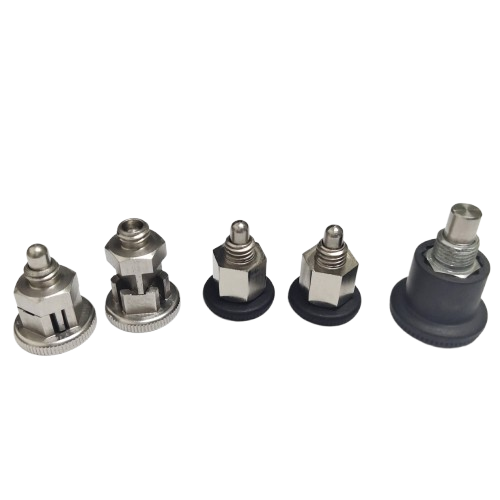
Leveraging years of technical expertise, Mocayo has developed a full line of threaded indexing plungers, covering metric, imperial, locking, and micro-thread models:
MS1171 Series
-
Metric Precision Grade
-
Thread grade: 4h (ISO 965-1)
-
Surface treatment: Hard chrome plating (HV ≥ 800)
-
Accuracy: ±0.01 mm
-
Application: CNC rotary table positioning
-

-
Imperial Heavy-Duty Type
-
Standard: ASME B1.1 compliant
-
Reinforced thread profile
-
Application: Construction equipment maintenance
-
MS1071 Series
-
Anti-Loosening Type
-
Integrated nylon locking ring
-
Vibration test: No loosening after 100 hours
-
Application: Wind turbine tower connections
-
-
Micro Fine-Thread Series
-
Minimum spec: M2×0.25
-
Surface finish: Ra 0.2 μm
-
Application: Optical instrument assembly
-


Customized Services
We provide comprehensive technical support:
-
Non-standard thread machining (drawings required)
-
Special materials (titanium alloy, Inconel)
-
Rapid prototyping (within 5 working days)
-
Thread inspection reports (with CMM data)
Success Story: A semiconductor manufacturer using our M4×0.35 ultra-fine thread indexing plunger increased wafer positioning accuracy to ±0.005 mm and improved product yield by 18%.
4. Professional Application and Quality Assurance
Scientific Selection Process
-
Application evaluation (online form submission)
-
Load calculation (free software support)
-
Thread matching (engineering team guidance)
-
Sample validation (laboratory testing)
Installation Specifications
-
Torque values:
-
M6 threads: 5–7 N·m
-
M12 threads: 45–55 N·m
-
Full torque chart available
-
-
Assembly Process:
-
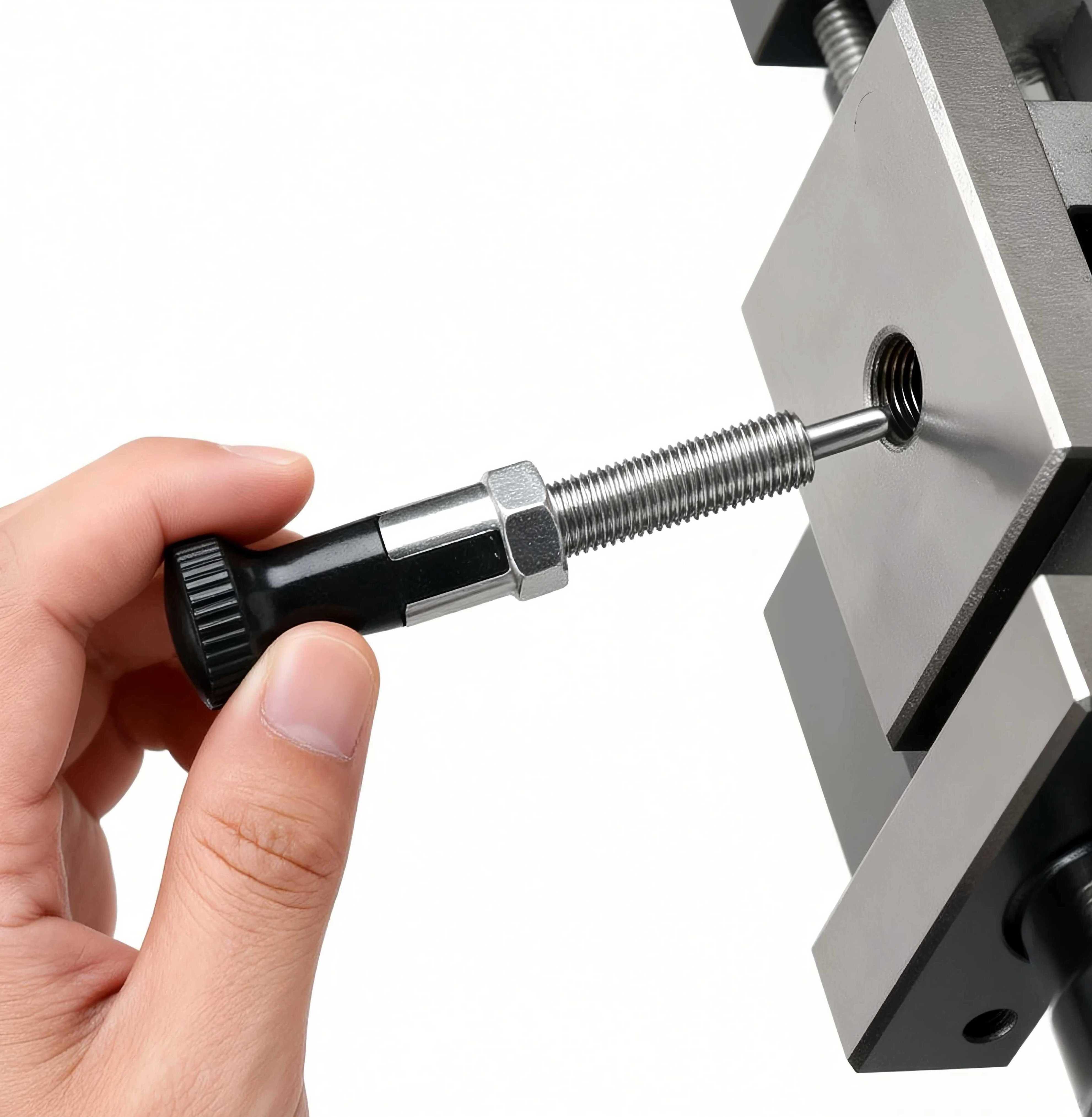
Use thread-guiding fixtures
-
Avoid direct hammering
-
Maintain clean mating surfaces
-
Quality Control System
-
Raw material certification (steel mill reports)
-
In-process control: 100% thread plug gauge inspection
-
Final inspection: ISO 4759-1 Class B
-
Certifications: ISO 9001 / AS9100
Mocayo’s engineering team offers:
-
Free thread inspection
-
Failure analysis reports
-
On-site technical support
-
Lifecycle management plans
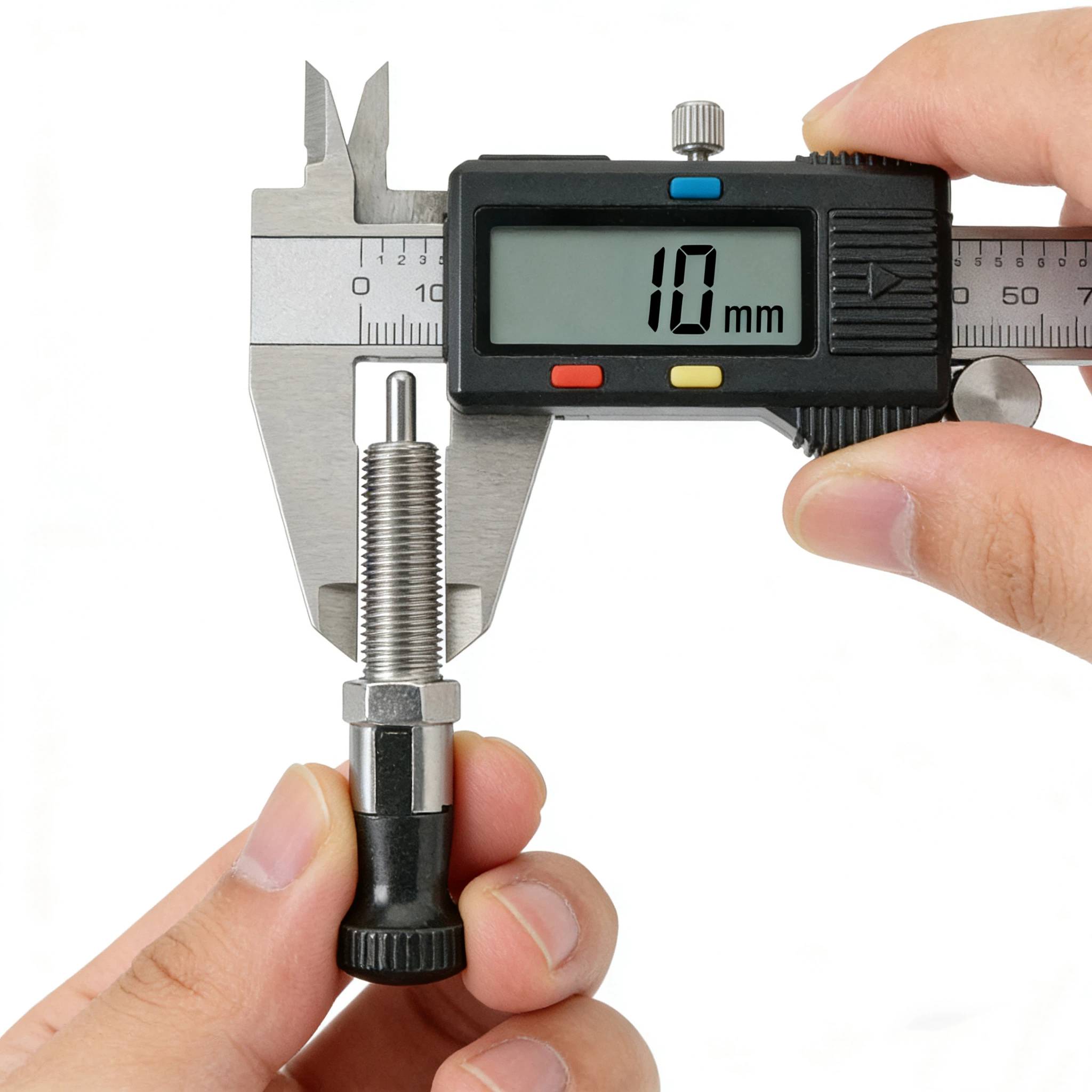
How to determine thread size, index plunger specifications accurately? Measure diameter and pitch with calipers or thread gauges. Ensure compatibility for precise indexing plunger performance in industrial applications.
By following a scientific selection and standardized installation process, our threaded indexing plungers help clients achieve:
-
20–35% improvement in positioning accuracy
-
2–3x extended maintenance intervals
-
25–40% overall cost reduction
Visit the Mocayo official website to download the full catalog or contact your local technical representative for tailored solutions. We guarantee a response to all technical inquiries within 2 hours and provide a preliminary selection plan within 24 hours.
How Is Stainless Steel Made-What Is The Best Stainless Steel For Index Bolts
What Is 316L Stainless Steel-Material Selection For Detent Pins
Related Article