Mechanical Properties of Stainless Steel
author: Lucia Liu
2025-08-07
Mechanical Properties of Stainless Steel
In the fields of modern industrial manufacturing and equipment assembly, stainless steel materials are widely adopted due to their excellent comprehensive performance. Especially in industries such as machinery, aerospace, shipbuilding, transportation, and healthcare, there are higher demands on the mechanical strength, corrosion resistance, and stability of stainless steel components. Therefore, gaining a thorough understanding of the mechanical properties of stainless steel has become an indispensable critical aspect in material selection and application.
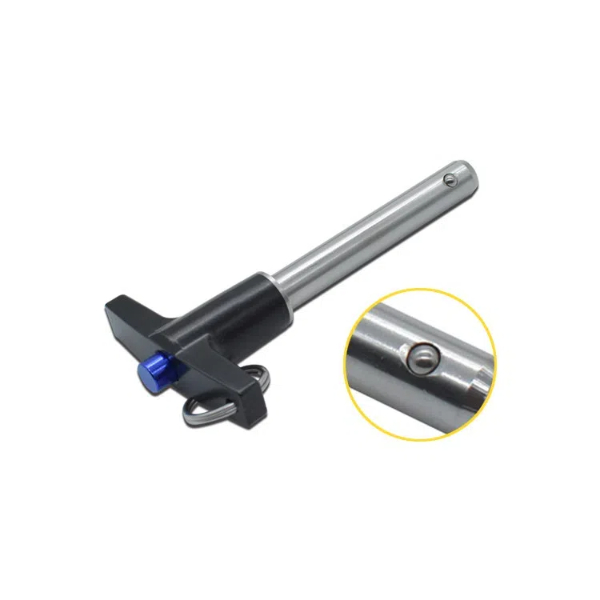
Meanwhile, as a professional manufacturer of high-precision stainless steel components, Mocayo Company's stainless steel ball lock pin has gained widespread favor among equipment manufacturers and engineering clients due to its stable performance and diverse application scenarios. This article will combine the core properties of stainless steel to provide a detailed introduction to its practical applications and advantages in mechanical parts such as ball lock pins.
Meanwhile, as a professional manufacturer of high-precision stainless steel components, Mocayo Company's stainless steel ball lock pin has gained widespread favor among equipment manufacturers and engineering clients due to its stable performance and diverse application scenarios. This article will combine the core properties of stainless steel to provide a detailed introduction to its practical applications and advantages in mechanical parts such as ball lock pins.
Overview of the Mechanical Properties of Stainless Steel
Stainless steel, as the name suggests, is a type of metal material with excellent rust-resistant properties. It primarily achieves this by adding alloy elements such as chromium, nickel, and molybdenum to steel, thereby enhancing its corrosion resistance and mechanical properties. Common stainless steel grades include 304, 316, and 430, among others. Among these, the austenitic stainless steel grade 316 (SS 316) stands out for its superior strength and corrosion resistance, making it widely used in high-demand applications.
Stainless steel, as the name suggests, is a type of metal material with excellent rust-resistant properties. It primarily achieves this by adding alloy elements such as chromium, nickel, and molybdenum to steel, thereby enhancing its corrosion resistance and mechanical properties. Common stainless steel grades include 304, 316, and 430, among others. Among these, the austenitic stainless steel grade 316 (SS 316) stands out for its superior strength and corrosion resistance, making it widely used in high-demand applications.
In engineering design and practical applications, understanding the mechanical properties of stainless steel is crucial for ensuring the performance of components and system stability. The following are key performance indicators for stainless steel:
1. Tensile strength and yield strength
Tensile strength indicates the maximum stress a material can withstand under tension, while yield strength marks the point at which plastic deformation begins. For example, SS 316 typically has a tensile strength of 515–620 MPa and a yield strength of at least 205 MPa, meeting the requirements of various high-strength applications.
Tensile strength indicates the maximum stress a material can withstand under tension, while yield strength marks the point at which plastic deformation begins. For example, SS 316 typically has a tensile strength of 515–620 MPa and a yield strength of at least 205 MPa, meeting the requirements of various high-strength applications.
2. Elongation and Fracture Toughness
Elongation indicates the material's ability to withstand deformation before fracture. SS 316 stainless steel has an elongation of over 40%, offering excellent toughness and impact resistance, enabling it to maintain structural integrity in complex environments.
Elongation indicates the material's ability to withstand deformation before fracture. SS 316 stainless steel has an elongation of over 40%, offering excellent toughness and impact resistance, enabling it to maintain structural integrity in complex environments.
3. Hardness and Wear Resistance
The hardness of stainless steel is typically measured using Rockwell hardness (HRB or HRC) or Brinell hardness (HB). SS 316 has medium-to-high hardness, making it suitable for components requiring a certain level of wear resistance, such as mechanical pins, connectors, etc.
The hardness of stainless steel is typically measured using Rockwell hardness (HRB or HRC) or Brinell hardness (HB). SS 316 has medium-to-high hardness, making it suitable for components requiring a certain level of wear resistance, such as mechanical pins, connectors, etc.
4. Corrosion Resistance
This is a key property that distinguishes stainless steel from ordinary steel. SS 316, with its high nickel and molybdenum content, exhibits exceptional resistance to chloride corrosion, making it suitable for corrosive environments such as marine, high-humidity, and chemical settings.
This is a key property that distinguishes stainless steel from ordinary steel. SS 316, with its high nickel and molybdenum content, exhibits exceptional resistance to chloride corrosion, making it suitable for corrosive environments such as marine, high-humidity, and chemical settings.
These mechanical properties of stainless steel provide a solid theoretical foundation for engineering design and material selection, ensuring the stable and reliable performance of various stainless steel components under actual operating conditions.
Performance and Application Advantages of Mocayo Stainless Steel Ball Lock Pins
Mocayo is a company specializing in the development, manufacturing, and sales of precision mechanical components, with main products including quick-release pins, locating pins, spring pins, and more. Among these, Mocayo's independently developed and manufactured stainless steel ball lock pins, renowned for their high strength and ease of use, are widely applied in various assembly and positioning applications.
Mocayo is a company specializing in the development, manufacturing, and sales of precision mechanical components, with main products including quick-release pins, locating pins, spring pins, and more. Among these, Mocayo's independently developed and manufactured stainless steel ball lock pins, renowned for their high strength and ease of use, are widely applied in various assembly and positioning applications.
Performance Advantages
High Strength: Mocayo stainless steel ball lock pins have high tensile strength and can withstand heavy loads, making them suitable for load-bearing applications.
High Strength: Mocayo stainless steel ball lock pins have high tensile strength and can withstand heavy loads, making them suitable for load-bearing applications.
Corrosion Resistance: SS 316 material has strong corrosion resistance, making it suitable for marine and chemical equipment applications.
Precision Manufacturing: Precision CNC machining ensures consistent product dimensions, reliable locking, and easy operation.
Ball lock pins with robust mechanical properties of stainless steel ensure secure fastening, rust resistance, and performance under stress. Perfect for industrial use.
Eliminate CNC Tooling Vibration
Difference Between SS 304 And SS 316
Related Article
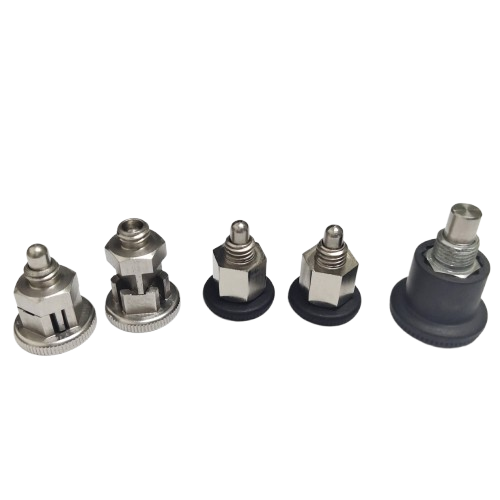
Explore the application of stainless steel materials for customizing mini indexing plungers based on specific operational environments and suitable spaces.
How To Make A Mini Indexing Plunger
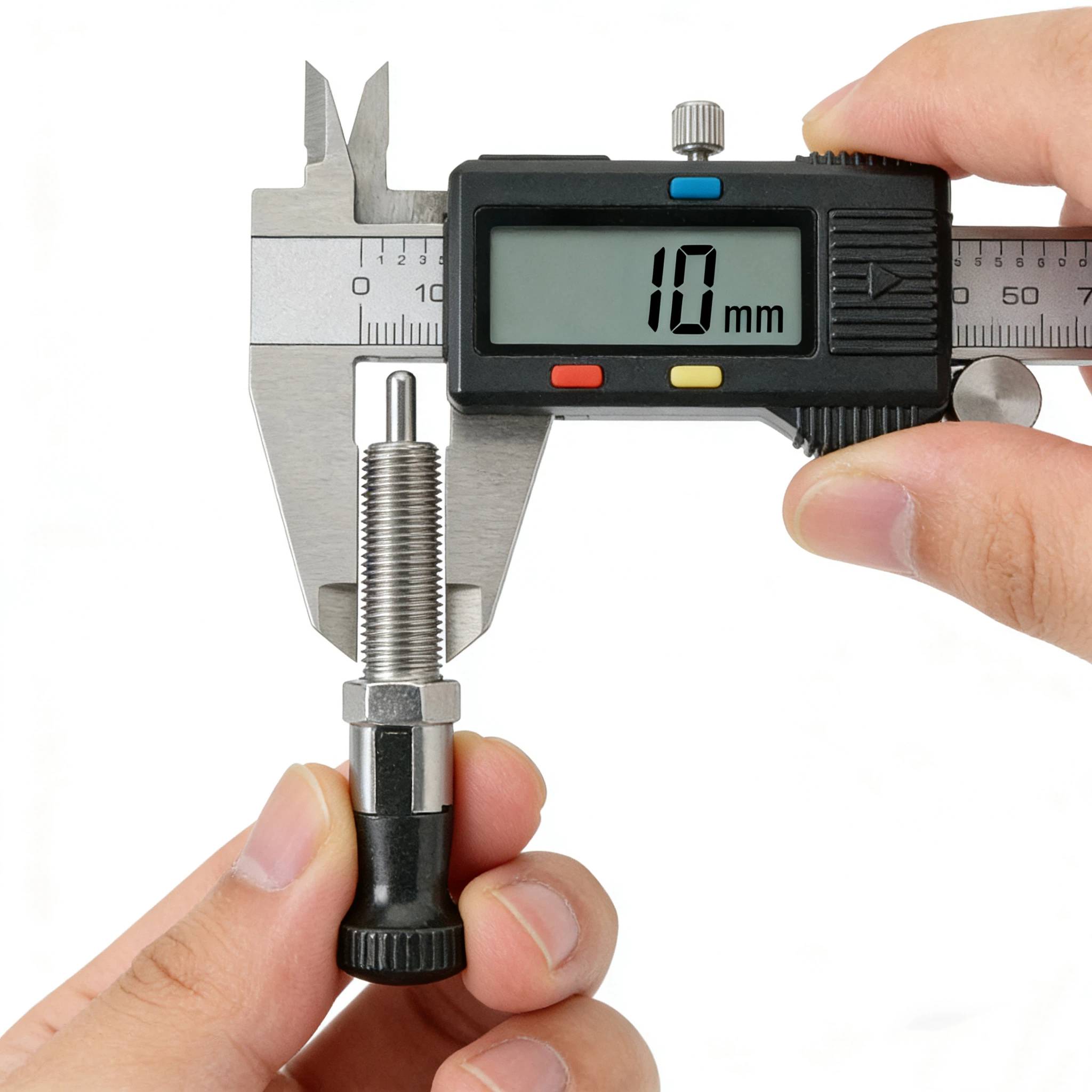
Discover how to choose correct size for indexing elements with confidence. Get precise recommendations that improve positioning accuracy, durability, and overall system performance.
How To Choose Correct Size For Indexing Elements