Spring Loaded Locking Mechanism
author: Lucia Liu
2025-07-11
Spring Loaded Locking Mechanism
In the modern manufacturing and assembly industry, fast connections and reliable positioning are key factors in improving efficiency and reducing costs. Traditional bolts and pins, while still valuable in many scenarios, are no longer flexible enough in operating environments that require frequent assembly and disassembly or efficient replacement. At this time, Spring Loaded Locking Mechanism becomes an indispensable component in various mechanical systems by virtue of its convenient operation and accurate repetitive positioning.
In this article, we will start from the basic principle and application field of spring loaded locking mechanism, focus on the representative product type - ball lock pin, and briefly explain the related detent pins in the practical application of industrial systems.
In this article, we will start from the basic principle and application field of spring loaded locking mechanism, focus on the representative product type - ball lock pin, and briefly explain the related detent pins in the practical application of industrial systems.
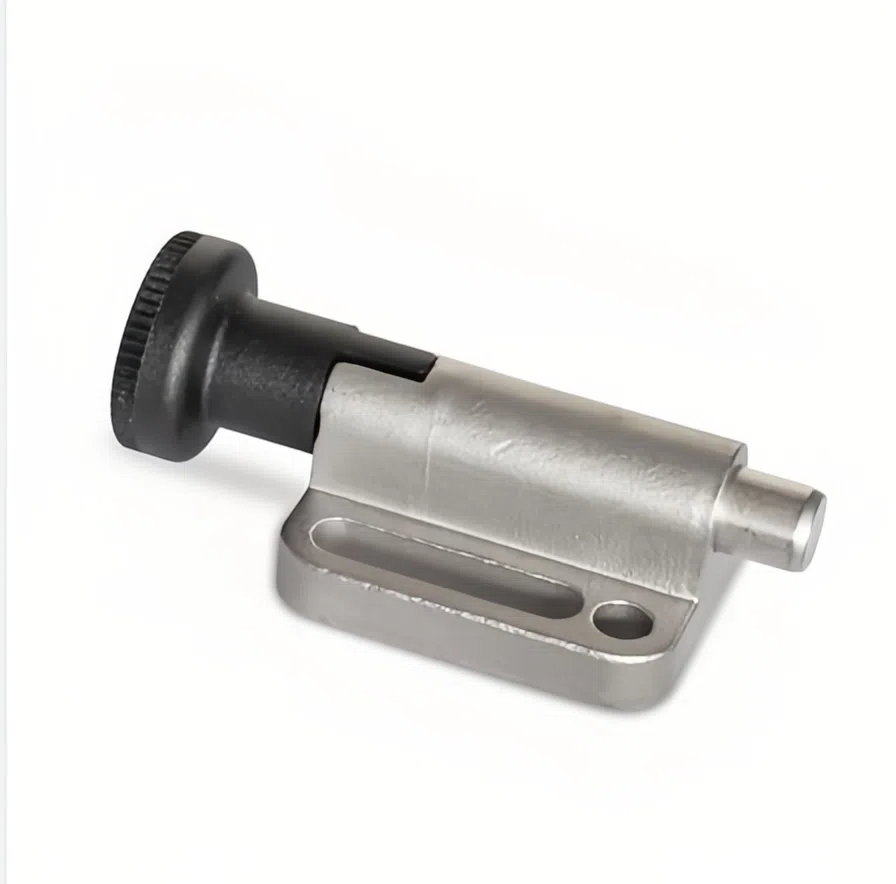
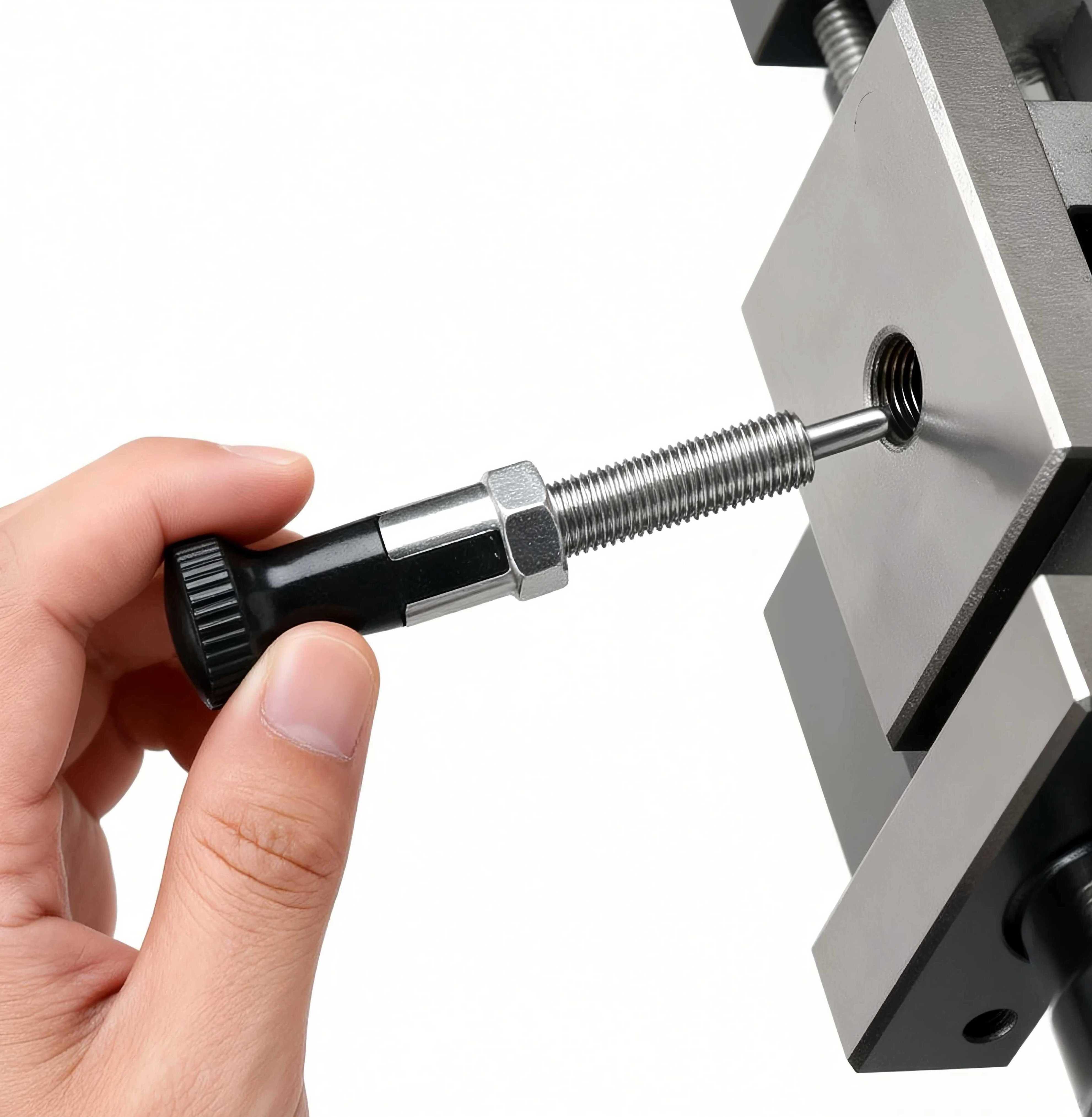
The Spring Loaded Locking Mechanism is a structural system for fast positioning and locking of components by means of a built-in spring that provides the driving force. In the absence of external force, the pin or ball will automatically spring back under the action of the spring force, thus realizing the automatic locking or fixing function.
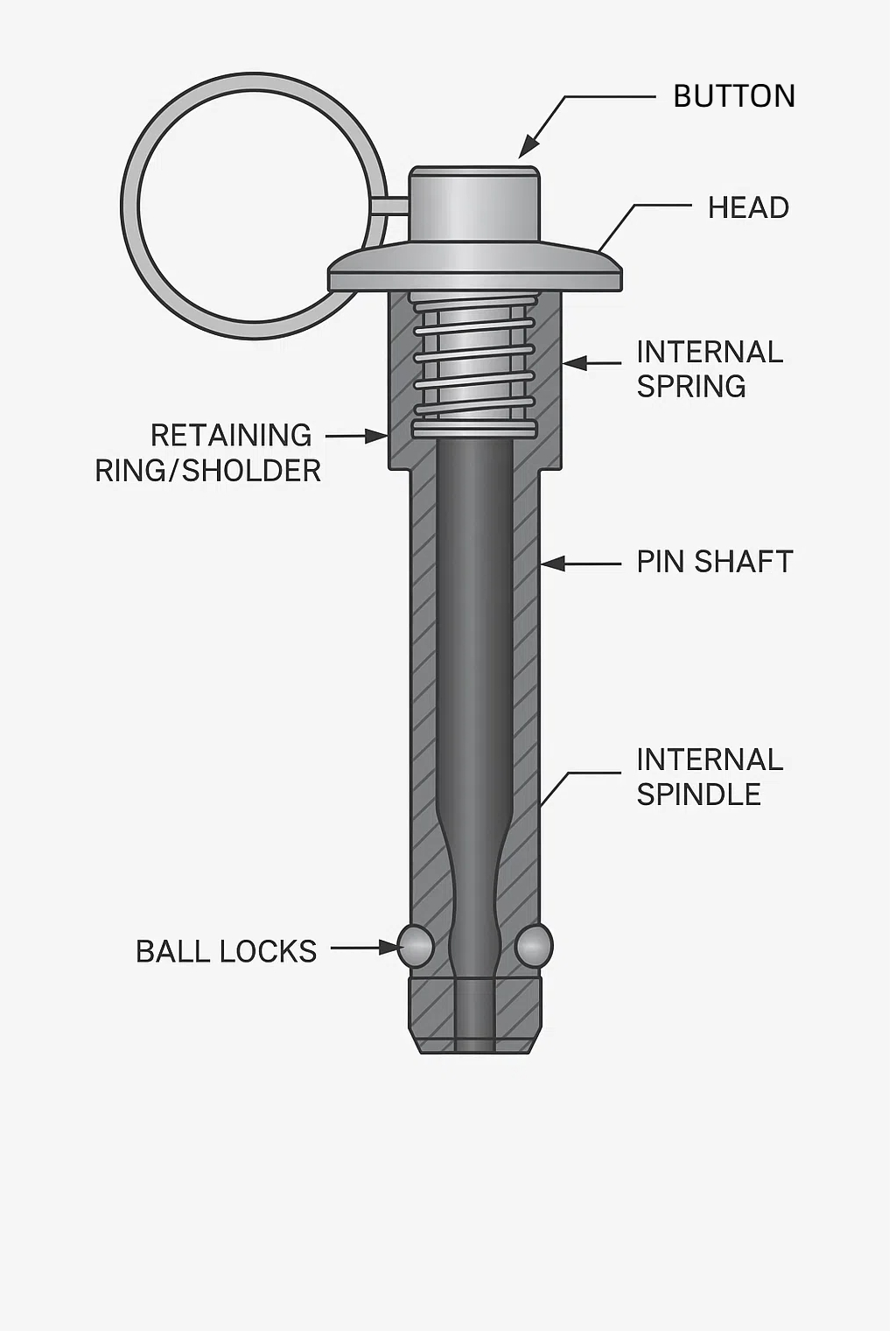
Among the many spring locking structures, the ball lock pin is a typical quick-locking product. It is characterized by the use of a push button to control the action of the locking ball, with the pin body inserted into the hole to complete the positioning and fixing. The structure usually consists of a push button, a built-in spring, a master pin and two or more ball lock pins.
Advantages of using ball lock pin:
Quick operation: press the button to insert and release to lock, can be done with one hand;
Quick operation: press the button to insert and release to lock, can be done with one hand;
Strong reusability: wear-resistant construction, suitable for frequent disassembly and assembly scenarios;
Good tightening: the locking ball seating is precise and maintains good connection strength

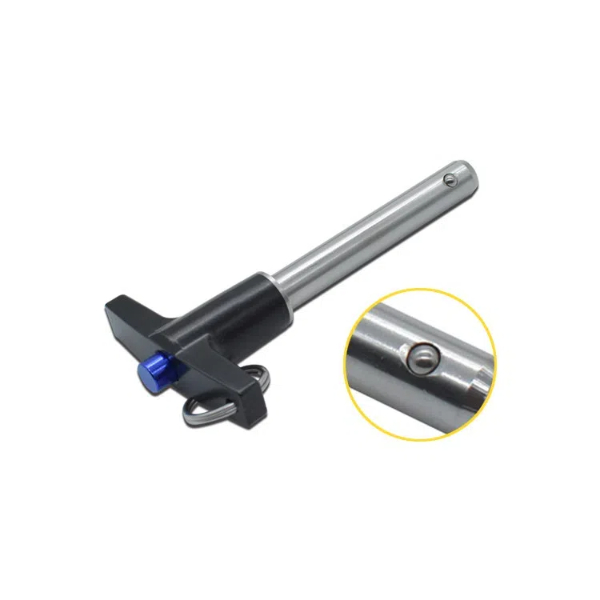
A simpler and easier to maintain component, detent pins. They are usually cylindrical pins with spring-loaded ball heads, used for mechanical alignment and limitation in temporary or fixed positions.
The detent pins are characterized by the following construction:
- One-piece pin body design with embedded spring and ball;
- After insertion into the hole, the ball pops out automatically to “snap” into place;
- The force required to overcome the compression of the spring during withdrawal provides a quick release.
Common Application Areas for Spring Loaded Locking Mechanism
Due to its simple structure and easy operation, the Spring Loaded Locking Mechanism is widely used in a variety of industries and equipments, including:
Due to its simple structure and easy operation, the Spring Loaded Locking Mechanism is widely used in a variety of industries and equipments, including:
Structural connections in automation equipment: e.g. module assembly, quick change of sensor brackets.
Positioning of jigs and fixtures: fast clamping and dismounting of precision workpieces.
Aviation seats, folding mechanisms: structures that require high-frequency stowage and unlocking.
Medical equipment: positional fixation of components in modular devices.
Choose precision-engineered spring loaded locking mechanisms with stainless steel detent pins for consistent locking power.
Locking & Indexing Plunger Mechanisms
Heavy Duty Ball Transfer Units
Related Article
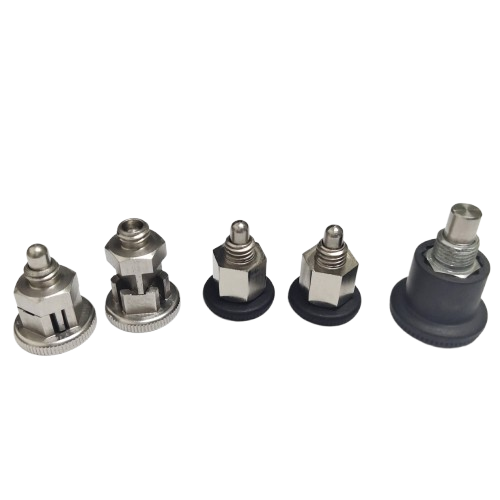
Explore the application of stainless steel materials for customizing mini indexing plungers based on specific operational environments and suitable spaces.
How To Make A Mini Indexing Plunger
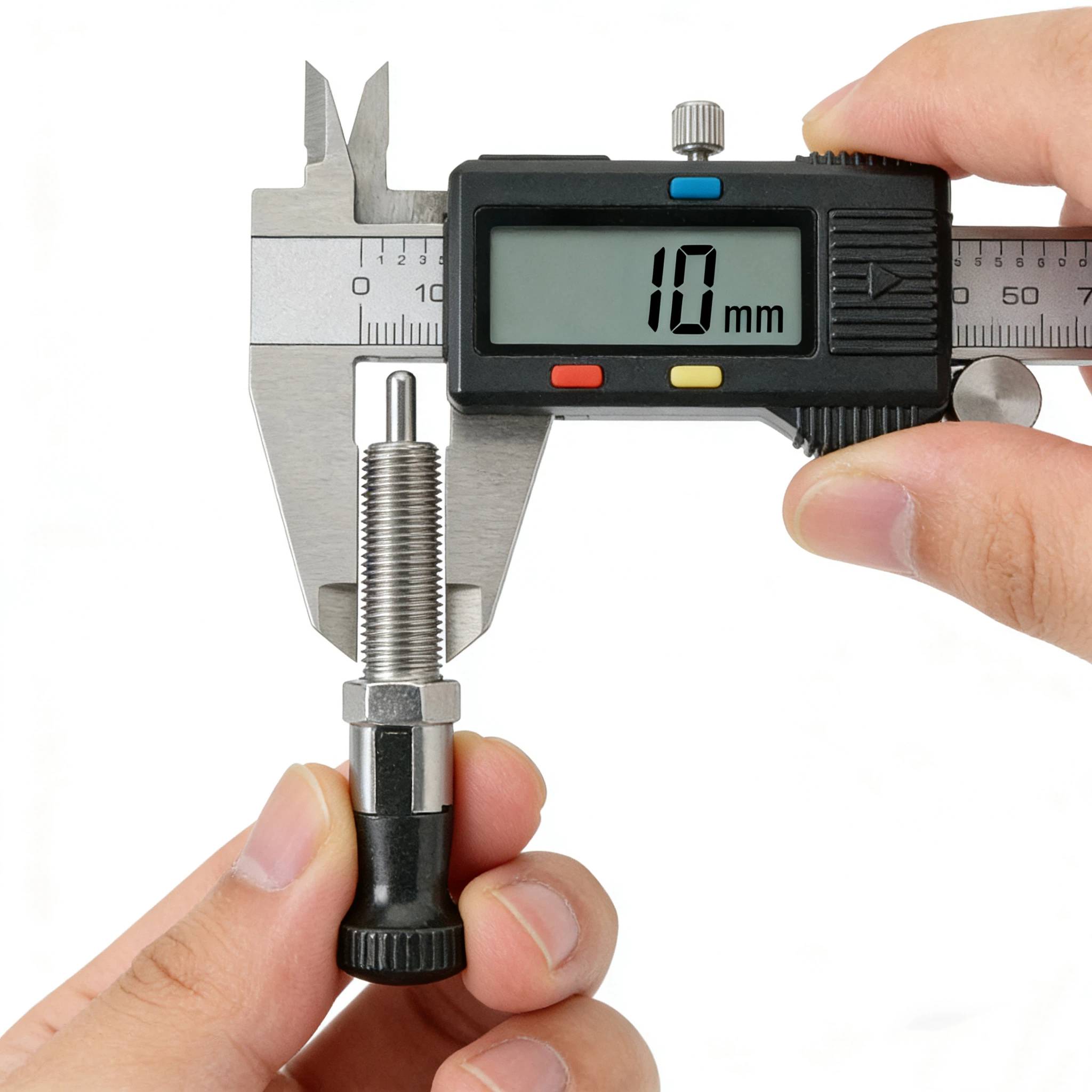
Discover how to choose correct size for indexing elements with confidence. Get precise recommendations that improve positioning accuracy, durability, and overall system performance.
How To Choose Correct Size For Indexing Elements