What Are Fasteners Used For
What Are Fasteners Used For: A Comprehensive Analysis of Core Functions and Innovative Solutions
1. Fundamental Functions of Fasteners and Their Industrial Significance
Fasteners, often referred to as the "rice of industry," are indispensable components in mechanical connection systems. When exploring what are fasteners used for, it is essential to understand the three core mechanisms by which they operate: mechanical interlocking (such as threaded engagement), frictional constraint (like static friction generated by preload), and material bonding (such as adhesive-assisted fastening). These mechanisms collectively ensure structural integrity and operational reliability.

In terms of performance criteria, high-quality fasteners must meet stringent technical standards. For example, a common Grade 8.8 bolt must have a tensile strength exceeding 800 MPa and a yield strength no less than 640 MPa (ISO 898-1 standard). Fasteners used in aerospace applications must also pass vibration tests under NASM 1312-7 standards, ensuring no loosening within a 20-2000Hz frequency range. Our laboratory data indicates that fasteners with optimized thread profiles can achieve a 40% increase in retention force under vibrational conditions.
From an industry application perspective, the choice of fasteners has a direct impact on engineering quality:
-
Automotive Manufacturing: Special bolts used in EV battery packs must meet IP67 sealing and 3000V insulation standards.
-
Wind Energy Sector: The preload control error for tower connection bolts must be within ±5% (EN 14399 standard).
-
Line Array System: Fasteners for vacuum chambers must maintain an outgassing rate below 1×10⁻⁹ Pa·m³/s (SEMI F72 standard).

Interestingly, with the growing popularity of modular design, the demand for removable fasteners is increasing at an annual rate of 12% (according to Global Market Insights), creating fresh opportunities for innovative fastening solutions and reshaping perspectives on what are fasteners used for.
2. Typical Applications of Fasteners Across Industries
Technological Breakthroughs in Heavy Industries
In the wind power industry, for instance, we developed a special M64 bolt for a 5MW wind turbine using a patented "dual-gradient heat treatment" process, resulting in triple the fatigue life compared to conventional products. Finite Element Analysis (FEA) confirmed that this solution reduced the stress concentration factor at the tower joint from 2.1 to 1.3.
In the petrochemical sector, high-pressure sealing systems compliant with ASME PCC-1 standards demand a bolt load control accuracy of ±2%, achieved through specialized hydraulic tensioners combined with strain gauge monitoring systems. These advanced practices further expand the horizons when considering what are fasteners used for.
Precision Manufacturing: Extreme Requirements
Micro fasteners used in medical robotic joints face unique challenges: they must meet ISO 13485 biocompatibility standards while delivering 50N·m torque strength within a mere 3mm diameter. Our solution involved Ti-6Al-4V ELI medical-grade titanium alloy with laser surface texturing, achieving a 60% improvement in friction coefficient stability.
In the semiconductor industry, fasteners used in EUV lithography machines exhibit outgassing rates two orders of magnitude lower than standard stainless steel, achieved through specialized vacuum annealing processes—an advanced answer to what are fasteners used for in ultra-high precision fields.
Innovative Applications in Emerging Technologies
The rise of EV battery swap systems demands revolutionary quick-release technologies. Our patented quick-release solution integrates multiple innovations:
-
Electromagnetic locking mechanism (response time <30ms)
-
Self-aligning tapered design (tolerates ±0.5° installation deviation)
-
Real-time load monitoring (MEMS sensor accuracy ±0.5%)
According to real-world testing by a leading automaker, this solution reduced battery swap time from five minutes to 90 seconds while cutting misoperation rates below 0.01%.
3. Mocayo's High-End Solutions: Indexing Plungers and Quick Release Pins
Breakthrough Technologies and Innovative Designs
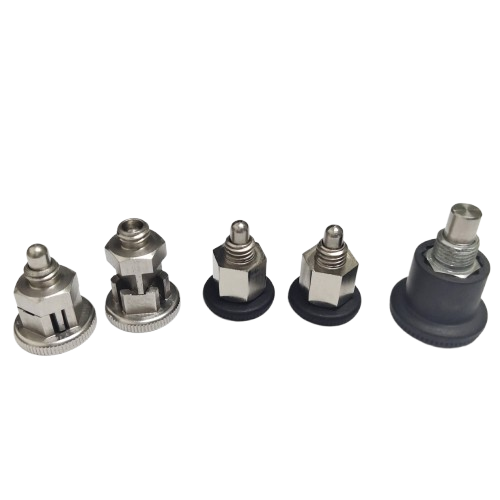
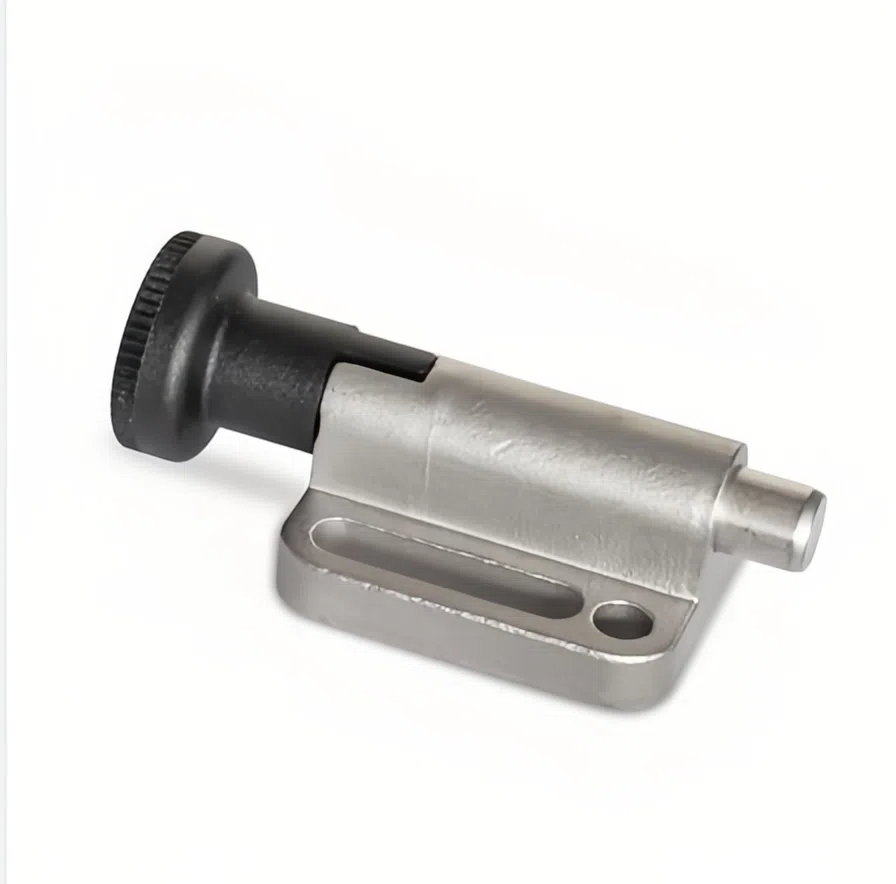
Mocayo’s MS1171 series indexing plungers represent the industry’s cutting edge, showcasing key technological advantages:
-
Submicron Positioning: Air-bearing-guided precision grinding achieves ±0.008mm repeatability (exceeding VDI 3441 top standards).
-
Intelligent Compensation System: Built-in piezoelectric micro-actuators automatically compensate for thermal deformation within 2μm.
-
Extreme Environment Adaptability: Successfully tested in -270°C to +300°C thermal cycles (following ESA ECSS-Q-ST-70-02C standards).

| Specification | Conventional Products | PrecisionLock Pro |
|---|---|---|
| Dynamic Load Capacity (10⁷ cycles) | 3kN | 12kN |
| Thermal Stability (μm/°C) | 0.5 | 0.02 |
| Corrosion Resistance (NSS) | 500h | 3000h |
Successful Application Cases
Our quick-release pin systems have been successfully deployed in booster separation mechanisms of reusable rockets. The unique "triple redundant locking" design ensures:
-
No failure under 20G shock loads
-
Integrity under 300°C thermal shocks
-
Less than 0.1% precision degradation after 100 reuse cycles

Compared to traditional bolted joints, this design achieved a 35% weight reduction, improving payload capacity by 8%—an inspiring case study of what are fasteners used for in space exploration.
Mocayo’s Customized Engineering Services
We offer full-cycle technical support, including:
-
Early-Stage Simulation: Multibody dynamic analysis (RecurDyn) + nonlinear contact analysis (Abaqus)
-
Prototype Testing: Equipped with a 2000Hz dynamic load testing bench
-
Mass Production Control: Process capability index (CPK) ≥1.67
Notably, for a lithography equipment manufacturer, we developed vacuum-environment-specific indexing plungers, achieving particle release levels below 5 particles/ft³ (ISO Class 1), supporting breakthroughs in 3nm chip fabrication technologies.
4. Fastener Selection and Trends in Technological Innovation
We recommend a risk-based selection process (referencing VDI 2230 standards):
-
Failure Mode Analysis: Establish FMEA tables for risk assessment
-
Load Spectrum Analysis: Collect real-world operational data (minimum 1000 hours recommended)
-
Material Compatibility Testing: Use electrochemical workstations to assess galvanic corrosion risks
-
Life Verification: Conduct accelerated fatigue testing (ISO 12107 standard)
Each of these practices refines and deepens our understanding of what are fasteners used for.
Cutting-Edge Developments
Fastener technologies are advancing in three major directions:
-
Smart Fasteners: Our IoT-enabled fasteners integrate:
-
Strain sensing (±0.1% precision)
-
Temperature monitoring (-40°C to +125°C range)
-
Wireless data transmission (LoRaWAN protocol)
-
-
Lightweight Design: New magnesium alloy fasteners achieve 55% weight reduction while maintaining 85% strength retention compared to steel.
-
Sustainability: Development of biodegradable fasteners (PLA composites) for temporary structures.
Maintenance Technology Upgrades
Predictive maintenance strategies are highly recommended:
-
Ultrasonic bolt stress monitors (±3% precision)
-
Infrared thermography for detecting abnormal friction hotspots
-
Machine learning algorithms for analyzing pre-loosening signals
In one offshore wind farm project, these strategies reduced maintenance costs by 40% and unexpected downtime by 75%, presenting a practical demonstration of what are fasteners used for in asset optimization.
Redefining Connection Reliability
Fastener technology has evolved beyond simple mechanical connections into a multidisciplinary field blending material science, smart sensing, and advanced manufacturing. Mocayo’s soon-to-launch Fastener Research Center—Asia’s largest—will feature:
-
Nano-scale surface engineering labs
-
20,000rpm high-speed dynamic test benches
-
Space environment simulation chambers (10⁻⁶ Pa vacuum)
By answering what are fasteners used for in the new era, we aim to empower global industries with next-generation fastening solutions.
What Are Fasteners Used For?Fasteners like screws, bolts, and rivets securely join materials in construction, manufacturing, and DIY projects. They ensure structural stability, precision assembly, and long-lasting durability.
What Is A CNC Lathe Machine?-The Critical Role of CNC and Spring Plungers in Precision Positioning
Proper Installation and Maintenance Techniques for Indexing Pins
Related Article