What Is Aluminum Used For-Aluminum Ball Lock Pin
author: Lucia Liu
2025-07-12
What Is Aluminum Used For-Aluminum Ball Lock Pin
In modern manufacturing industry, light weight, high strength and fast connection are important directions in structural design. And aluminum, as a metal material with both light weight, high strength and good processability, is widely used in all kinds of industrial products. Especially in structural parts such as locating pins and quick-connect pins, the performance advantages of aluminum are fully utilized.
This article will focus on the theme of What Is Aluminum Used For, highlighting the application value of aluminum in the industrial field, and analyzing the functional structure and application scenarios of Ball Lock Pins made of aluminum. Find out what is aluminum used for and why engineers prefer it for high-performance, cost-effective applications.
Basic Properties of Aluminum
Aluminum (Aluminum) is a silvery-white, lightweight metal with a density about one-third that of stainless steel, but its alloys have strengths comparable to structural steel. In addition, aluminum has good corrosion resistance and thermal conductivity, as well as superior machinability, making it an ideal material for machinery manufacturing, transportation equipment, electrical and electronic industries.
Aluminum (Aluminum) is a silvery-white, lightweight metal with a density about one-third that of stainless steel, but its alloys have strengths comparable to structural steel. In addition, aluminum has good corrosion resistance and thermal conductivity, as well as superior machinability, making it an ideal material for machinery manufacturing, transportation equipment, electrical and electronic industries.
- Lightweight and high strength: Reduces equipment loads and improves system responsiveness
- Corrosion resistance: Aluminum surface is easy to form a layer of oxide film, effectively resisting rust and corrosion.
- Good processability: suitable for CNC machining, stamping, drawing, welding and other processes.
- Strong thermal conductivity: suitable for heat dissipation or grounding structures.
Application Scenarios and Types of Ball Lock Pin
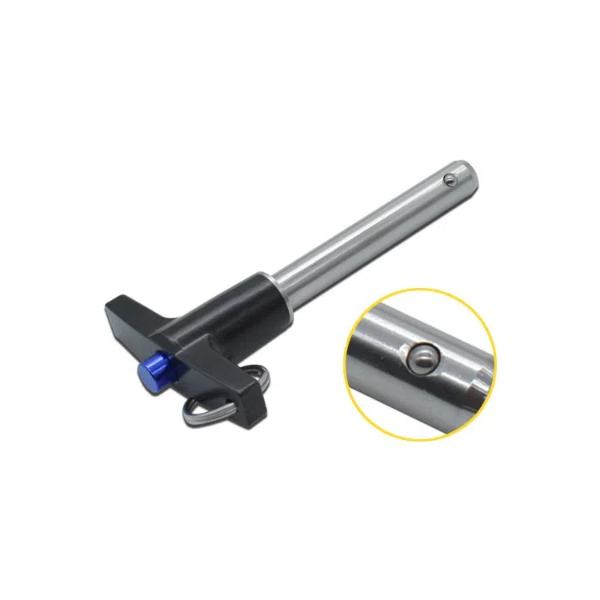
Ball Lock Pin can be widely used in the following industrial environments:
Ball Lock Pin can be widely used in the following industrial environments:
- Automation equipment: e.g. module replacement, guideway positioning, fixture replacement, etc.
- Aerospace/Marine: for removable structures, maintenance access, access brackets, etc.
- Mechanical fixtures/tooling: for quick limiting, adjusting, and clamping operations.
- Spreaders/transportation systems: e.g. shelf positioning pins, fixing points for collapsible structural components.
Ball Lock Pin is an irreplaceable connector for frequent movement and fast installation and disassembly.
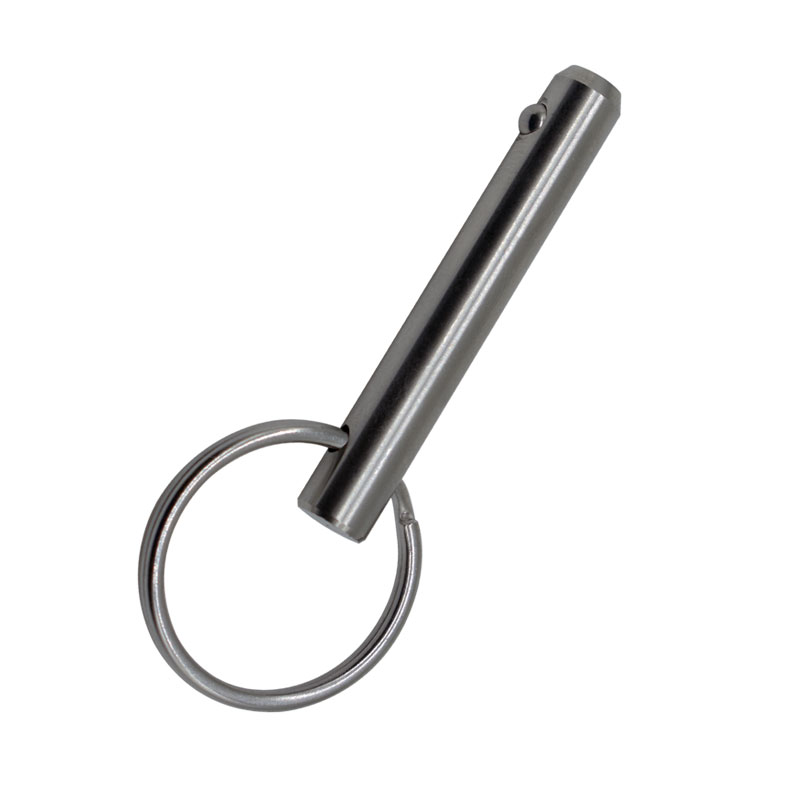
Advantages of Aluminum Ball Lock Pins and Suggestions for Use
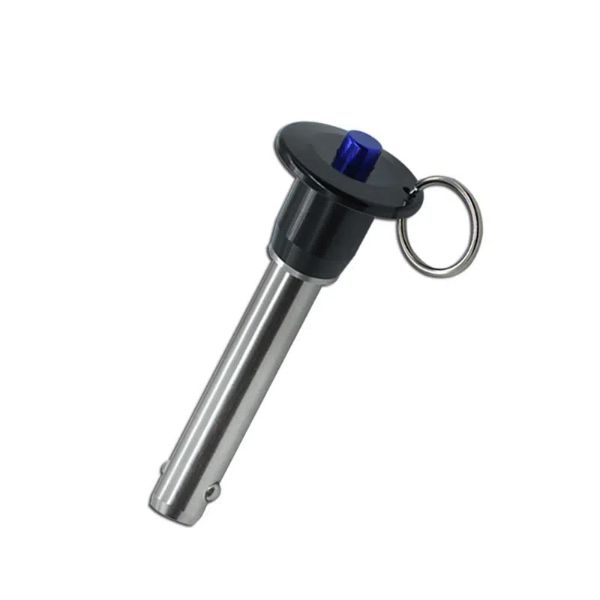
Aluminum Ball Lock Pins offer the following significant advantages over stainless steel products:
Aluminum Ball Lock Pins offer the following significant advantages over stainless steel products:
- Lightweight: Suitable for equipment that requires strict control of overall weight, e.g. aerospace structures, portable devices.
- Aesthetically pleasing and corrosion-resistant: fine anodized surface for use in exposed or exterior parts
- Processing flexibility: more suitable for complex shapes, fine tolerance CNC machining program
- Controllable cost: relatively low material cost while maintaining strength requirements.
Thus, in addressing the question “What Is Aluminum Used For?”, we see that aluminum is not only suitable for structural and frame components, but can also be fully utilized in high-performance quick release parts such as Ball Lock Pins.
Security Fasteners for Critical Applications
Corrosion-Resistant Locking pins
Related Article
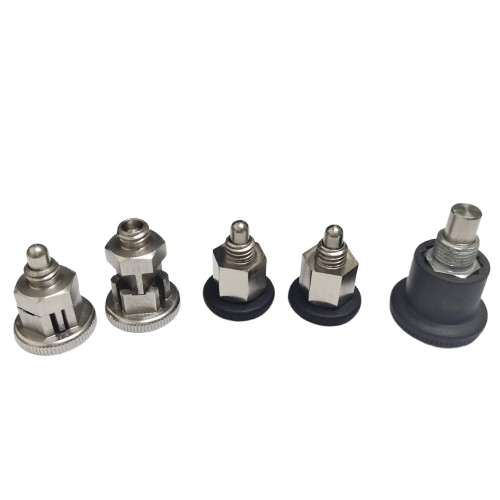
Explore the application of stainless steel materials for customizing mini indexing plungers based on specific operational environments and suitable spaces.
How To Make A Mini Indexing Plunger
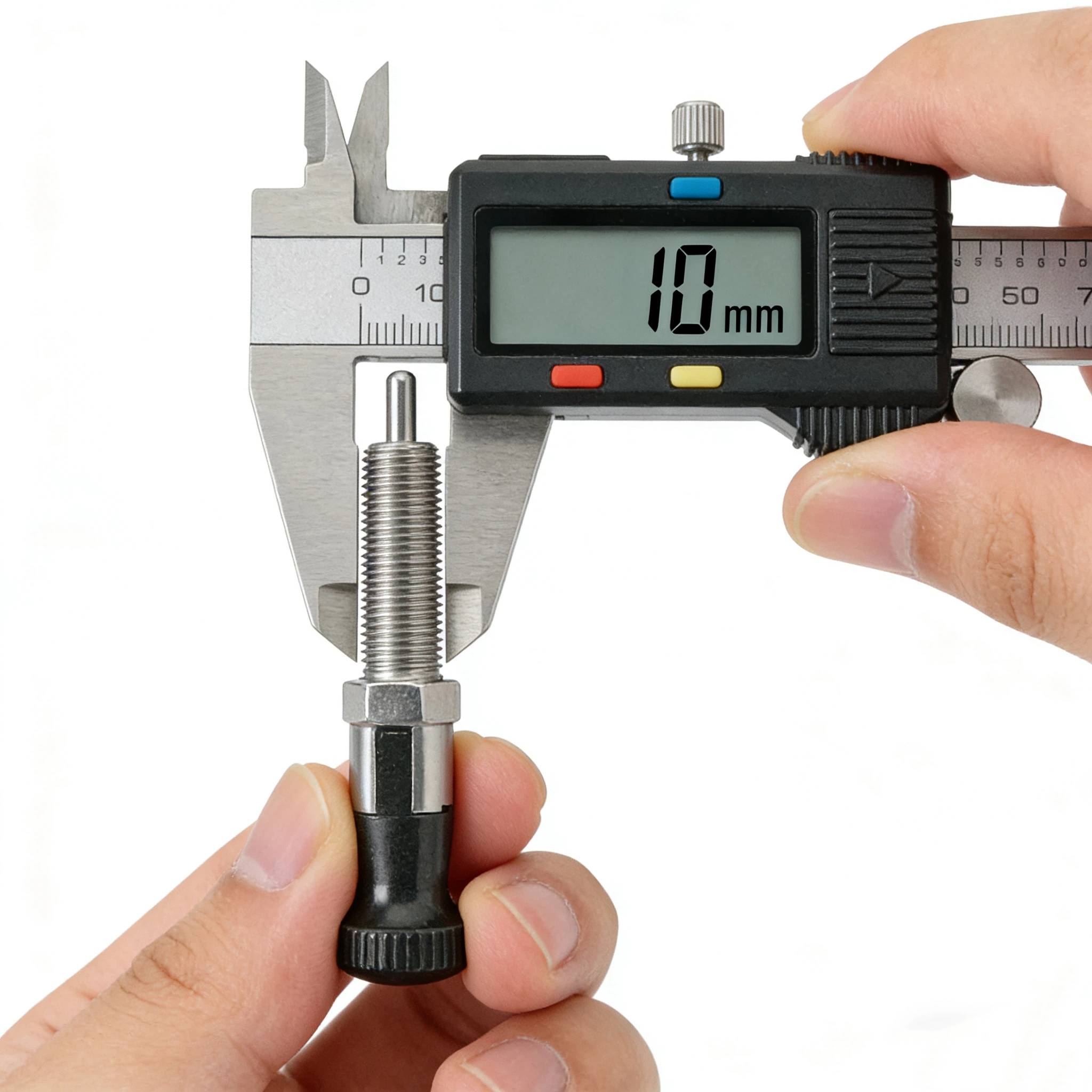
Discover how to choose correct size for indexing elements with confidence. Get precise recommendations that improve positioning accuracy, durability, and overall system performance.
How To Choose Correct Size For Indexing Elements