What Is Ball Lock System
author: Lucia Liu
2025-10-21
Table of Contents
1. Main Components of the Ball Lock System
2. Functions & Advantages of the Ball Lock Mounting System
3. Structure & Function of Face Mount Receiver Bushings
4. Features & Applications of Back Mount Receiver Bushings
5. Support Function of Ball Lock Liners
6. Application Fields of Ball Lock System
7. FAQ
1. Main Components of the Ball Lock System
2. Functions & Advantages of the Ball Lock Mounting System
3. Structure & Function of Face Mount Receiver Bushings
4. Features & Applications of Back Mount Receiver Bushings
5. Support Function of Ball Lock Liners
6. Application Fields of Ball Lock System
7. FAQ
What Is Ball Lock System
In modern manufacturing, rapid mold change, high-precision positioning, and enhanced production efficiency have become key objectives for industrial automation. To meet these demands, the Ball Lock System was developed. Through its precision-engineered locking and positioning mechanisms, it enables faster, safer, and more reliable replacement of molds, fixtures, and jigs.
This article will provide an in-depth exploration of the Ball Lock System's operating principles, key components (including the Ball Lock Mounting System, Face Mount Receiver Bushing, Back Mount Receiver Bushings, and Ball Lock Liner), and its typical applications within the manufacturing industry.
This article will provide an in-depth exploration of the Ball Lock System's operating principles, key components (including the Ball Lock Mounting System, Face Mount Receiver Bushing, Back Mount Receiver Bushings, and Ball Lock Liner), and its typical applications within the manufacturing industry.
Main Components of the Ball Lock System
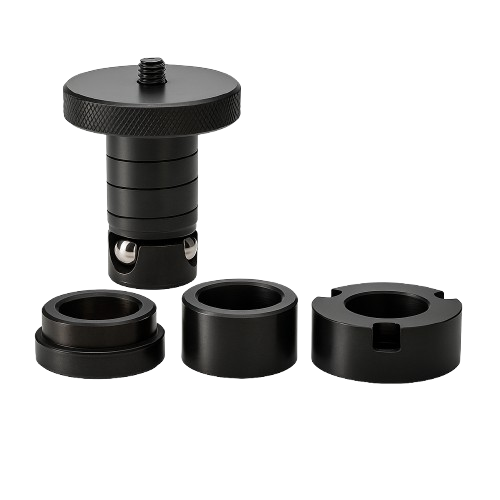
A complete Ball Lock System typically consists of the following parts:
Ball Lock Bolt: The core locking element, which positions the steel ball via an internal spring;
A complete Ball Lock System typically consists of the following parts:
Ball Lock Bolt: The core locking element, which positions the steel ball via an internal spring;


Functions & Advantages of the Ball Lock Mounting System
The Ball Lock Mounting System is the central positioning unit in the entire ball lock structure. It combines a locking pin with a bushing system for fast clamping and highly repeatable positioning.
Its main advantages include:
- Ease of operation: parts can be changed by pressing or pulling out;
- Stable accuracy: repeatable positioning accuracy of ±0.005mm;
- High versatility: it can be adapted to different sizes and structures of jigs and fixtures.
The Ball Lock Mounting System can significantly reduce the clamping time and improve the overall machining efficiency in CNC tooling change systems.
The Ball Lock Mounting System is the central positioning unit in the entire ball lock structure. It combines a locking pin with a bushing system for fast clamping and highly repeatable positioning.
Its main advantages include:
- Ease of operation: parts can be changed by pressing or pulling out;
- Stable accuracy: repeatable positioning accuracy of ±0.005mm;
- High versatility: it can be adapted to different sizes and structures of jigs and fixtures.
The Ball Lock Mounting System can significantly reduce the clamping time and improve the overall machining efficiency in CNC tooling change systems.

Structure & Function of Face Mount Receiver Bushings
Face Mount Receiver Bushings are typically mounted on the surface of a base plate, designed for easy front-side clamping. This structure simplifies the installation process while ensuring stable force distribution and positioning accuracy.
When used in conjunction with Ball Lock Pins, they enable precise insertion and locking, maintaining consistent positioning performance in high-frequency mold change environments.
When used in conjunction with Ball Lock Pins, they enable precise insertion and locking, maintaining consistent positioning performance in high-frequency mold change environments.
Compared to other configurations, the Face Mount Receiver Bushing is better suited for fixture systems with limited space or requiring front-side mounting. It is a common rapid positioning component in the mold manufacturing industry.
Features & Applications of Back Mount Receiver Bushings
Back Mount Receiver Bushings are designed for installation from the rear of the workpiece, providing enhanced structural strength and overall machine stability.
When used in large molds, automated fixtures, or clamping devices subjected to heavy loads, these bushings prevent assembly loosening and ensure reliable positioning during prolonged operation.
When used in large molds, automated fixtures, or clamping devices subjected to heavy loads, these bushings prevent assembly loosening and ensure reliable positioning during prolonged operation.
They complement Face Mount Receiver Bushings, allowing flexible selection based on installation space and mechanical requirements. For high-load equipment, back-mounted bushings offer superior structural support and vibration resistance.

Support Function of Ball Lock Liners
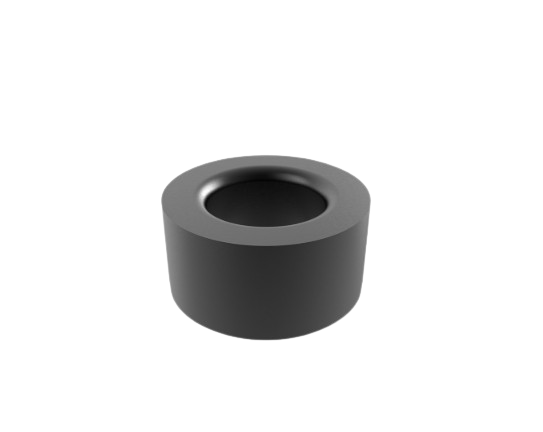
Within the entire system, Ball Lock Liners serve a dual role of guidance and protection.
Their primary function is to provide a precise insertion path for Ball Lock Pins and prevent positioning errors caused by wear. Manufactured from high-hardness materials, Ball Lock Liners effectively extend system lifespan while maintaining positioning accuracy.
Their primary function is to provide a precise insertion path for Ball Lock Pins and prevent positioning errors caused by wear. Manufactured from high-hardness materials, Ball Lock Liners effectively extend system lifespan while maintaining positioning accuracy.
In automated equipment undergoing high-frequency assembly and disassembly, Ball Lock Liners are one of the key components ensuring stable system precision.

Ball Lock System is widely used in the following fields:
1. Quick Mold Change
Through the combination of Ball Lock Pin and Receiver Bushing, it can achieve quick positioning and dismounting of the mould plate, and significantly reduce the downtime.
2. CNC Fixturing System
Ball Lock Mounting System can help CNC operators to quickly fix the workpiece, achieve high repeatable precision positioning, and improve processing stability.
3. Automated Assembly and Robot End-of-Line Tooling
In the automated production line, Face Mount Receiver Bushing and Back Mount Receiver Bushings can be flexibly arranged according to the mounting space to improve the efficiency of robot tool change.
4. Test Fiixtures
The Ball Lock Liner design can effectively reduce wear and improve the repeatable service life of the system and maintain long-term stable accuracy.
1. Quick Mold Change
Through the combination of Ball Lock Pin and Receiver Bushing, it can achieve quick positioning and dismounting of the mould plate, and significantly reduce the downtime.
2. CNC Fixturing System
Ball Lock Mounting System can help CNC operators to quickly fix the workpiece, achieve high repeatable precision positioning, and improve processing stability.
3. Automated Assembly and Robot End-of-Line Tooling
In the automated production line, Face Mount Receiver Bushing and Back Mount Receiver Bushings can be flexibly arranged according to the mounting space to improve the efficiency of robot tool change.
4. Test Fiixtures
The Ball Lock Liner design can effectively reduce wear and improve the repeatable service life of the system and maintain long-term stable accuracy.
Simplify fixture setup with Mocayo Ball Lock System—Ball Lock Mounting System, Face & Back Mount Receiver Bushings, and Ball Lock Liner engineered for accuracy and long life.
Precise Positioning and Reliable Locking: Indexing Plungers Play a Central Role in Car Seat Adjustment Systems
Spring Plunger Ensures Uninterrupted Operation: The Reliability Solution in Modern Tractors
Related Article
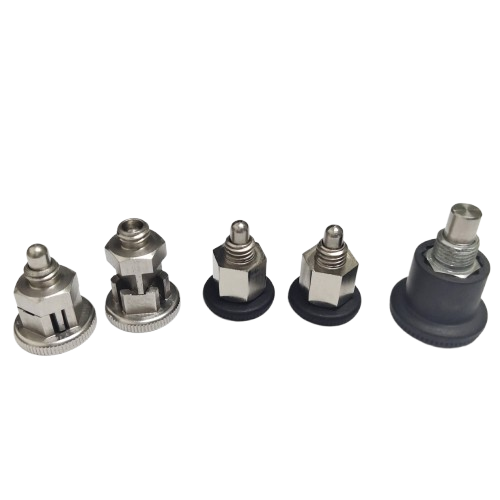
Explore the application of stainless steel materials for customizing mini indexing plungers based on specific operational environments and suitable spaces.
How To Make A Mini Indexing Plunger
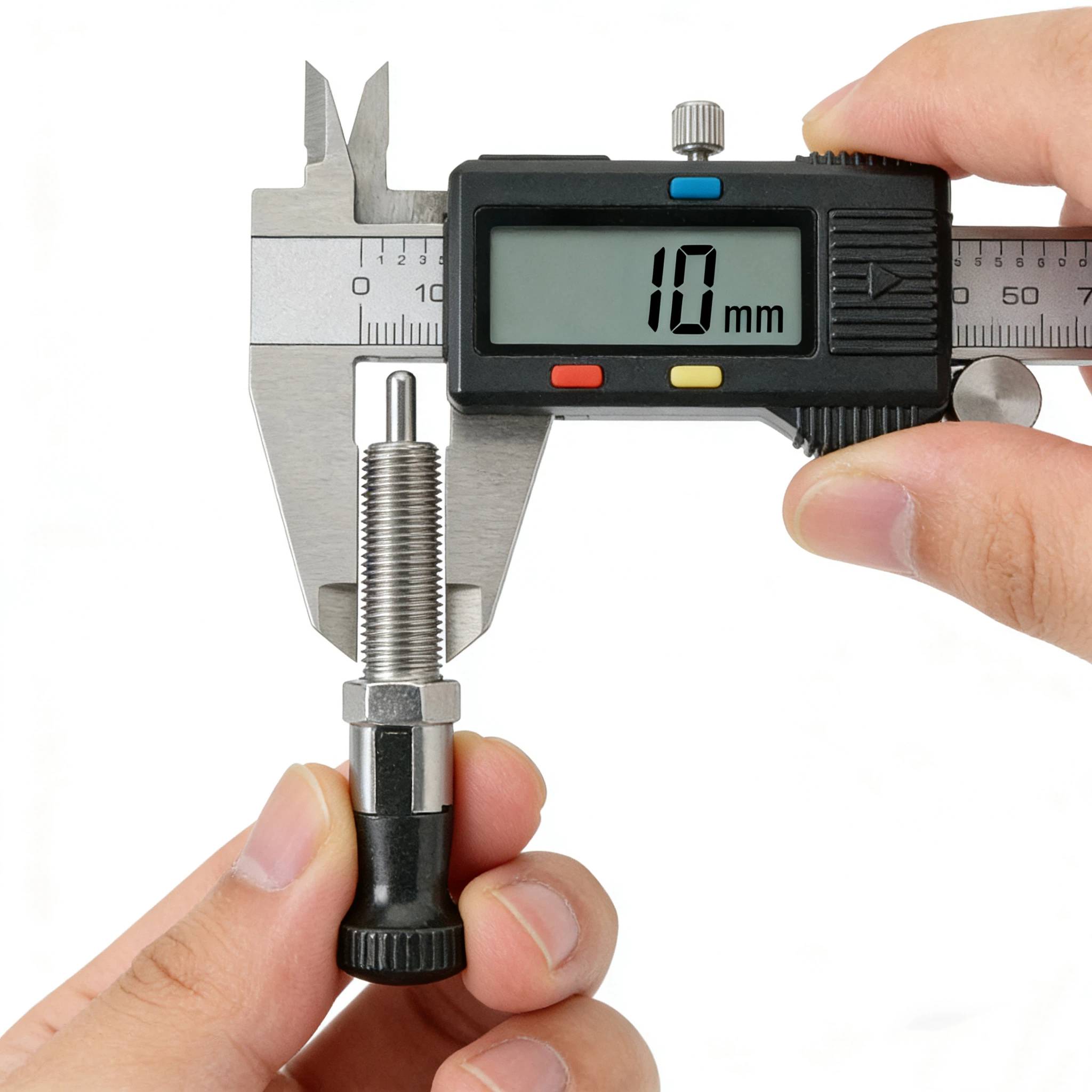
Discover how to choose correct size for indexing elements with confidence. Get precise recommendations that improve positioning accuracy, durability, and overall system performance.
How To Choose Correct Size For Indexing Elements