What Is Stainless Steel 303
author: Lucia Liu
2025-09-08
Table of Contents
What Is Stainless Steel 303
What is stainless steel? Among the numerous stainless steel grades, stainless steel 303 is a distinctive and commonly used variety. It is widely applied in the machining industry due to its excellent machinability. This article will provide an in-depth overview of stainless steel 303's fundamental characteristics, composition, properties, and advantages and disadvantages, helping you gain a better understanding of this material. When you need durability, stainless steel 303 is the answer. Our expertly crafted stainless steel fasteners combine corrosion resistance with excellent machinability.


Basic Introduction to Stainless Steel 303
When answering the question “What is stainless steel?”, we must first clarify that stainless steel is a category of iron-based alloys containing at least 10.5% chromium. It resists corrosion through a passivation film that forms on its surface. Stainless Steel 303 belongs to the austenitic stainless steel category. It is an improved material derived from 304 stainless steel, enhanced with a specific amount of sulfur to boost machinability.
The presence of sulfur grants Stainless Steel 303 exceptional workability, making it particularly suitable for high-speed machining on automatic lathes. Consequently, it is commonly used in the mass production of screws, nuts, bolts, and various mechanical components.
When answering the question “What is stainless steel?”, we must first clarify that stainless steel is a category of iron-based alloys containing at least 10.5% chromium. It resists corrosion through a passivation film that forms on its surface. Stainless Steel 303 belongs to the austenitic stainless steel category. It is an improved material derived from 304 stainless steel, enhanced with a specific amount of sulfur to boost machinability.
The presence of sulfur grants Stainless Steel 303 exceptional workability, making it particularly suitable for high-speed machining on automatic lathes. Consequently, it is commonly used in the mass production of screws, nuts, bolts, and various mechanical components.
Chemical Composition of Stainless Steel 303
When understanding what stainless steel 303 is, its chemical composition is key to grasping its properties. Its primary components are as follows:
Chromium (Cr): Approximately 17-19%, providing excellent corrosion resistance;
Nickel (Ni): Approximately 8-10%, enhancing the steel's toughness and corrosion resistance;
Sulfur (S): Around 0.15%, significantly improving machinability;
Carbon (C): Low content, preserving the steel's toughness.
It is precisely this combination of elements that enables Stainless Steel 303 to achieve a balance between machinability and corrosion resistance.
When understanding what stainless steel 303 is, its chemical composition is key to grasping its properties. Its primary components are as follows:
Chromium (Cr): Approximately 17-19%, providing excellent corrosion resistance;
Nickel (Ni): Approximately 8-10%, enhancing the steel's toughness and corrosion resistance;
Sulfur (S): Around 0.15%, significantly improving machinability;
Carbon (C): Low content, preserving the steel's toughness.
It is precisely this combination of elements that enables Stainless Steel 303 to achieve a balance between machinability and corrosion resistance.
Performance Characteristics of Stainless Steel 303
Excellent Machinability
The greatest advantage of stainless steel 303 lies in its outstanding machinability. The addition of sulfur results in shorter chips during cutting, reducing tool wear and enhancing production efficiency.
The greatest advantage of stainless steel 303 lies in its outstanding machinability. The addition of sulfur results in shorter chips during cutting, reducing tool wear and enhancing production efficiency.
Good Corrosion Resistance
Although stainless steel 303 offers lower corrosion resistance than 304, it maintains excellent oxidation resistance in daily use and most industrial environments.
Although stainless steel 303 offers lower corrosion resistance than 304, it maintains excellent oxidation resistance in daily use and most industrial environments.
Suitable for Mass Production
Due to its high machinability, stainless steel 303 is particularly well-suited for automated mass production. It is widely used in fasteners, bearings, and mechanical components.
Due to its high machinability, stainless steel 303 is particularly well-suited for automated mass production. It is widely used in fasteners, bearings, and mechanical components.
Therefore, when asked about the practical performance of stainless steel, stainless steel 303 serves as a prime example, balancing corrosion resistance with efficient machining requirements.
Disadvantages of Stainless Steel 303
1. Slightly lower corrosion resistance
Due to the presence of elemental sulphur, the corrosion resistance of stainless steel 303 is reduced compared with that of ss 304, and it is especially susceptible to corrosion in strong acid or alkali environments.
2. poor welding performance
The presence of sulphur will make stainless steel 303 has poor welding performance, easy to produce cracks in the welding process, so it is not suitable for structural parts that need a lot of welding.
3. Unsuitable for marine environments
In environments with a high chloride ion content, such as seashores or seawater contact conditions, stainless steel 303 is not sufficiently resistant to corrosion and may quickly develop rusting problems.
Typical Applications for Stainless Steel 303
Due to its unique properties, stainless steel 303 has an important place in industrial production. Typical applications include:
- Fasteners: screws, nuts, bolts and other parts that require efficient mass production;
- Mechanical parts: gears, bearings, pins;
- Automatic lathe parts: suitable for high speed cutting production;
- General industrial equipment: food processing machinery, medical equipment and so on.
These applications fully reflect the real value of what is stainless steel 303: it is a highly advantageous material in scenarios where efficient machining is required.
Due to its unique properties, stainless steel 303 has an important place in industrial production. Typical applications include:
- Fasteners: screws, nuts, bolts and other parts that require efficient mass production;
- Mechanical parts: gears, bearings, pins;
- Automatic lathe parts: suitable for high speed cutting production;
- General industrial equipment: food processing machinery, medical equipment and so on.
These applications fully reflect the real value of what is stainless steel 303: it is a highly advantageous material in scenarios where efficient machining is required.
Density Stainless Steel
Quality CNC Machining Parts: Built To Exact Specifications
Related Article
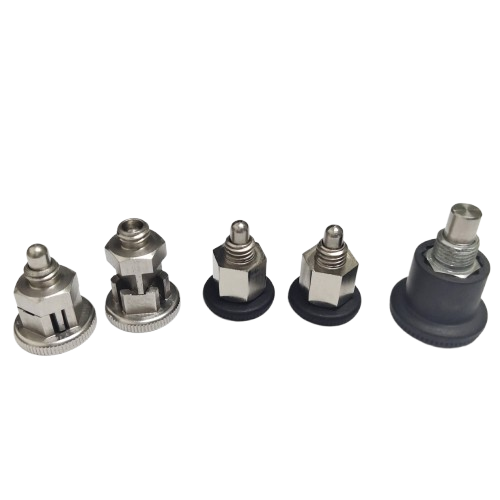
Explore the application of stainless steel materials for customizing mini indexing plungers based on specific operational environments and suitable spaces.
How To Make A Mini Indexing Plunger
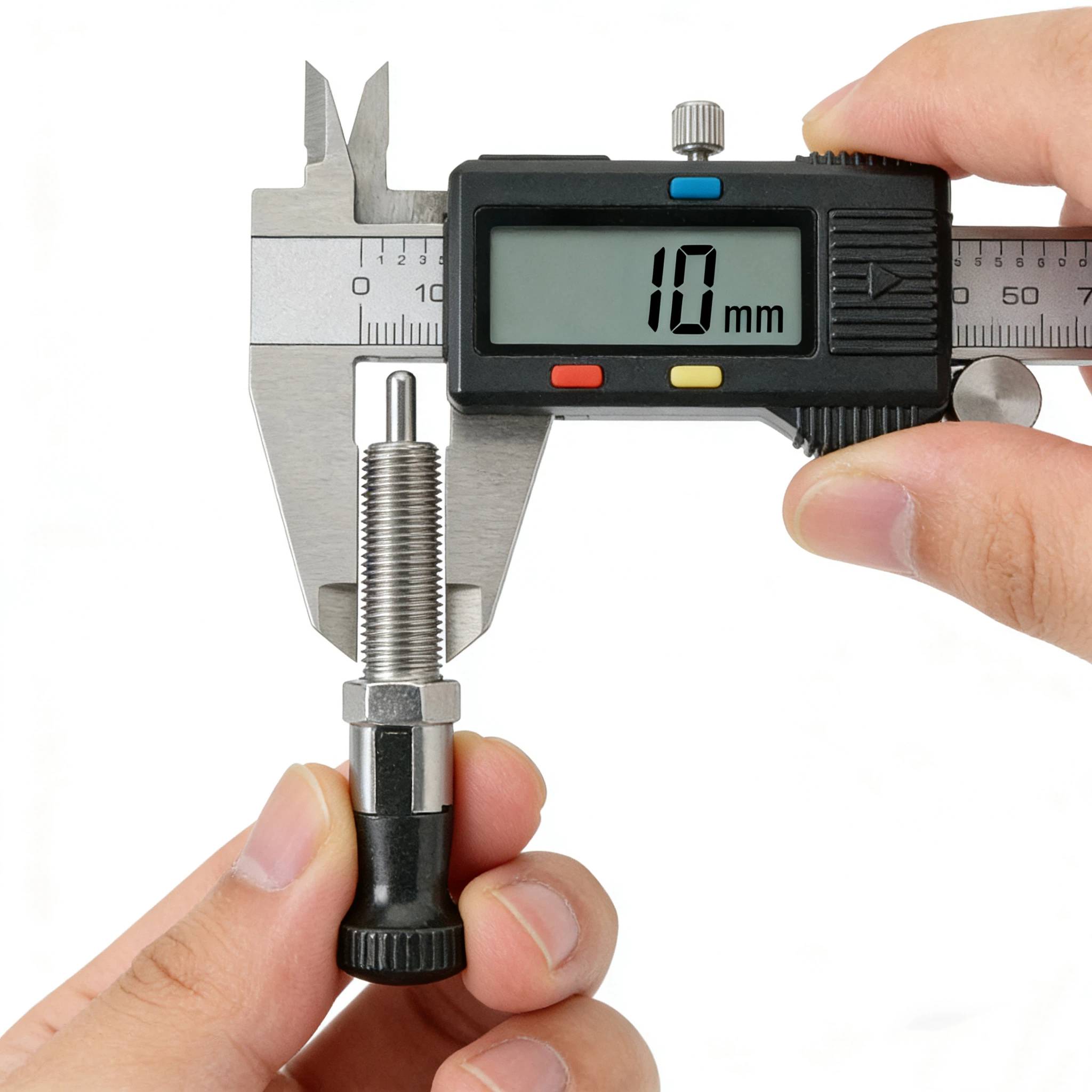
Discover how to choose correct size for indexing elements with confidence. Get precise recommendations that improve positioning accuracy, durability, and overall system performance.
How To Choose Correct Size For Indexing Elements