What Is the Difference Between 304 and 316 Stainless Steel-Choose the Right Quick Release Pin
What Is the Difference Between 304 and 316 Stainless Steel — Choose the Right Quick Release Pin
In the field of industrial fasteners, selecting the right quick release pin directly affects equipment reliability and maintenance costs. As a critical connecting component, the choice of material is especially important. This article offers an in-depth comparison between 304 and 316 stainless steel and provides a professional guide to selecting Mocayo's quick release pins.

1. Key Performance Comparison Between 304 and 316 Stainless Steel
Chemical Composition Analysis
304 stainless steel, the most commonly used austenitic stainless steel, contains 18% chromium and 8% nickel (often called 18/8 stainless steel), offering excellent all-around performance. On the other hand, 316 stainless steel is enhanced with an additional 2–3% molybdenum, which significantly improves its corrosion resistance. Laboratory data show that under identical chloride environments, the pitting resistance of 316 stainless steel is more than three times higher than that of 304. Moreover, the low-carbon version, 316L (with carbon content ≤0.03%), further improves the corrosion resistance of welded areas.
Corrosion Resistance Test Data
Standard salt spray testing (ASTM B117) reveals that 304 stainless steel begins to show rust spots after 200 hours, while 316 stainless steel can withstand over 1000 hours without visible corrosion. In acidic environments with pH ≤ 3, 316 demonstrates even greater advantages. A case study from a chemical company showed that quick release pins made from 316 stainless steel achieved a service life five times longer than their 304 counterparts in acid pipeline systems.
Mechanical Properties and Workability
Although 316 stainless steel exhibits slightly higher initial tensile strength (about 10% higher than 304), it has a lower work hardening rate, making it more suitable for manufacturing complex-shaped components. It’s worth noting that both materials can have their hardness increased through cold working, but 304 responds more significantly. Regarding welding, 316 stainless steel offers better thermal stability and is more suitable for environments requiring frequent welding.
2. Material Selection Standards for Quick Release Pins
Environmental Factors Assessment
For coastal areas, we strongly recommend using 316 stainless steel quick release pins. Data from an offshore wind power project showed that maintenance intervals for 316 quick release pins were four times longer than for 304 under salt spray conditions. While 304 stainless steel can meet the basic needs of food processing equipment, upgrading to 316 enhances resistance against acidic cleaning agents. In high-temperature environments (above 60℃), the superior stability of 316 becomes even more evident.
Load Conditions Analysis
For heavy-duty applications, we recommend specially heat-treated 316 quick release pins, which can achieve up to a 30% improvement in dynamic load capacity. In vibration environments, 316 stainless steel offers 15–20% higher fatigue strength compared to 304. Our engineering team has also developed a dedicated load calculation tool to assist customers in accurately determining the specifications they need.
Cost-Benefit Considerations
Although the initial cost of 316 stainless steel is 30–50% higher than 304, from a full life-cycle perspective, 316 often proves more economical in harsh environments. A petrochemical company's cost analysis revealed that over five years, using 316 quick release pins resulted in a 40% reduction in total cost compared to using 304.
3. Recommended High-Quality Quick Release Pin Products
Premium 316 Stainless Steel Series
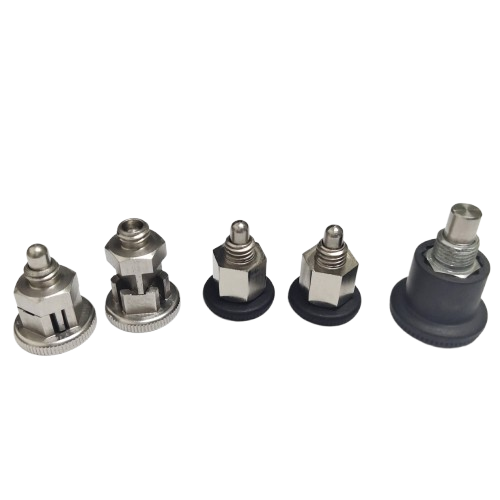
Our meticulously crafted MLPS series of 316 stainless steel quick release pins are designed for the most demanding applications. Made from imported 316L stainless steel bars and treated with special heat processes, these products combine outstanding corrosion resistance with superior mechanical strength. Key features include:
-
Material Certification: Certified by TÜV Rheinland and other international agencies
-
Surface Treatment: Micro-arc oxidation technology achieving surface hardness up to HV800
-
Performance Parameters:
-
Salt Spray Resistance: Over 1200 hours without red rust (ASTM B117 standard)
-
Tensile Strength: ≥700 MPa
-
Operating Temperature Range: -60℃ to 400℃
-
-
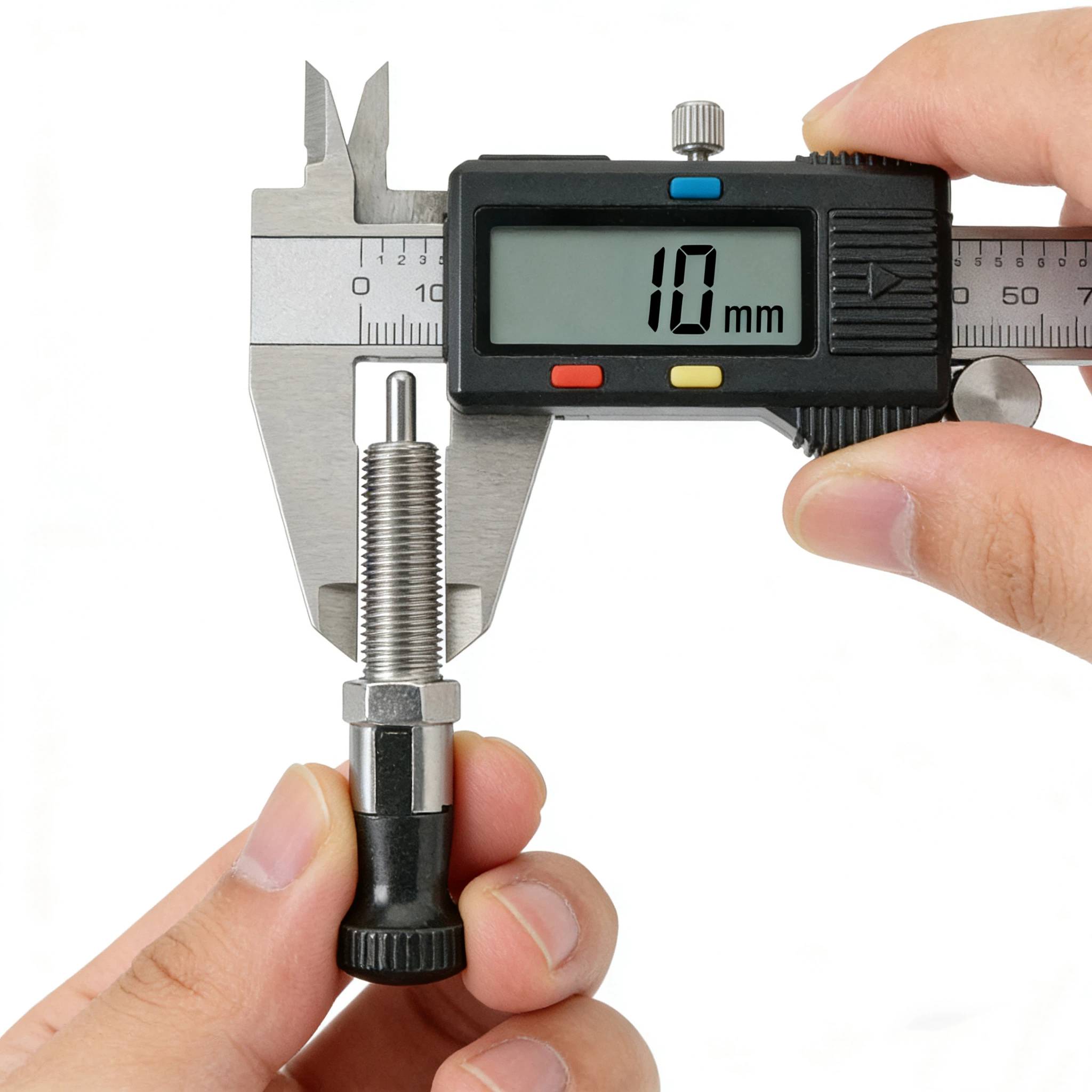
Size Options: Available in diameters from 5mm to 30mm, with custom non-standard options supported
Application Example: After adopting this series on an offshore oil platform, maintenance intervals were extended from quarterly to once every two years, saving more than ¥500,000 annually in maintenance costs.

Economical 304 Stainless Steel Series
For standard industrial applications, our MOX series offers an outstanding cost-effective solution:
-
Material and Processing:
-
Sourced from Baosteel 304 stainless steel
-
Manufactured using precision cold heading technology
-
Optional surface hardening treatment (HRC35–40)
-
-
Product Advantages:
-
35% lower cost compared to 316 series
-
Sufficient inventory for rapid 72-hour emergency deliveries
-
Multiple surface finish options, including zinc and nickel plating
-
-
Technical Parameters:
-
Salt Spray Resistance: 500 hours without red rust
-
Tensile Strength: ≥550 MPa
-
Dimensional Accuracy: ±0.02mm
-
Application Example: A major automotive parts manufacturer achieved a 28% reduction in annual procurement costs and maintained a zero-failure record after fully switching to the MOX series quick release pins on its welding production lines.


Customized Solutions
We offer a full range of customization services for industries with specific needs:
-
Ultra-Low Temperature Series:
-
Made from 316L stainless steel
-
Special cryogenic treatment
-
Suitable for temperatures from -196℃ to 300℃
-
Successfully applied in LNG storage projects
-
-
Food and Medical Grade Series:
-
Compliant with FDA certification
-
Electropolished surfaces (Ra≤0.4μm)
-
Material certification reports available
-
-
Anti-Magnetic Series:
-
Special alloy composition
-
Magnetic permeability <1.01
-
Widely used in precision instrument manufacturing
-
Customization Process:
-
Requirement Analysis (response within 2 business days)
-
Design Proposal (including 3D models)
-
Sample Trial Production (delivered in 7–15 days)
-
Mass Production (strict quality control throughout)
Mocayo's engineering team, with over 10 years of industry experience, provides optimal solutions tailored to specific customer needs. Recently, we successfully customized anti-contamination quick release pins for a semiconductor equipment manufacturer, effectively solving the cleanroom particulate control challenge and receiving high praise. All our products come with complete technical documentation, including material certificates, performance testing data, and installation manuals.Speed up assembly with durable quick release pins! Perfect for machinery, automotive, and aerospace applications. Features spring-loaded designs for tool-free operation. Shop industrial-grade pins now!
What Is Carbon Steel Made Of – Selection Guide for Carbon Steel Indexing Plunger Pin
Types of Indexing Plunger Threads And Materials
Related Article