What Are The Main Locking Mechanisms Used In Quick Release Pins
What Are the Main Locking Mechanisms Used in Quick Release Pins?
Quick release pins are versatile fastening devices widely used in applications requiring rapid and secure connections. Their design allows for easy insertion and removal, making them ideal for equipment that requires frequent assembly and disassembly. A critical aspect of quick release pins is their locking mechanism, which ensures stability and safety during use. This article explores the main locking mechanisms used in quick release pins, their features, and their applications.
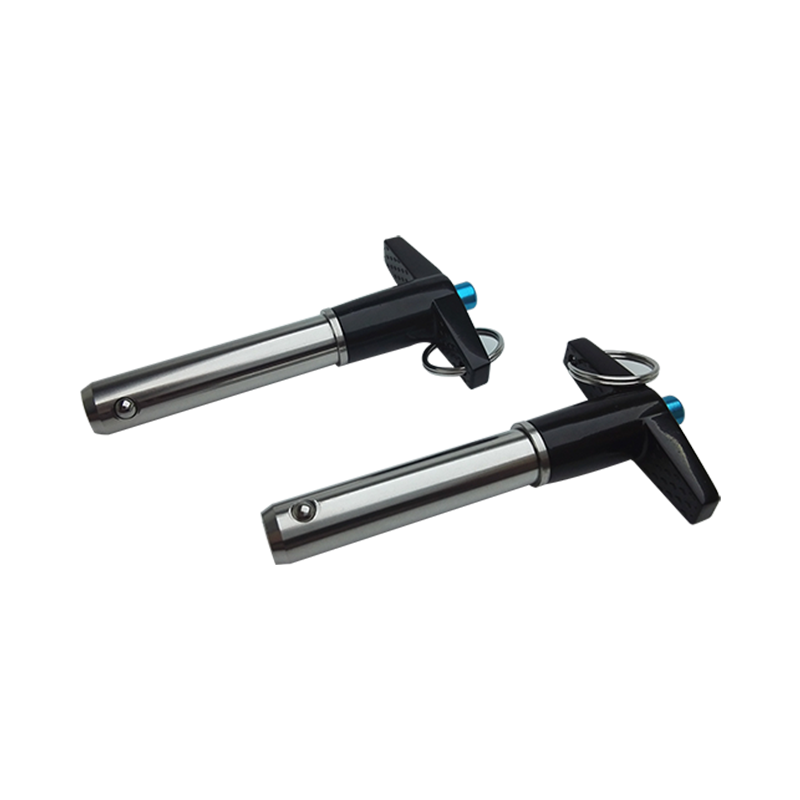
1. Ball Lock Mechanism
The ball lock mechanism is one of the most common and widely used locking systems in quick release pins. It consists of a spring-loaded plunger with balls that protrude from the pin's shaft when engaged. When the pin is inserted into a hole, the balls retract and then expand into a recess or groove, locking the pin in place. To release the pin, the plunger is pulled back, allowing the balls to retract and the pin to be removed.
-
Features: Simple design, reliable locking, and ease of use.
-
Applications: Commonly used in automotive, aerospace, and industrial machinery.
2. Spring-Loaded Plunger Mechanism
This mechanism uses a spring-loaded plunger that engages with a detent or hole in the mating part. When the pin is inserted, the plunger snaps into place, securing the pin. To release, the plunger is manually disengaged by pulling or pressing a button.
-
Features: Provides a secure hold and is easy to operate.
-
Applications: Ideal for lightweight applications such as furniture, fixtures, and consumer products.
3. Lever Lock Mechanism
The lever lock mechanism uses a handle or lever to actuate the locking mechanism. When the lever is flipped, it engages a cam or other locking feature to secure the pin. Releasing the lever disengages the lock, allowing the pin to be removed.
-
Features: Offers a strong and visible locking indication, making it easy to verify if the pin is securely locked.
-
Applications: Suitable for heavy-duty applications like construction equipment, agricultural machinery, and marine hardware.
4. Push Button Mechanism
The push button mechanism is a user-friendly locking system where a button on the pin's head is pressed to release the locking balls or plunger. When the button is released, the locking mechanism engages automatically.
-
Features: Quick and easy operation with minimal effort.
-
Applications: Often used in medical devices, fitness equipment, and light industrial applications.
5. Threaded Lock Mechanism
Some quick release pins feature a threaded locking mechanism, where a threaded collar or nut is tightened to secure the pin in place. This provides a more permanent and tamper-resistant locking solution.
-
Features: High security and resistance to vibration or accidental release.
-
Applications: Suitable for applications requiring a more permanent connection, such as in heavy machinery or structural assemblies.
6. Cam Lock Mechanism
The cam lock mechanism uses a rotating cam to secure the pin. When the cam is rotated, it expands or engages with a groove, locking the pin in place. Rotating the cam in the opposite direction releases the pin.
-
Features: Provides a strong and reliable lock, often used in high-stress environments.
-
Applications: Commonly found in automotive, aerospace, and military equipment.
7. Magnetic Lock Mechanism
Magnetic locking mechanisms use magnets to secure the pin in place. The magnetic force holds the pin securely, and releasing the lock requires overcoming the magnetic pull.
-
Features: Smooth operation and no mechanical wear.
-
Applications: Ideal for applications requiring clean and quiet operation, such as in medical or electronic equipment.
8. Safety Wire or Cotter Pin Mechanism
In some quick release pins, a secondary locking mechanism, such as a safety wire or cotter pin, is used to prevent accidental release. This adds an extra layer of security.
-
Features: Provides additional safety in critical applications.
-
Applications: Used in aerospace, military, and high-vibration environments.
9. Choosing the Right Locking Mechanism
Selecting the appropriate locking mechanism depends on several factors, including:
-
Load Requirements: Heavy-duty applications may require stronger mechanisms like lever locks or cam locks.
-
Frequency of Use: For frequent assembly and disassembly, ball lock or push button mechanisms are ideal.
-
Environmental Conditions: Corrosive or high-vibration environments may require threaded or safety wire mechanisms.
-
Ease of Use: User-friendly mechanisms like push buttons or spring-loaded plungers are suitable for applications requiring quick operation.
Discover our pins with ball on end and ball lock pin mechanisms for secure and efficient fastening in industrial applications. Durable and reliable, they ensure smooth operation. Contact us for custom solutions today.
How Often Should Quick Release Pins Be Replaced
Do Spring Plungers Need Lubrication
Related Article