304 Chemical Composition
304 Chemical Composition
In industrial manufacturing and precision assembly, the selection of metal materials is critical to product performance. Stainless steel 304 is one of the most widely used types of stainless steel, thanks to its excellent chemical composition and physical properties, making it ideal for the production of various industrial components. This article will provide an in-depth analysis of the chemical composition of 304 stainless steel and further introduce the structural characteristics and performance advantages of stainless steel indexing plungers made from this material.

What is 304 stainless steel?
304 stainless steel is an austenitic stainless steel that is widely used in various industries such as construction, mechanical processing, food equipment, and daily hardware due to its excellent corrosion resistance, processability, and stable mechanical properties. Its performance characteristics mainly stem from its unique chemical composition.
304 stainless steel is an austenitic stainless steel that is widely used in various industries such as construction, mechanical processing, food equipment, and daily hardware due to its excellent corrosion resistance, processability, and stable mechanical properties. Its performance characteristics mainly stem from its unique chemical composition.
Core Content of 304 Chemical Composition
304 Chemical Composition refers to the chemical composition ratio of 304 stainless steel. The reasonable combination of different elements gives 304 its excellent comprehensive performance. The standard composition is as follows (by mass percentage):
304 Chemical Composition refers to the chemical composition ratio of 304 stainless steel. The reasonable combination of different elements gives 304 its excellent comprehensive performance. The standard composition is as follows (by mass percentage):
Chromium (Cr): 18.0% – 20.0%
Primarily responsible for corrosion resistance and enhancing hardness, it determines the strength of 304 stainless steel's oxidation resistance.
Primarily responsible for corrosion resistance and enhancing hardness, it determines the strength of 304 stainless steel's oxidation resistance.
Nickel (Ni): 8.0% – 10.5%
Enhances the material's ductility, toughness, and resistance to acid-alkali corrosion, and is a key element in maintaining the austenitic structure.
Enhances the material's ductility, toughness, and resistance to acid-alkali corrosion, and is a key element in maintaining the austenitic structure.
Carbon (C): ≤0.08%
The lower the carbon content, the better the weldability, and it also helps reduce the risk of corrosion cracks.
The lower the carbon content, the better the weldability, and it also helps reduce the risk of corrosion cracks.
Manganese (Mn): ≤2.0%
Enhances the strength of the steel and improves its hot working properties.
Enhances the strength of the steel and improves its hot working properties.
Silicon (Si): ≤1.0%
Improves oxidation resistance and enhances strength.
Improves oxidation resistance and enhances strength.
Phosphorus (P) and Sulfur (S): Extremely low (P ≤ 0.045%, S ≤ 0.03%)
These elements affect the steel's toughness and corrosion resistance, so their levels are strictly controlled.
These elements affect the steel's toughness and corrosion resistance, so their levels are strictly controlled.
This precise 304 chemical composition ensures that 304 stainless steel offers comprehensive advantages such as corrosion resistance, wear resistance, heat resistance, and ease of processing in most environments. Especially in food processing, medical devices, and outdoor equipment, stainless steel 304 is regarded as a safe and reliable high-quality material.
Overview of the Properties of 304 Stainless Steel
Through a reasonable chemical composition, 304 stainless steel exhibits the following core properties:
Through a reasonable chemical composition, 304 stainless steel exhibits the following core properties:
Excellent corrosion resistance
It can withstand most weak acids, weak alkalis, and neutral environments, making it suitable for a wide range of indoor and outdoor applications.
It can withstand most weak acids, weak alkalis, and neutral environments, making it suitable for a wide range of indoor and outdoor applications.
Stable mechanical strength
Tensile strength typically exceeds 520 MPa, with excellent compressive strength and impact resistance.
Tensile strength typically exceeds 520 MPa, with excellent compressive strength and impact resistance.
Good processability and weldability
Suitable for conventional machining, stamping, bending, and welding processes, facilitating the production of complex structural components.
Suitable for conventional machining, stamping, bending, and welding processes, facilitating the production of complex structural components.
Aesthetic appeal and ease of cleaning
High surface finish, easy to clean and maintain, widely used in applications requiring high cleanliness.
High surface finish, easy to clean and maintain, widely used in applications requiring high cleanliness.
These performance advantages are the foundation for the widespread application of stainless steel 304 in various precision components (such as indexing plungers).
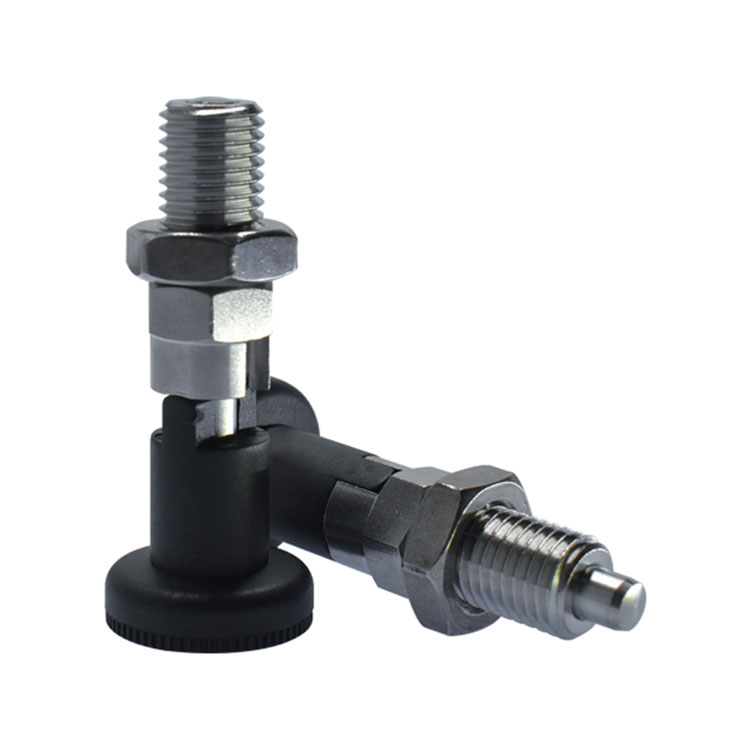

What is a Stainless Steel Indexing Plunger?
A stainless steel indexing plunger, also known as a stainless steel positioning plunger, is a mechanical component used for rapid positioning, fixation, and unlocking in mechanical equipment. It controls the extension and retraction of the plunger through an internal spring mechanism, enabling precise position control. It is widely applied in automated equipment, tooling fixtures, transportation vehicles, instruments, and other systems.
Basic Structural Components of an Indexing Plunger:
Main Body: The primary load-bearing component, typically made of stainless steel 304 to ensure overall corrosion resistance and strength.
Main Body: The primary load-bearing component, typically made of stainless steel 304 to ensure overall corrosion resistance and strength.
Plunger: The movable positioning component that extends and retracts, performing the locking function.
Spring Assembly: Provides stable return force to ensure accurate plunger reset.
Button or Knob: Controls plunger movement, enabling manual or automatic operation.
High-quality indexing plungers rely not only on precise structural design but also on superior material support. The stainless steel indexing plunger manufactured using stainless steel 304 achieves significantly enhanced performance reliability. The low carbon content and high chromium-nickel ratio of 304 confer multiple advantages on the product, including corrosion resistance, fatigue resistance, and extended service life.
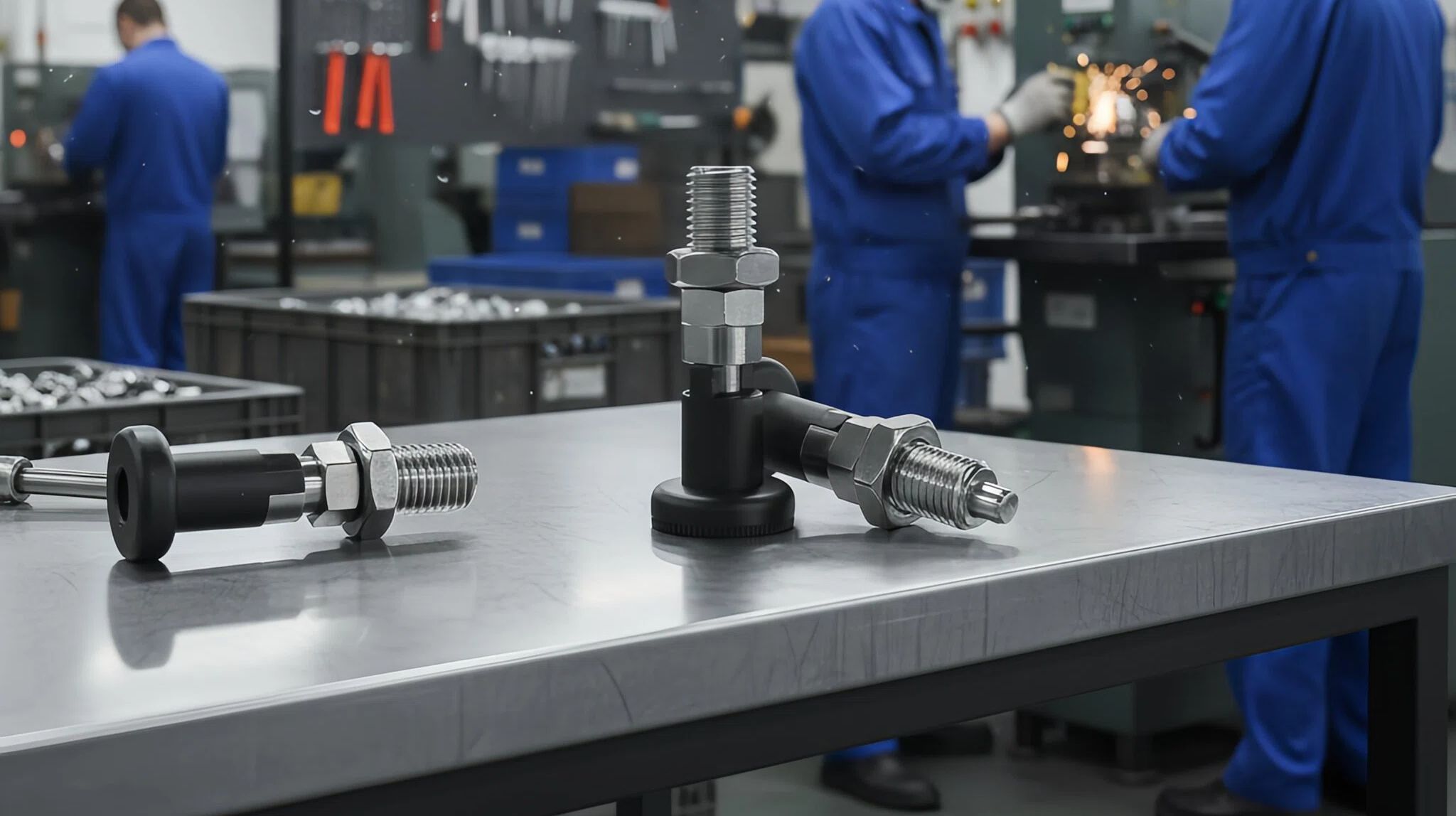
Precision-crafted indexing plunger with trusted 304 chemical composition—built to withstand industrial environments and heavy use.
Aluminium Properties
AISI 316 Stainless Steel Ball Locking Pins