How to Anodize Aluminum
How to Anodize Aluminum
Basic explanation of the anodising process
Anodising is a surface treatment technology that produces a dense oxide film on the surface of aluminium alloys by electrochemical methods. Mocayo adopts international advanced anodic oxidation production line, the thickness of the film can be precisely controlled in the range of 5-50μm.
Anodising is a surface treatment technology that produces a dense oxide film on the surface of aluminium alloys by electrochemical methods. Mocayo adopts international advanced anodic oxidation production line, the thickness of the film can be precisely controlled in the range of 5-50μm.
In terms of process type selection, we offer two main options: normal anodising (film thickness 5-25μm) is suitable for decorative purposes; hard anodising (film thickness 25-50μm) is more suitable for industrial parts that require high wear resistance. In terms of process parameters, the electrolyte temperature is controlled at 18±2°C and the current density is maintained at 1.5-2.5A/dm². The precise control of these key parameters ensures the quality of the oxide film is stable. Learn how to anodize aluminum for improved corrosion resistance, durability, and appearance. Step-by-step guide for effective aluminum anodizing.
The surface hardness of anodized aluminium alloy can reach HV300-500, and the corrosion resistance is improved by 5-10 times, meanwhile, it has good insulating property (resistivity 10⁹-10¹²Ω-cm).Mocayo's test data shows that the aluminium alloy parts treated with hard anodic oxidizing treatment can achieve more than 500 hours of no rusting performance in the salt spray test. Mocayo's test data shows that hard anodised aluminium alloy parts can achieve more than 500 hours in salt spray test without rusting.
Advantages of Mocayo's anodised quick release pins
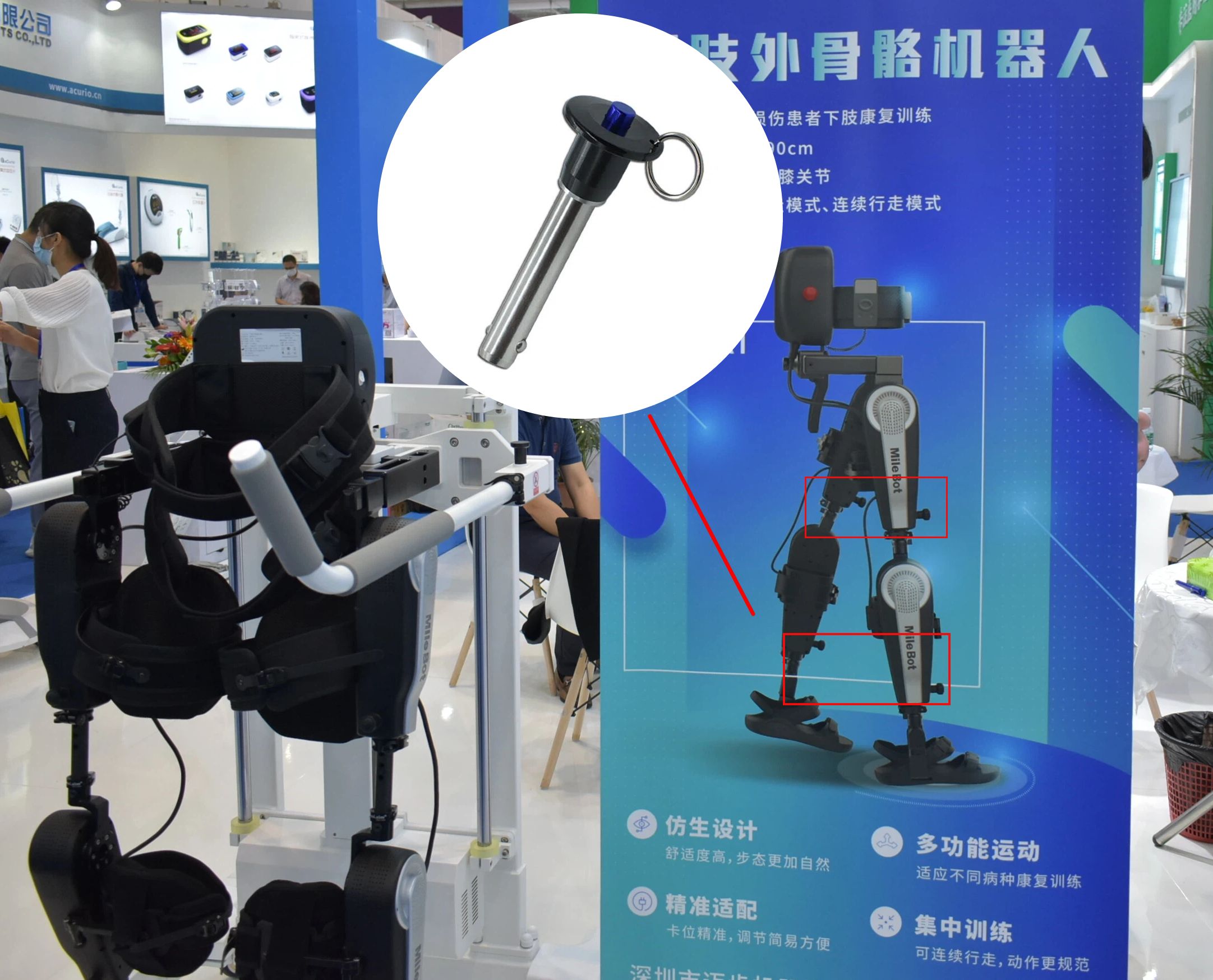
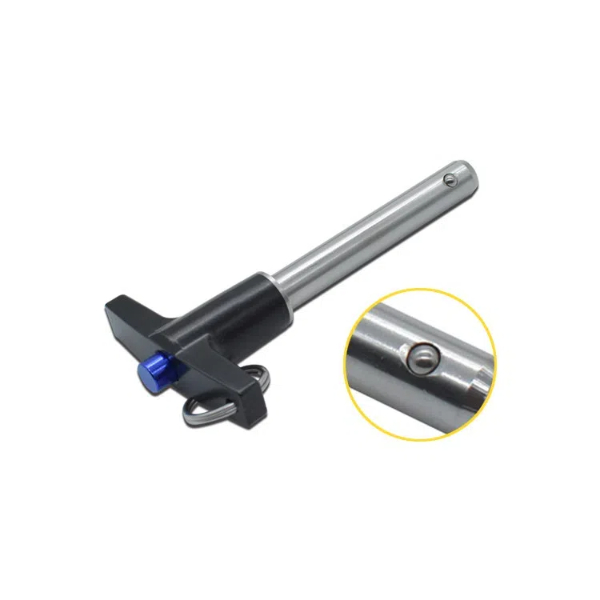
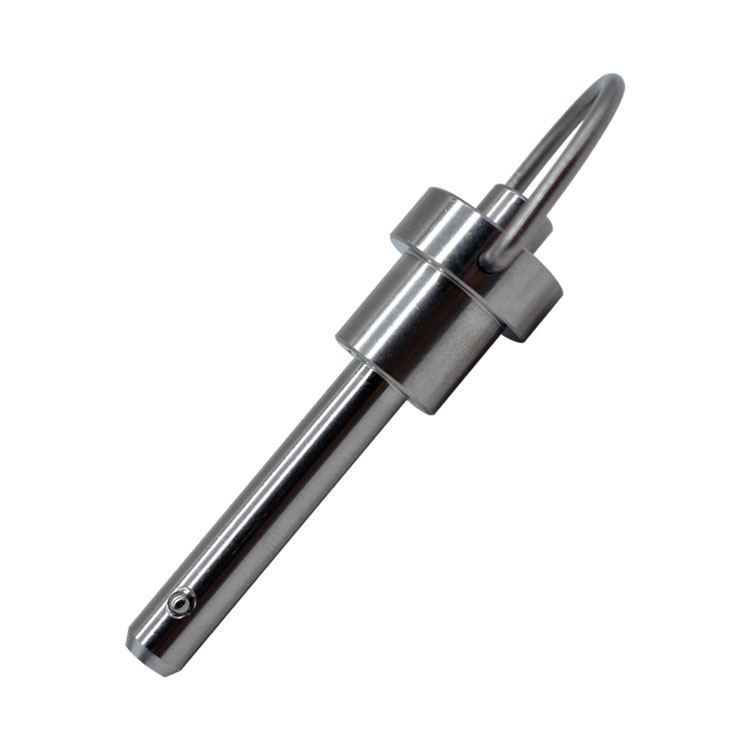
Mocayo's anodised quick release pins are a typical application of the hard anodising process. The product is made of 7075 aviation aluminium alloy precision machining, after special hard anodic oxidation treatment, the surface hardness reaches above HV450, and the wear resistance is 2-3 times of ordinary steel.
Mocayo's anodised quick release pins are a typical application of the hard anodising process. The product is made of 7075 aviation aluminium alloy precision machining, after special hard anodic oxidation treatment, the surface hardness reaches above HV450, and the wear resistance is 2-3 times of ordinary steel.
Our hard anodising process has three main technical features: firstly, it adopts pulse power supply technology to ensure uniform oxide film in deep holes, blind holes and other complex parts; secondly, the original low temperature electrolysis process (10-15℃) can obtain a denser oxide film structure; and lastly, it adopts the double sealing technology, which greatly improves the corrosion resistance of the product. The product has passed the ISO9227 standard salt spray test for 500 hours, which is far better than similar products in the market.
These quick-release pins are widely used in construction machinery, aerospace and other fields. Taking an excavator manufacturer as an example, after adopting our anodised quick release pins, the service life of the product was extended from 6 months to more than 2 years, and the maintenance cost was reduced by 60%. All the products have gone through 12 quality inspection processes, such as 3-coordinate measurement, hardness test, etc., before leaving the factory to ensure 100% pass rate.


Anodising process
Mocayo's anodising line follows a standardised process. The pre-treatment stage includes: ultrasonic degreasing (5-10 minutes), alkaline etching (50-60°C, 3-5 minutes), and neutralisation treatment (nitric acid solution, 2 minutes at room temperature) to ensure the surface of the substrate is clean and activated. The process control at this stage directly affects the bonding of the final oxide film.
Mocayo's anodising line follows a standardised process. The pre-treatment stage includes: ultrasonic degreasing (5-10 minutes), alkaline etching (50-60°C, 3-5 minutes), and neutralisation treatment (nitric acid solution, 2 minutes at room temperature) to ensure the surface of the substrate is clean and activated. The process control at this stage directly affects the bonding of the final oxide film.
The anodising core process is carried out in sulphuric acid electrolyte at 15°C, in constant current mode, with a current density of 1.5A/dm², and the treatment time is controlled at 30-120 minutes, depending on the film thickness required. We are equipped with a PLC automatic control system to ensure that the fluctuation of process parameters does not exceed ±5%. The post-treatment stage offers a variety of options: hot water sealing (95-100°C, 30 minutes), cold sealing or organic dyeing.
Quality testing sessions include: film thickness test (eddy current thickness gauge), hardness test (micro hardness tester), corrosion resistance test (salt spray tester), etc. Mocayo's laboratory is fully equipped with testing equipment, and complete test records are kept for each batch. Our data shows that the precision of process parameter control directly affects the product qualification rate, when the temperature fluctuation exceeds ±2℃, the product defective rate will increase by 15%.
Consideration points for choosing professional anodising service
When choosing an anodising supplier, it is recommended to focus on four dimensions: firstly, process control ability, including parameter control precision and stability; Mocayo adopts automated control system imported from Germany, and the fluctuation of key process parameters is controlled within ±3%. Second is the equipment configuration, our production line is equipped with a full set of imported equipment such as refrigeration units, filtration systems and rectifiers.
When choosing an anodising supplier, it is recommended to focus on four dimensions: firstly, process control ability, including parameter control precision and stability; Mocayo adopts automated control system imported from Germany, and the fluctuation of key process parameters is controlled within ±3%. Second is the equipment configuration, our production line is equipped with a full set of imported equipment such as refrigeration units, filtration systems and rectifiers.
Third is the testing capacity, complete testing instruments is the basis of quality assurance, Mocayo laboratory is equipped with Olympus metallurgical microscope, X-ray thickness gauge and other high-end equipment. The last is the quality management system, we have passed ISO9001 certification, and established a complete traceability system to monitor the whole process from raw materials to finished products.
How is Aluminum Made
Can Aluminum Alloy Rust