How to Weld Stainless Steel-Custom Machined Parts
How to Weld Stainless Steel – Custom Machined Parts Guide
In the world of industrial manufacturing, stainless steel stands out for its exceptional corrosion resistance, high strength, and attractive finish. These properties make it a go-to material for Custom Machined Parts. However, mastering how to weld stainless steel is crucial, as welding quality significantly affects both performance and durability. In this article, we’ll walk you through the complete stainless steel welding process and introduce how Mocayo delivers outstanding services in the Custom Machined Parts field.
Preparation Before Welding: A Solid Foundation for Success
As the saying goes, "A workman must first sharpen his tools if he is to do his work well." When it comes to how to weld stainless steel parts, thorough preparation is the first step to achieving exceptional results.
Learn how to weld stainless steel for custom machined parts with expert tips, techniques, and quality control for precision manufacturing.

Material Selection Matters
Different stainless steel grades have distinct characteristics. For example, 304 stainless steel is widely used in food machinery and medical devices for its excellent overall properties and hygiene compliance. On the other hand, 316 stainless steel contains molybdenum, providing superior corrosion resistance—ideal for marine engineering and chemical processing environments. Choosing the right material lays the groundwork for reliable welding results.
Choosing the Right Welding Equipment
Selecting appropriate equipment is equally important.
-
TIG welding (Tungsten Inert Gas) offers stable arcs and clean welds, making it ideal for precision custom machined parts.
-
MIG welding (Metal Inert Gas) is known for its high efficiency and automation, perfect for mass production scenarios.
Essential accessories like grinders and clamps also play a key role in surface preparation and workpiece positioning, enhancing both welding efficiency and precision.
Pre-Weld Surface Treatment
A commonly overlooked yet crucial step in how to weld stainless steel is pre-weld surface treatment. Any contamination like oil, rust, or dirt on the surface can result in welding defects such as porosity or slag inclusion. Thorough mechanical grinding or chemical cleaning ensures clean, shiny metal surfaces. Proper beveling also sets the stage for a strong and stable weld.
Stainless Steel Welding Techniques: Precision Builds Quality
Mastering the correct welding technique is key to producing high-quality custom machined parts. Among all options, TIG welding stands out for its fine control and is often preferred for precision stainless steel components.
TIG Welding Essentials
When using TIG welding, precise control over current, voltage, and gas flow is critical.
-
Excessive current may burn through the workpiece
-
Insufficient current could result in incomplete fusion
-
Proper argon gas flow prevents oxidation of the weld pool
From arc ignition to filler rod feeding and crater fill, every detail contributes to the weld’s integrity.
MIG Welding for High Efficiency
In large-scale production, MIG welding shines due to its automation potential. Proper wire selection, along with well-adjusted feed speed and gas flow, can result in efficient, repeatable welds. For custom machined parts, this helps reduce labor errors and significantly boosts productivity.
Other techniques like laser welding and resistance welding also offer unique advantages. Laser welding is ideal for thin sheets and precision parts due to its high energy density and low distortion. Resistance welding works well for pipes and wires. Selecting the right method is key to ensuring the best weld quality for specific component types and production needs.
Welding Quality Control & Inspection: No Compromise on Standards
Completing the weld is only part of the journey. Ensuring high-quality welds for custom machined parts requires rigorous quality control and inspection.
Common Welding Defects & Prevention
Issues like porosity, cracks, and lack of fusion are common threats.
-
Porosity often results from poor shielding or surface contamination
-
Cracks may arise from incorrect material selection or excessive thermal stress
Mocayo uses real-time monitoring during welding to detect and resolve potential issues instantly. We also enforce standardized procedures to reduce the risk of defects from the ground up.
Inspection Methods
Visual inspection checks for surface uniformity, width consistency, and surface defects like undercut or weld spatter. For internal quality, non-destructive testing is crucial:
-
X-ray inspection reveals internal porosity and inclusions
-
Ultrasonic testing excels at detecting planar defects such as cracks
This double-layer quality assurance ensures every weld withstands both time and performance demands.
Mocayo Custom Machined Parts: Professional, Reliable, Proven
With years of experience in stainless steel custom machined parts, Mocayo has earned the trust of global clients through technical expertise and consistent quality.
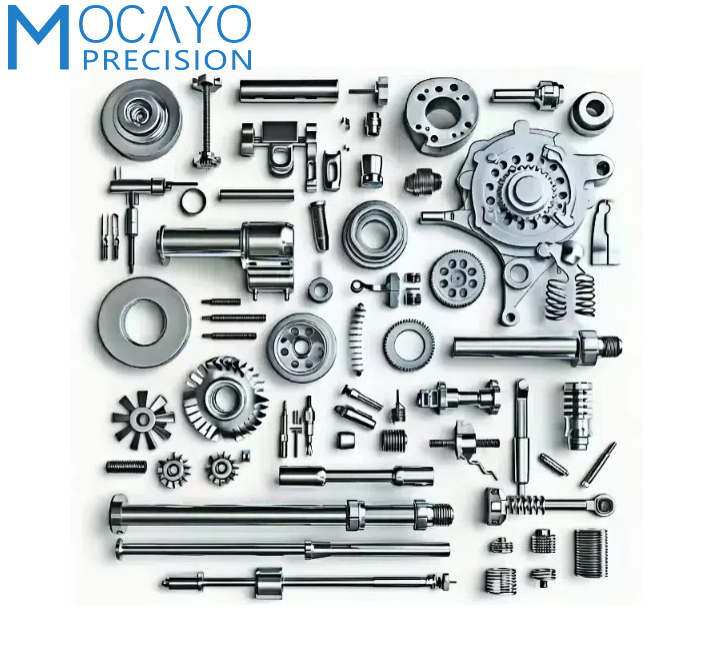
We provide full-service solutions for a wide range of parts—including mechanical components, structural elements, and non-standard designs. Whether you need miniature precision parts or large-scale custom assemblies, Mocayo delivers flexibility, micron-level accuracy, and tailored services for diverse industries.
Our Competitive Edge
-
Advanced CNC machining centers
-
Mature welding technologies tailored for stainless steel
-
One-stop solutions from machining to welding and assembly
-
Experienced technical team providing design optimization and technical support
-
Complete quality control system, from raw material to final inspection
At Mocayo, we don't just understand how to weld stainless steel — we perfect it. For reliable, precision-engineered custom machined parts, trust the experts who combine craftsmanship with technology.
Ball Bearing Locking Mechanism
How Can I Cut Stainless Steel-Mocayo Custom Cnc Parts