How To Work Out Thread Size-Choose Thread Size For Ball Plungers
How To Work Out Thread Size – Choosing the Right Thread Size for Ball Plungers
In precision mechanical assemblies, determining the correct thread size is fundamental to ensuring reliable positioning and performance of Ball Plungers. Understanding how to work out thread size based on international standards and engineering principles can significantly enhance assembly accuracy and component lifespan. This guide explores thread size calculation principles, Mocayo’s ball plunger product line, technical selection guidelines, and quality assurance protocols.
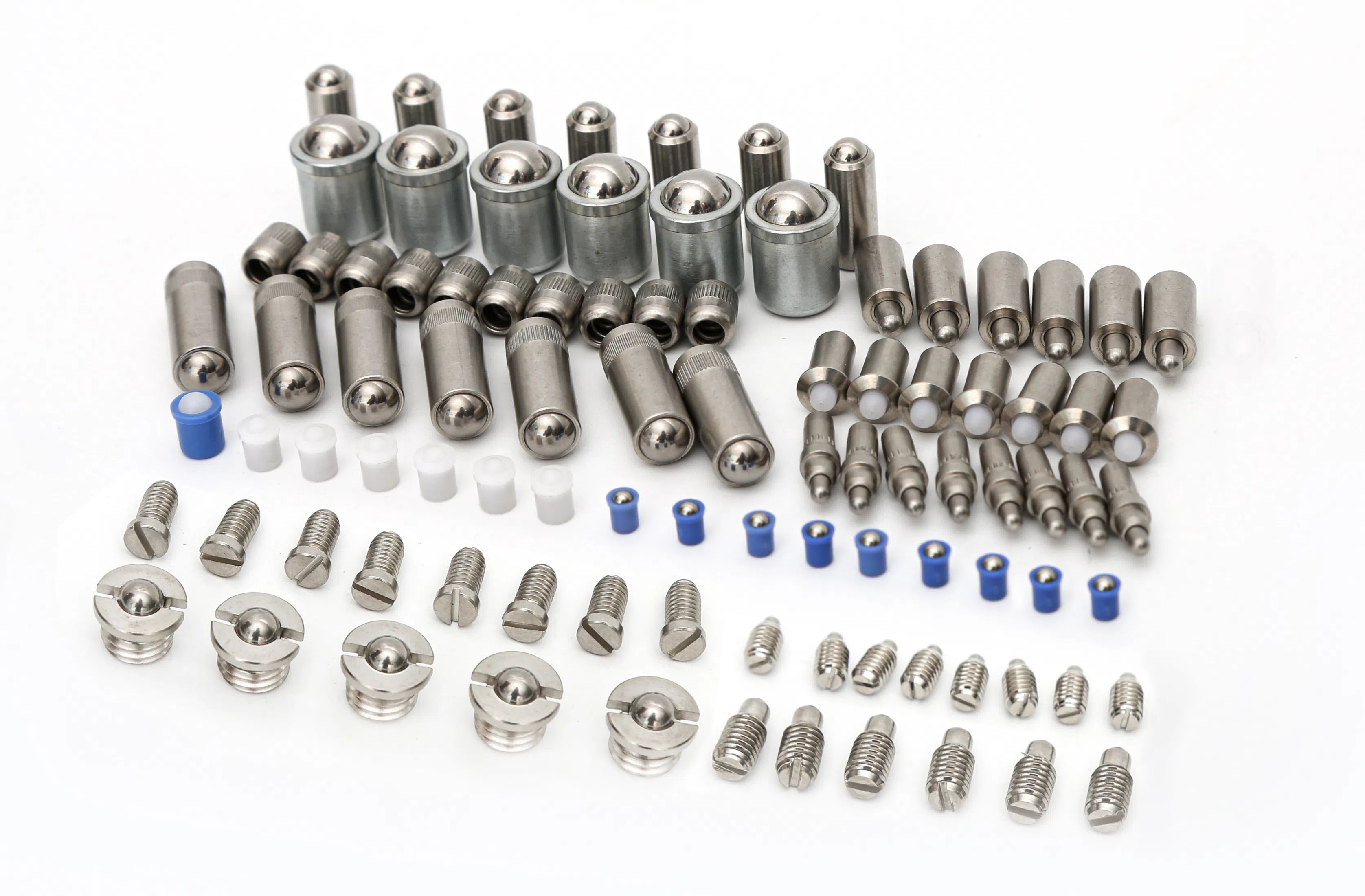
1. Principles of Thread Size Calculation and Measurement Standards
In the field of high-precision assembly, accurately working out the thread size is a critical prerequisite for the reliable function of Ball Plungers. According to ISO 68-1, a complete thread designation must include three core elements: nominal diameter, pitch, and tolerance grade.
Data from Mocayo Engineering Laboratory reveals that scientifically calculated threads can improve assembly precision by over 40%.
-
For metric threads (M series), the nominal diameter refers to the major diameter, while pitch is the axial distance between adjacent thread crests.
-
For imperial threads (UNC/UNF), the key parameter is TPI (Threads Per Inch). For example, 1/4"-20UNC indicates a nominal diameter of 1/4 inch with 20 threads per inch.
Recommended Three-Level Inspection System
-
Initial Inspection
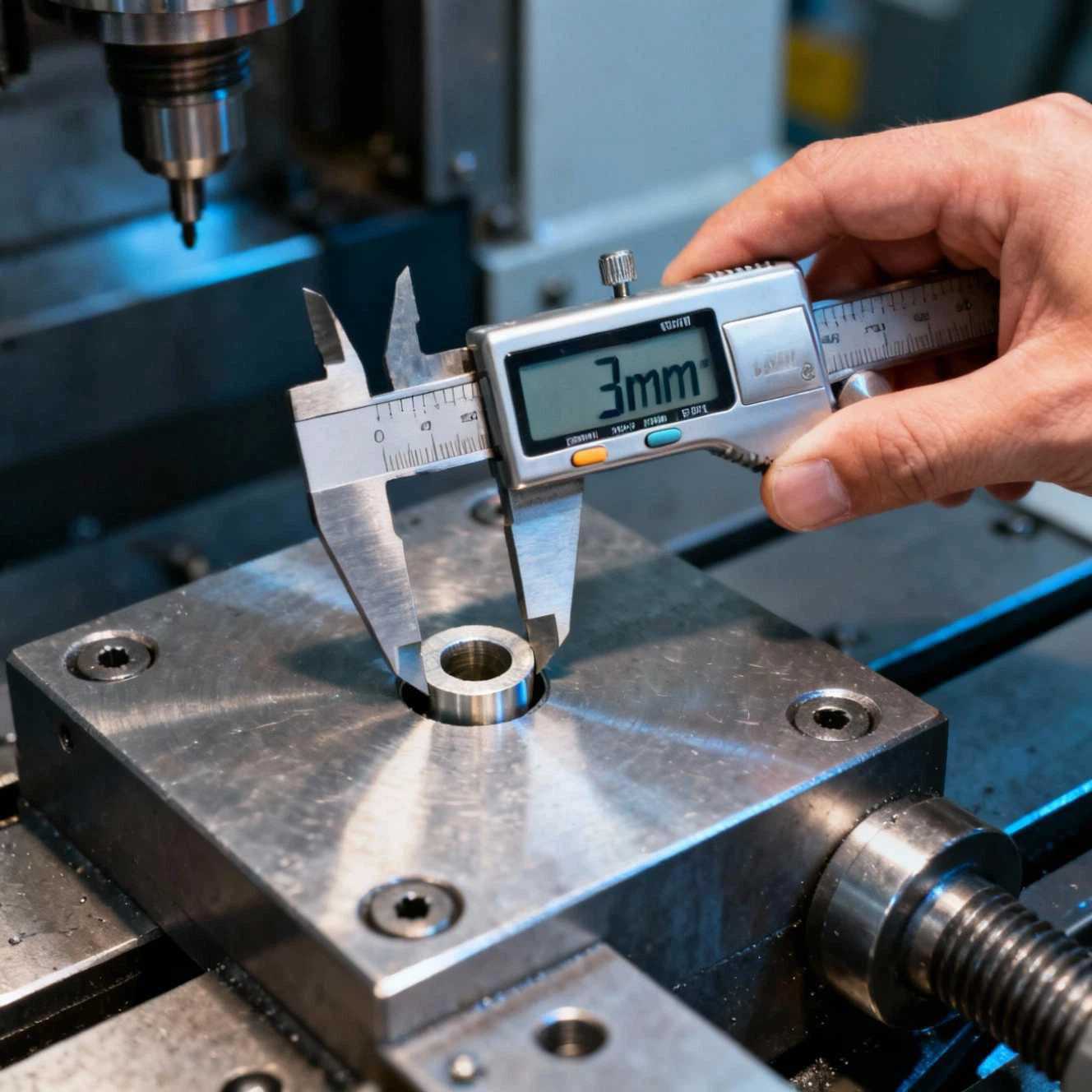
Digital caliper measurement of major diameter
Accuracy: ±0.02 mm -
Precision Inspection
Thread plug and ring gauge verification
Ensures 6H/6g grade fit -
Final Inspection
Full-parameter evaluation using CMM (Coordinate Measuring Machine)
Repeatability: ±0.002 mm
A case study from an automotive parts manufacturer showed that implementing this inspection protocol reduced thread fit failure rate from 3.2% to 0.5%. For demanding environments, Mocayo has also developed temperature compensation algorithms that correct measurement deviations due to environmental changes.
Example: Steel thread thermal coefficient = 11.5×10⁻⁶/°C
2. Mocayo Ball Plunger Product Range and Technical Innovation
Standard Thread Ball Plungers
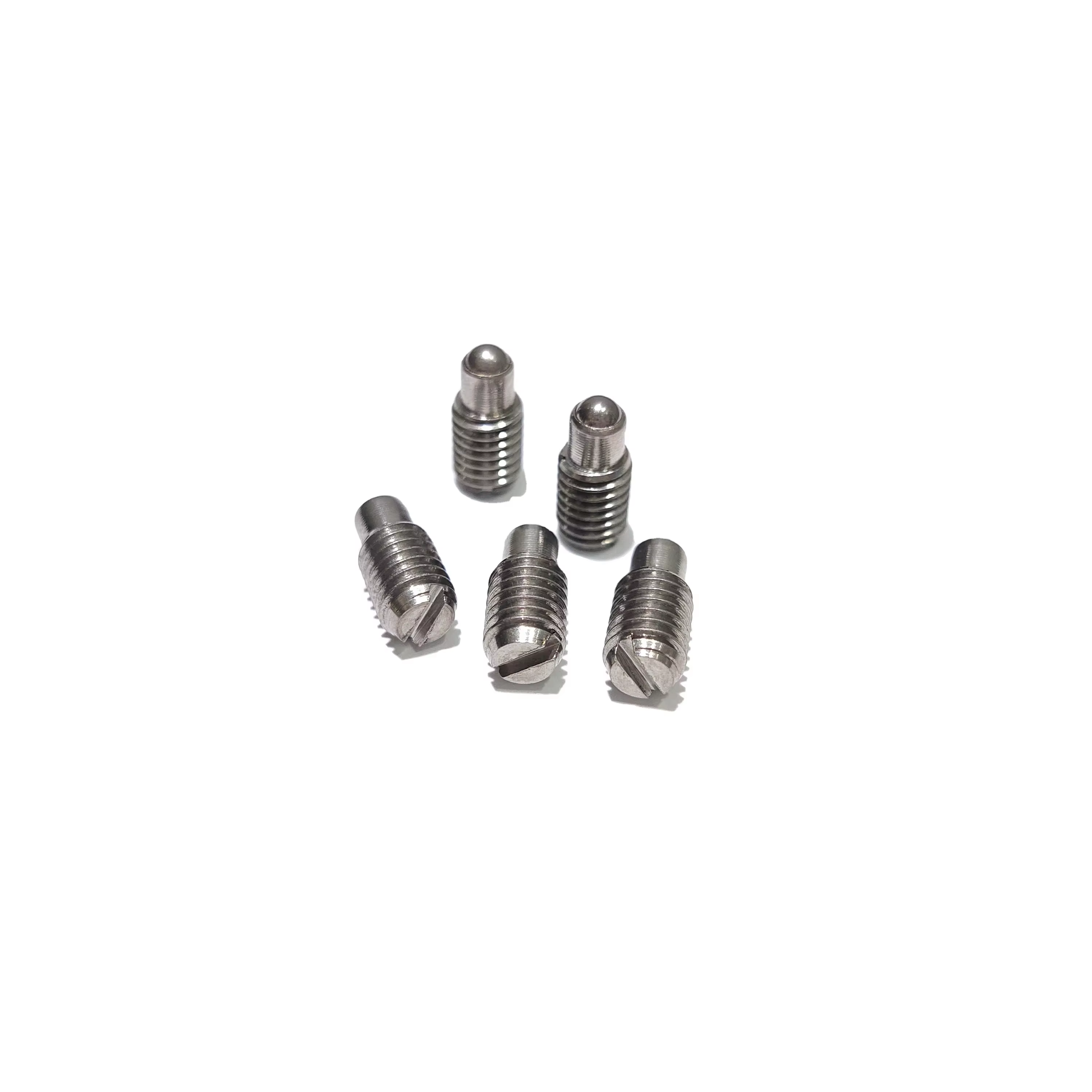
Metric Industrial Series (M4–M12)
-
Material: SCM435 alloy steel
-
Hardness: HRC58–62
-
Surface: Hard chrome plating (15–25μm)
-
Thread Accuracy: ISO 6g (per ISO 965-1)
-
Applications: Used in automated fixture positioning; customer reports show a 35% increase in mold change efficiency.
Heavy-Duty Imperial Series (1/4"–1/2" UNC)
-
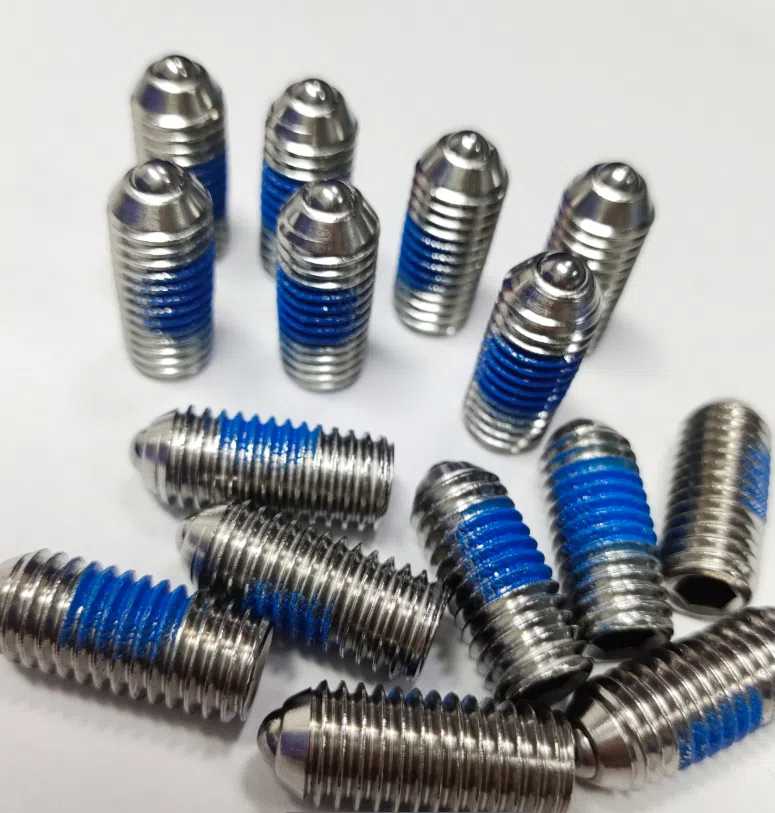
Standard: Compliant with ASME B1.1
-
Design: Patented dual-lock mechanism (metal ring + nylon lock)
-
Load Ratings: Radial – 800N | Axial – 500N
-
Case Study: Effective positioning in hydraulic modules of construction machinery.
Medical Grade 316L Stainless Steel Plungers
-
Finish: Electro-polished to Ra 0.4μm
-
Certification: FDA approved
-
Salt Spray Resistance: No corrosion after 96 hours
-
Application: Used in surgical robot guiding systems.
Custom Engineering Services
We offer:
✓ Non-standard threading (as small as M1.2)
✓ Special materials (Titanium alloy / Ceramic)
✓ 5-day rapid prototyping
✓ Integrated positioning module design
Case Study: A semiconductor manufacturer improved wafer positioning accuracy to ±0.005 mm and reduced particle contamination by 90% using custom M2.5 ball plungers.
3. Technical Guidelines for Ball Plunger Selection
Scientific Selection Process
Load Analysis
-
Static Loads: Standard triangular threads
-
Dynamic Loads: Fine pitch threads (20% strength improvement)
-
Impact Loads: Reinforced thread forms
Environmental Evaluation
-
Corrosive environments: Choose 316L stainless steel
-
High-temperature environments: Opt for 310S stainless steel (resistant up to 1150°C)
Cost Optimization
-
Mass production: Alloy steel with hard chrome
-
Special requirements: Customized solutions
Installation Technical Specifications
Recommended Torque Values:
| Thread Size | Torque (N·m) |
|---|---|
| M4 | 1.5–3 |
| M6 | 5–7 |
| M8 | 12–15 |
Lubrication Management:
-
Standard use: Lithium-based grease
-
Food/Medical: NSF H1 certified lubricants
Preload Adjustment:
Maintain 10–15% elastic reserve for optimal preload.
Maintenance and Inspection Standards
-
Weekly: Measure ball projection amount (tolerance: ±0.1 mm)
-
Every 500 hours: Reapply specialized lubricants
-
Replacement: When thread wear exceeds 0.01 mm
4. Quality Assurance and Technical Support
Full-Process Quality Control System
-
Raw Material: Spectral analysis + ultrasonic flaw detection
-
Manufacturing: 100% hardness testing (Rockwell/Vickers)
-
Final Product: Full-dimensional CMM inspection
-
Certifications: ISO 9001 / AS9100 / ISO 13485
Professional Technical Support
Mocayo provides:
★ Free thread size calculation software
★ Failure analysis and design improvement services
★ On-site installation guidance
★ Total lifecycle cost optimization
Service Commitments:
→ 2-hour technical inquiry response
→ 24-hour emergency sample support
→ 72-hour on-site service (within China)
How to Work Out Thread Size for Ball Plungers?Use calipers or thread gauges to measure diameter and pitch, ensuring perfect fit for ball plungers in precision applications. Get accurate sizing tips today!
By following a scientific selection process and rigorous maintenance guidelines, Mocayo Ball Plungers help customers achieve:
✓ 30–50% improvement in positioning accuracy
✓ 40–60% reduction in maintenance costs
✓ 25–35% boost in overall equipment efficiency
For full technical documentation or to request test samples, visit the official Mocayo website or contact your sales representative. Our engineering team is ready to assist with thread size calculations and application-specific ball plunger solutions.
What Are Different Types of Screws-Mocayo Spring Plunger Pin
What Is Cnc Machine Used For-Custom Cnc Parts For Different Industry