Indexing Plunger Functions and Application Categories for Self-Locking and Non-Self-Locking Types
Indexing Plunger Functions and Application Categories for Self-Locking and Non-Self-Locking Types
In the fields of mechanical manufacturing and automation equipment, indexing plungers serve as critical positioning components, with their performance directly influencing the operational precision and stability of equipment. This article provides a detailed overview of the basic functions of indexing plungers, with a particular focus on analyzing the characteristics and application scenarios of self-locking and non-self-locking types. It also offers professional selection advice for engineers and technicians.
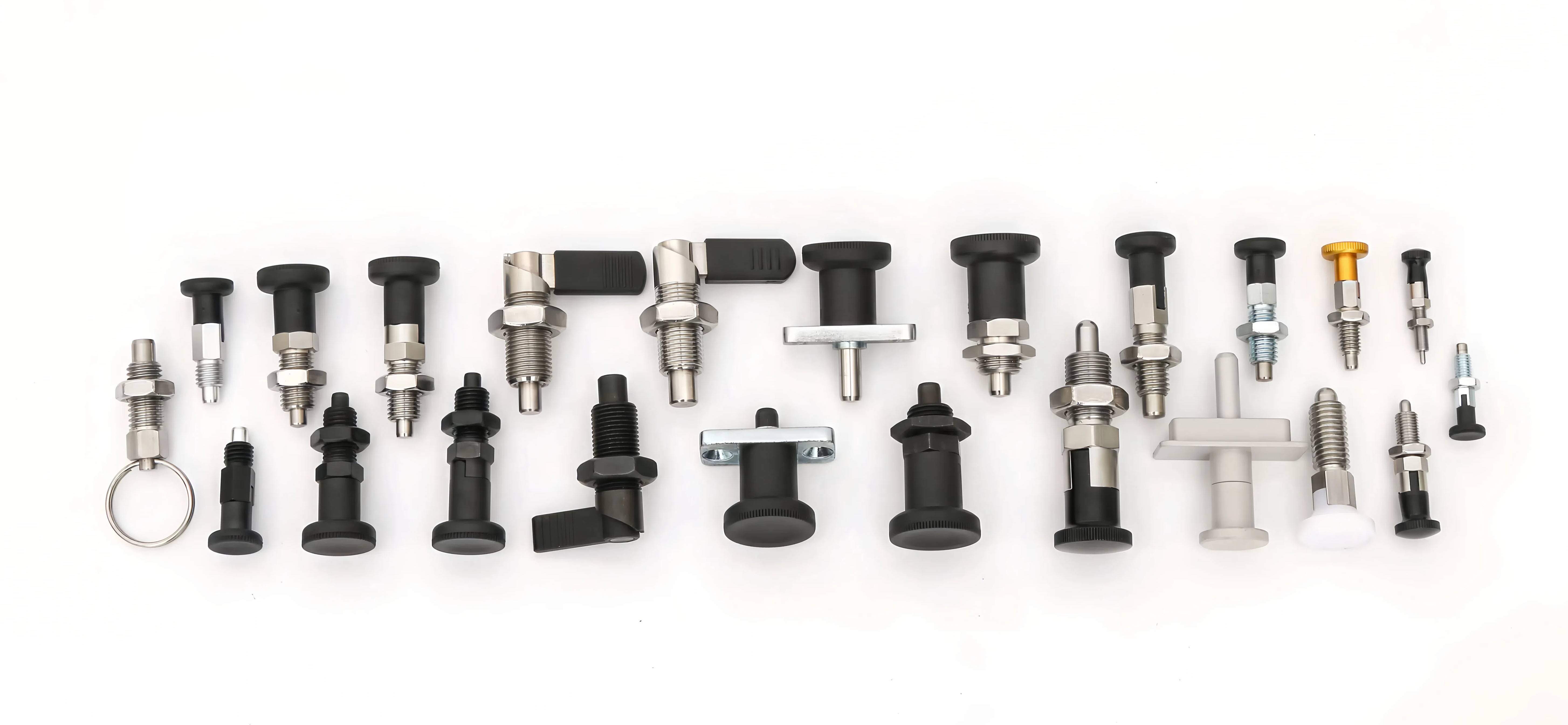
1. Basic Functions of Indexing Plungers
Indexing plungers are indispensable positioning elements in machining and assembly processes. Their primary function is to ensure precise relative positioning of workpieces or molds during operations. Structurally, an indexing plunger typically consists of a pin body, a guiding section, and a locating section, achieving its function through precision-fit dimensions. According to international standard ISO 8734, high-quality indexing plungers can achieve a positioning accuracy of up to ±0.005 mm, fully meeting the requirements of most precision machining tasks.
In practical applications, the load-bearing capacity of indexing plungers is a critical consideration. Standard carbon steel indexing plungers usually offer static load capacities of 3–5 tons, while those made from alloy steels can withstand even greater loads. It is important to note that the durability of an indexing plunger depends not only on the material but also closely on its heat treatment process. Properly quenched and tempered plungers can extend service life by more than 30%.
2. Characteristics and Applications of Self-Locking Indexing Plungers
Structural Features of Self-Locking Indexing Plungers
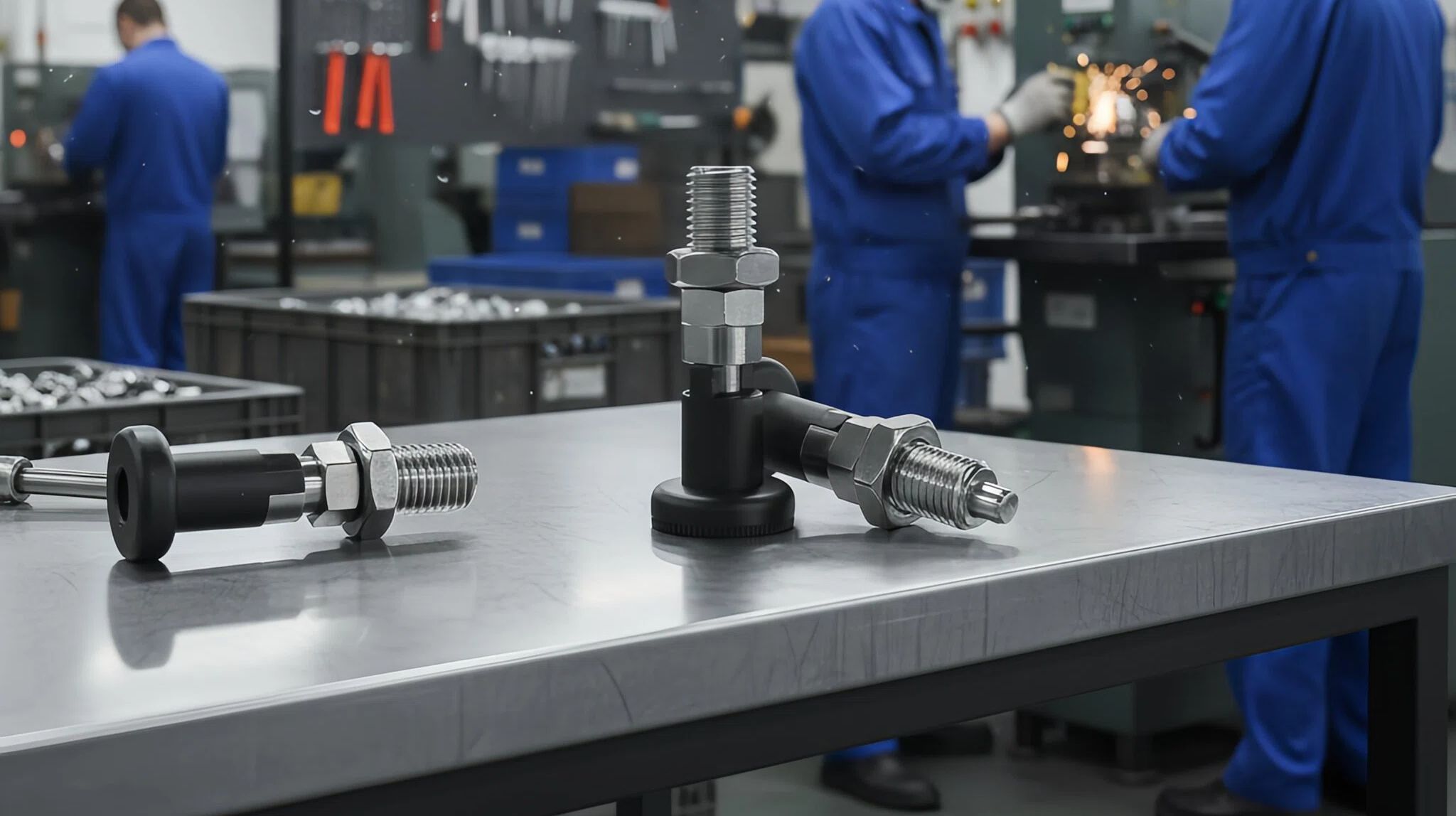
Self-locking indexing plungers like our model MS1171 feature an internal spring mechanism combined with a precision tapered locking surface to achieve automatic locking functionality. Their typical structure consists of a spring, a steel ball, and a locking taper. When the plunger is inserted into a locating hole, the spring forces the steel ball into contact with the taper, generating friction that produces a secure locking effect. High-grade industrial self-locking indexing plungers can deliver locking forces exceeding 500 N, maintaining secure positioning even in high-vibration environments.

Application Scenarios for Self-Locking Indexing Plungers
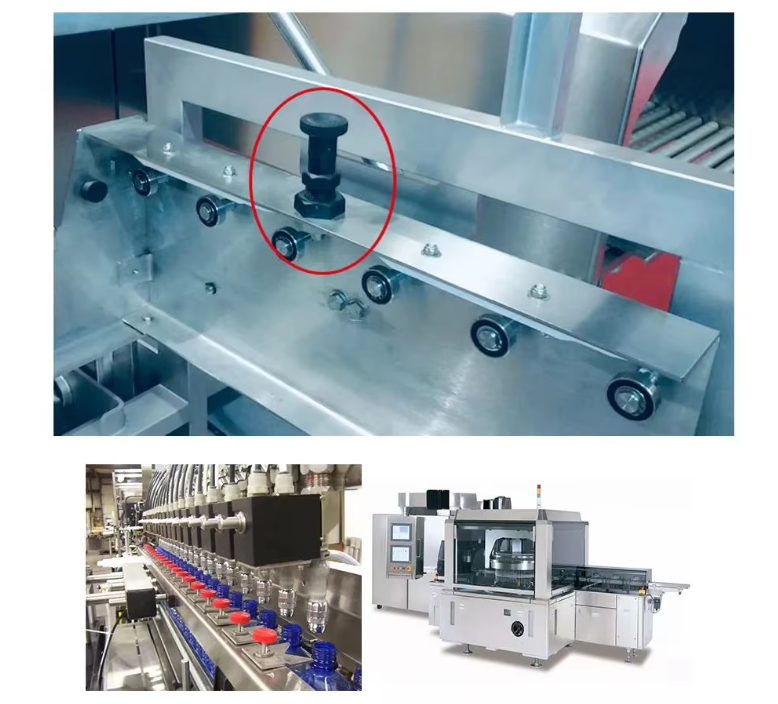
In automotive engine assembly lines, self-locking indexing plungers are the preferred choice for ensuring the precise positioning of critical components, meeting the rigorous vibration resistance requirements during engine operation. Similarly, in the positioning of molds in large stamping equipment, self-locking indexing plungers can maintain long-term positioning accuracy, avoiding failure caused by frequent impacts. In vertical installation scenarios, the self-locking feature acts as an additional safeguard against accidental disengagement.
3. Characteristics and Applications of Non-Self-Locking Indexing Plungers
Structural Features of Non-Self-Locking Indexing Plungers
Non-self-locking indexing plungers use a simple cylindrical fit structure, offering smooth insertion and easy operation. Their guiding sections typically feature a chamfer of 15°–30°, facilitating quick positioning. To reduce wear, high-quality non-self-locking indexing plungers, like our model MS1170 undergo surface hardening treatments, achieving a hardness of HRC58–62 to ensure that fitting precision is maintained even after prolonged use.

Application Scenarios for Non-Self-Locking Indexing Plungers
In quick mold change systems for injection molds, non-self-locking indexing plungers are highly favored for their ease of operation. A skilled operator can complete the positioning and replacement of an entire mold set within minutes. During equipment commissioning stages, using non-self-locking plungers can significantly enhance debugging efficiency. Moreover, in fixture positioning on automated production lines, the quick setup feature of non-self-locking indexing plungers greatly improves production efficiency.

4. Selection and Usage Recommendations
Factors to Consider During Selection
When selecting indexing plungers, load conditions must be carefully evaluated. For applications primarily subjected to radial forces, it is advisable to select plungers with larger diameters. For axial load applications, attention should be paid to the locking force specifications. Environmental conditions are also critical—stainless steel indexing plungers are the better choice for humid or corrosive environments.
Usage Precautions
During installation, ensure that the axis of the indexing plunger aligns precisely with the locating hole to avoid forced striking. It is recommended to use specialized installation tools to guarantee installation quality and to protect the surface integrity of the indexing plungers. During routine inspections, particular attention should be given to surface wear and whether the fitting clearance remains within acceptable limits.
Maintenance and Care Recommendations
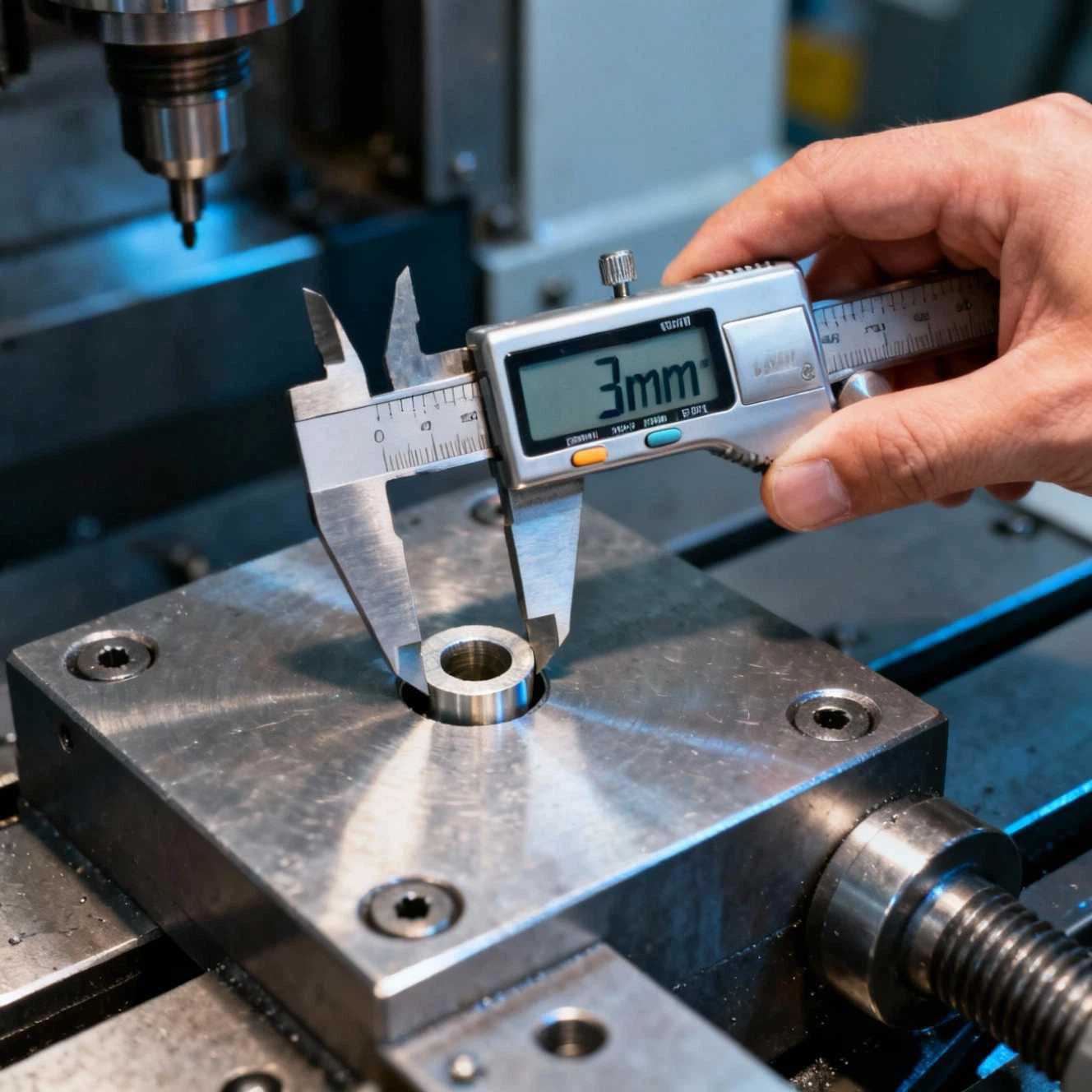
It is advisable to perform a comprehensive inspection and lubrication maintenance of indexing plungers every three months. For high-frequency usage scenarios, maintenance intervals should be shortened accordingly. If significant surface wear or a fitting clearance greater than 0.01 mm is detected, the indexing plunger should be replaced promptly to ensure ongoing positioning accuracy.
Through proper selection, usage, and maintenance of indexing plungers, equipment reliability and production efficiency can be significantly improved. For further technical details or personalized selection advice, please feel free to contact our technical support team.
Ensure accurate alignment with durable indexing plunger. Available in steel, stainless steel, and plastic for various loads. Ideal for machinery, fixtures, and automation.
How Does A Cnc Machine Work-The Application of Indexing Plungers and Spring Plungers in CNC
Does Stainless Steel Have Nickel