Manufacture Process of Indexing Plungers
Table of Contents
1. What Are Indexing Plungers
2. Structure of Indexing Plungers
3. Manufacturing Process for Indexing Plungers
4. How Indexing Plungers Work
5. Application Scenarios for Indexing Plungers
6. FAQ
1. What Are Indexing Plungers
2. Structure of Indexing Plungers
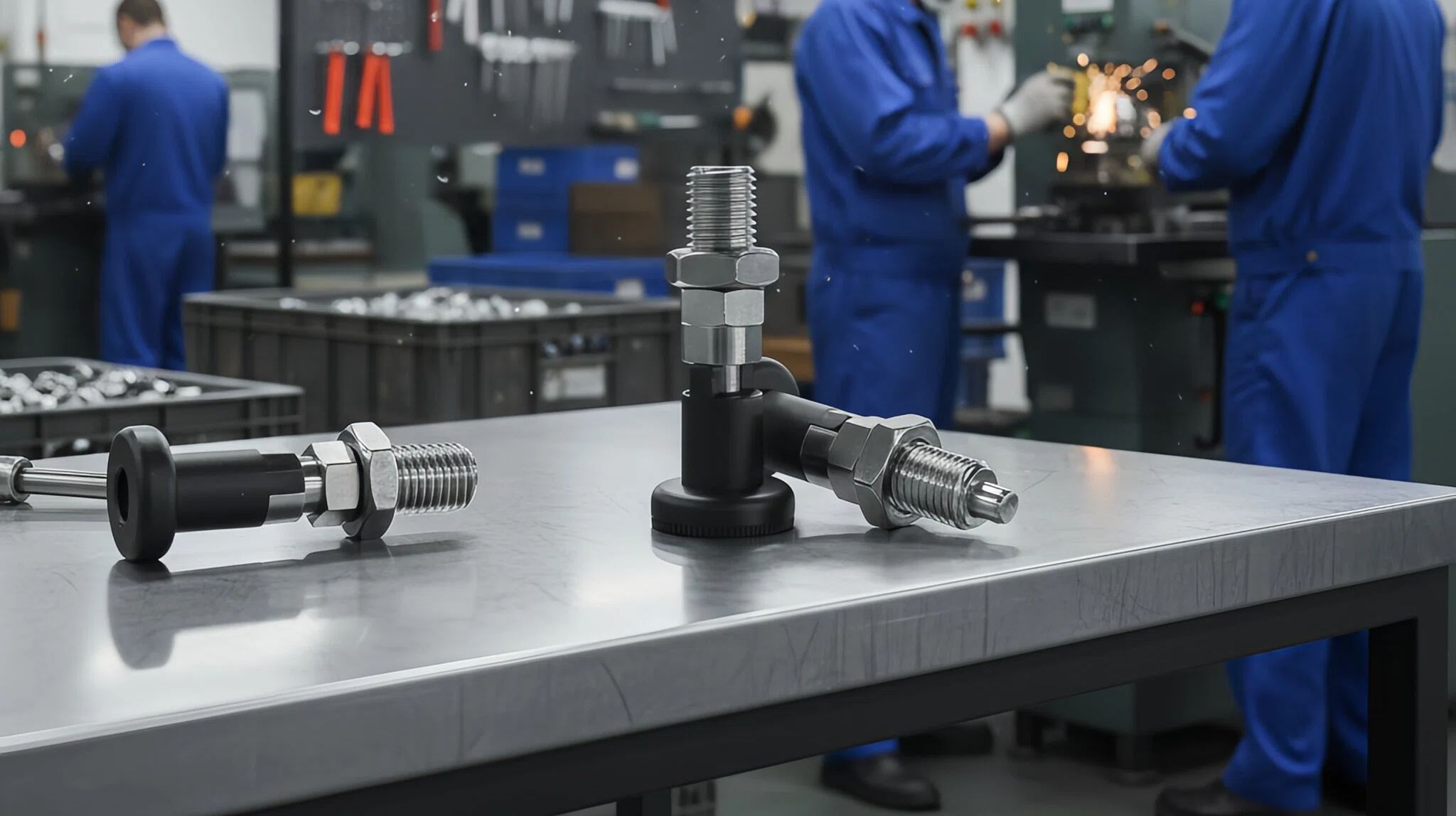
3. Manufacturing Process for Indexing Plungers
4. How Indexing Plungers Work
5. Application Scenarios for Indexing Plungers
6. FAQ
Manufacture Process of Indexing Plungers
In the fields of modern mechanical manufacturing and industrial assembly, indexing plungers serve as a critical positioning component. Whether in precision fixtures, automated equipment, or adjustable mechanisms, it performs the vital functions of “positioning—locking—releasing.”
Discover the manufacture process of indexing plungers ensuring precision, durability, and flawless locking performance for every industrial need.
What Are Indexing Plungers
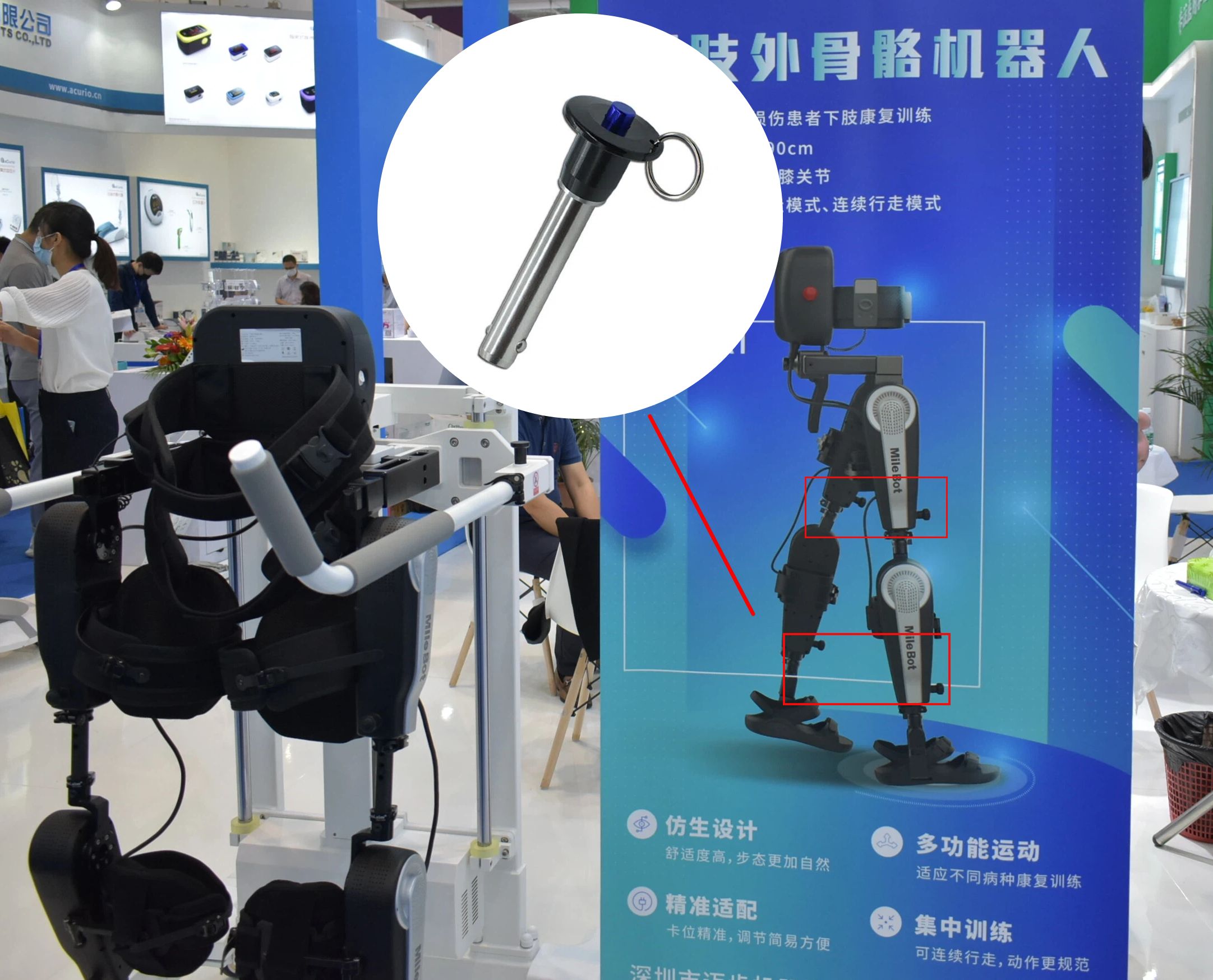
Indexing plungers, known in Chinese as indexing pins, are standard components used in mechanical structures to achieve rapid positioning and locking. Their operation relies on spring force to control the extension and retraction of the pin. When the pin extends into the locating hole, the mechanical structure is securely locked in place. When the operator pulls the pin out, the mechanical components can move freely or be repositioned.
Indexing plungers, known in Chinese as indexing pins, are standard components used in mechanical structures to achieve rapid positioning and locking. Their operation relies on spring force to control the extension and retraction of the pin. When the pin extends into the locating hole, the mechanical structure is securely locked in place. When the operator pulls the pin out, the mechanical components can move freely or be repositioned.
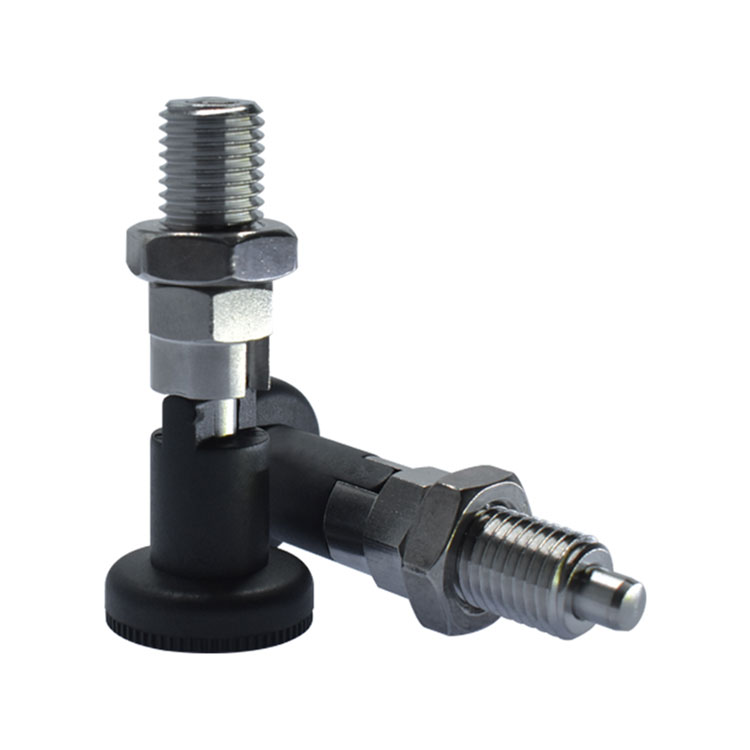


Structure of Indexing Plungers
A standard indexing plunger typically consists of the following components:
Body: Generally made of stainless steel or galvanized steel, offering high strength and corrosion resistance. It serves as the structural support for the entire assembly.
Pin: A precision-machined positioning element inserted into the locating hole to achieve locking. The pin is typically hardened to ensure wear resistance.
Spring: Installed inside the body, it provides the force to push the pin outward.
Pull Knob / Handle: Used for manual operation to retract or release the pin.
Locking Mechanism: Present in some models to prevent loosening due to vibration or accidental contact.
Manufacturing Process for Indexing Plungers
1. Raw Material Preparation
The main body and pins of Indexing Plungers are typically made from stainless steel (such as SUS303 or SUS304) or carbon steel.
2. Machining
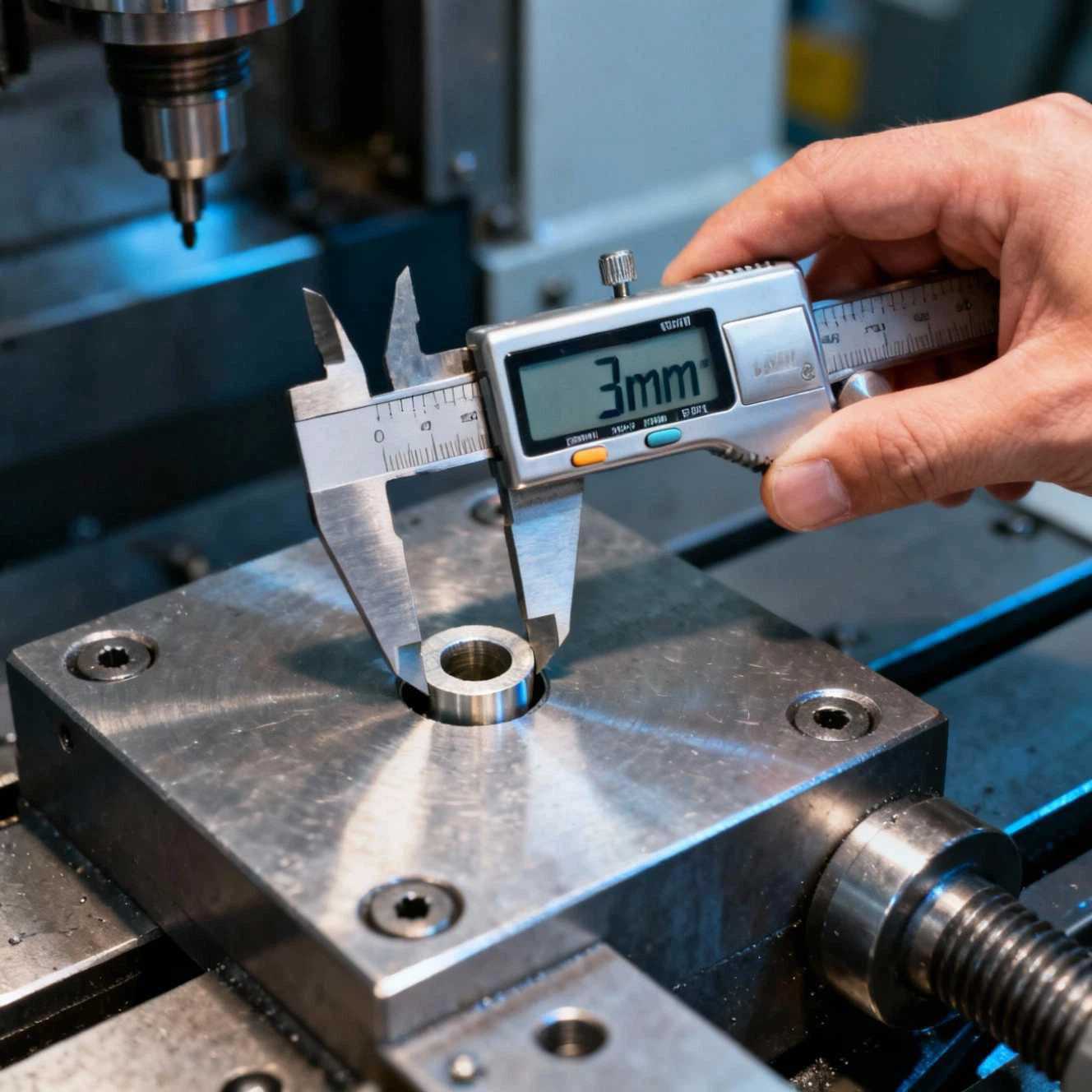
This is the core manufacturing stage, encompassing processes like turning, milling, drilling, and tapping. High-precision CNC machining ensures part dimensions are accurate to the micrometer level.
3. Heat Treatment Process
Pins and certain critical components undergo quenching and tempering to enhance surface hardness and overall strength.
4. Surface Treatment
Depending on application requirements, surface treatments like zinc plating, blackening, polishing, or anodizing may be applied.
5. Precision Assembly
During assembly, components including springs, pins, and handles are individually fitted.
6. Inspection and Quality Control
Final products undergo multiple tests, including pin travel testing, spring force testing, dimensional inspection, and endurance testing.
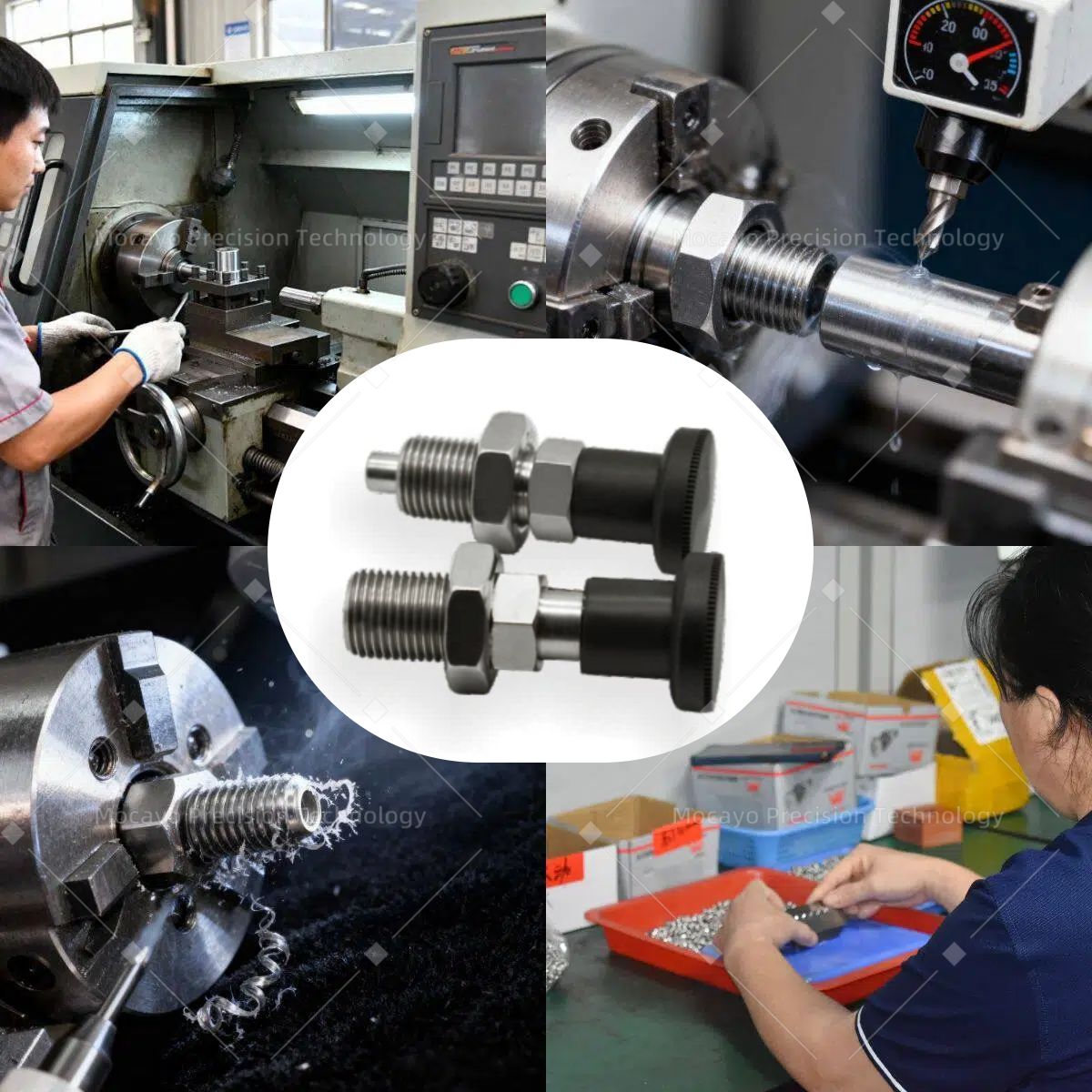
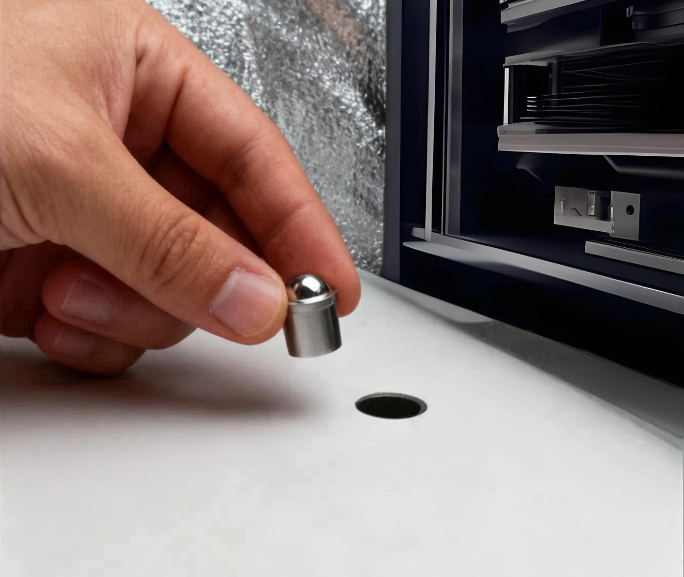
Indexing plungers operate based on the principle of mechanical elasticity. A spring, preloaded in a compressed state, pushes the pin to automatically extend into the locating hole, achieving precise positioning.
When the operator pulls the ring or knob, the pin retracts under external force, releasing the locking position. After releasing the operation, the spring force pushes the pin back into place.
When the operator pulls the ring or knob, the pin retracts under external force, releasing the locking position. After releasing the operation, the spring force pushes the pin back into place.
Application Scenarios for Indexing Plungers
Thanks to their compact design and flexible operation, Indexing Plungers play an important role in many industrial sectors:
1. machine and equipment adjustment devices: for controlling position switching or limiting of equipment components.
2. jigs and fixtures: to ensure repetitive positioning accuracy during assembly or testing.
3. automated production lines: for quick module changes and machine adjustments.


FAQ
Q: What's your MOQ for the indexing plungers?
A: 100-200.
Q: How to choose the best material for index plunger?
A:When choosing Index Plunger material, it should be based on the use of the environment, strength requirements and cost considerations: general mechanical environment can choose SS303 or zinc-plated steel, taking into account the machinability and cost-effective; wet or outdoor environment is recommended to use SS304, corrosion resistance is better; if the use of the seashore, the chemical industry, and other highly corrosive environments, should be selected SS316; and need to be high-strength, high-precision positioning equipment, then recommended 17-4PH stainless steel. For equipment requiring high strength and high precision positioning, 17-4PH stainless steel is recommended. Reasonable selection of materials can significantly improve the durability and stability of the indexing pin.
Lateral Spring Plunger Guideline
Indexing Elements Applications