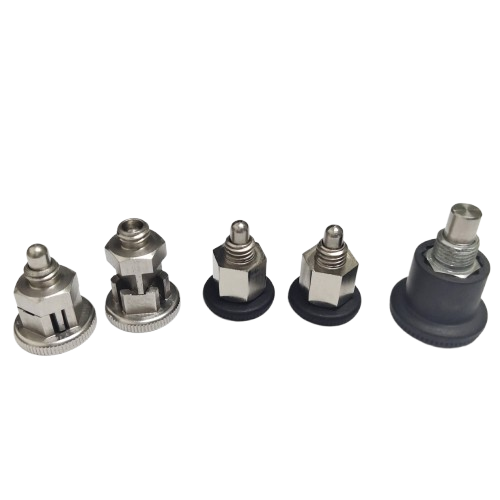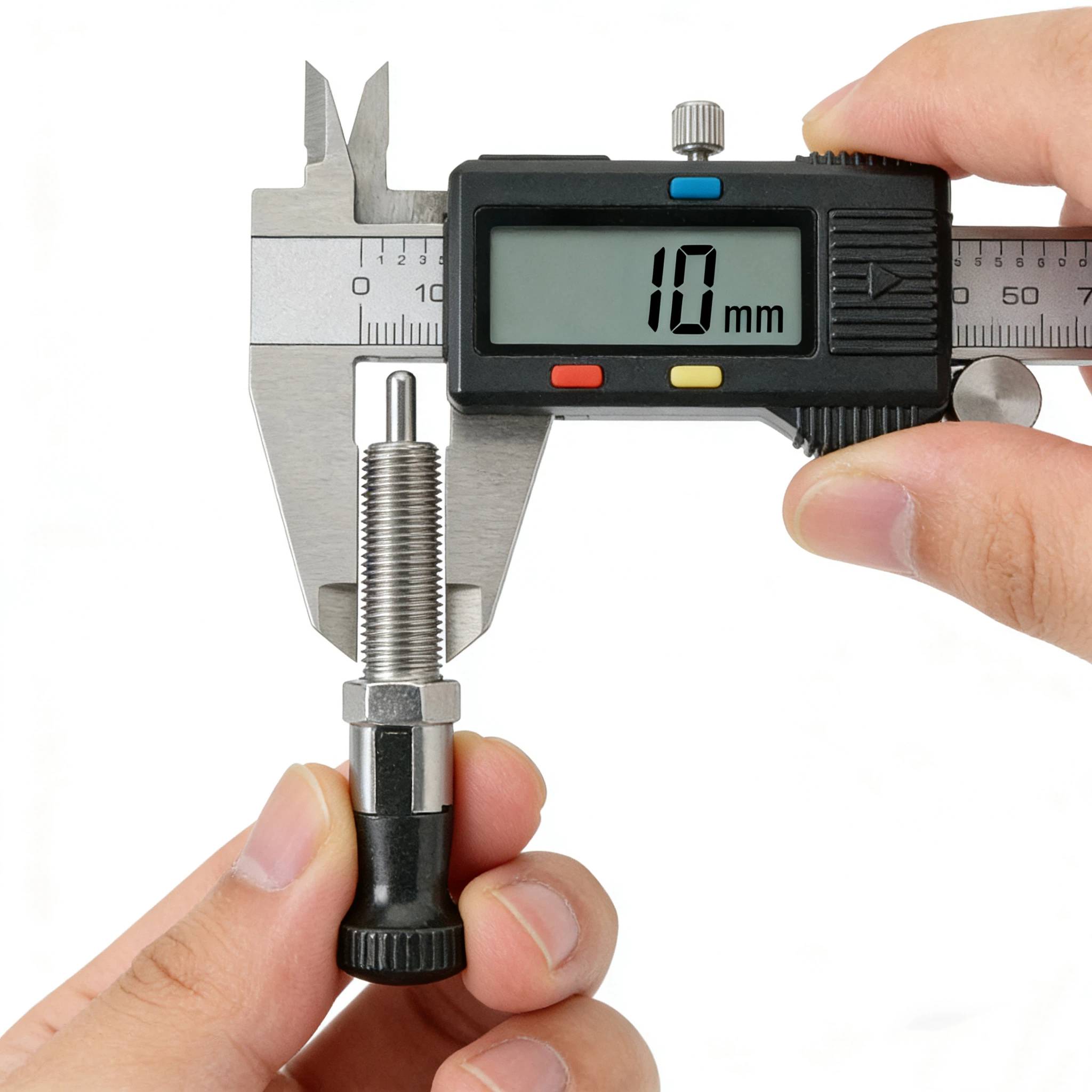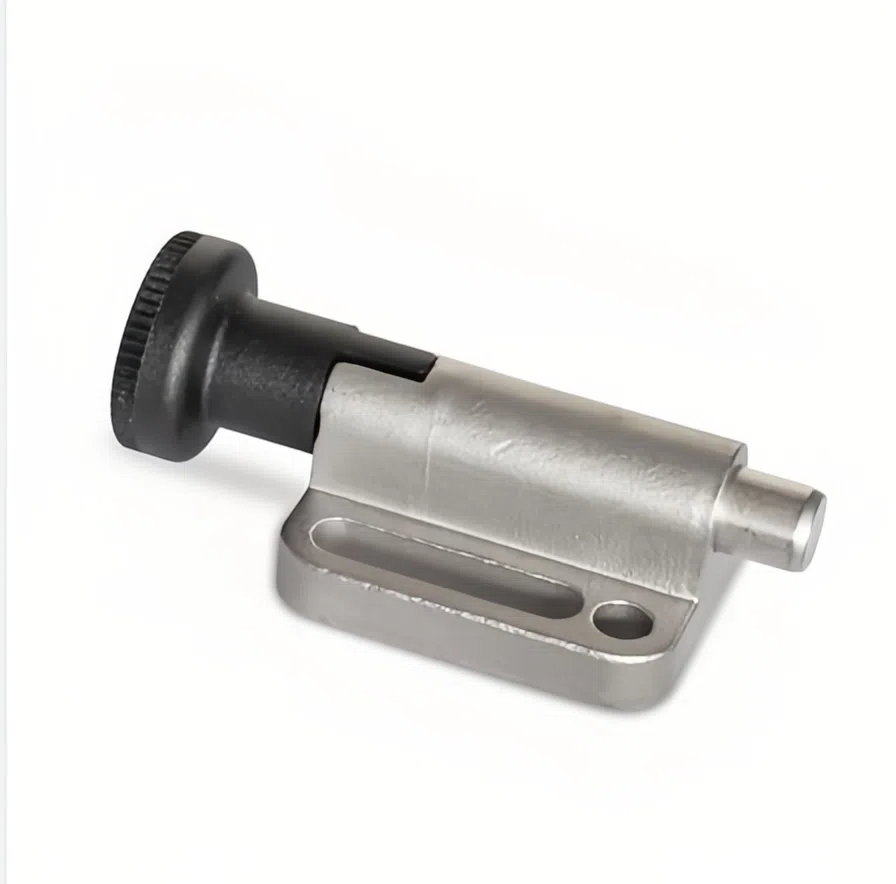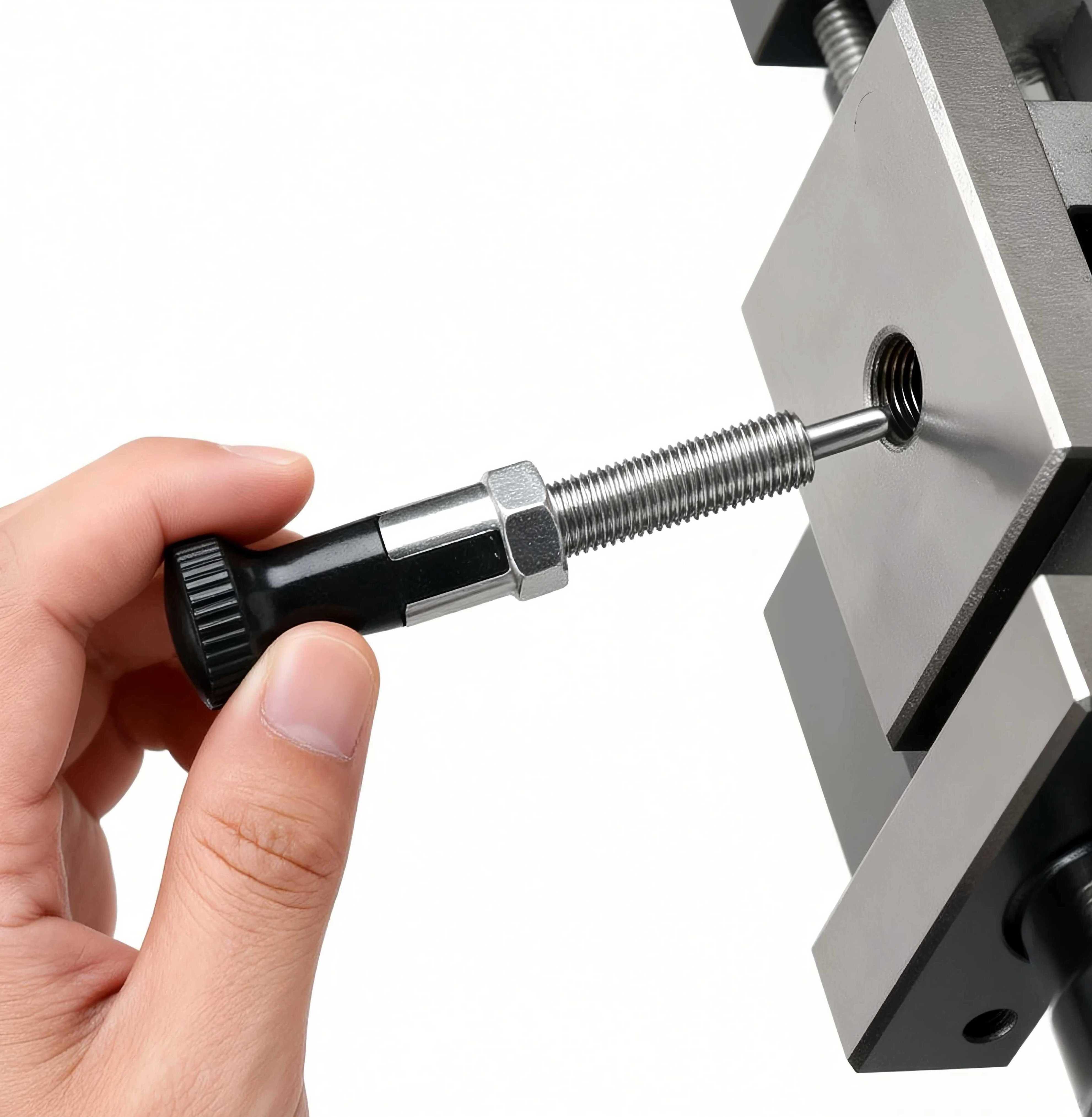
Ball Type Plunger
Ball Type Plungers: Precision Positioning Solutions for Modern Industry
Introduction
In the realm of industrial components where precision meets reliability, Ball Type Plungers have emerged as an essential fastening and positioning solution. These versatile mechanical devices combine the functionality of traditional plungers with the smooth operation of ball bearings, creating an optimal system for applications requiring both secure locking and easy release. From CNC machining centers to aerospace assembly lines, Ball Type Plungers are revolutionizing how industries approach component positioning and temporary fastening.
This in-depth exploration examines the design principles, technical specifications, and industrial applications of Ball Type Plungers, providing engineers and procurement specialists with valuable insights into this critical component.
What Are Ball Type Plungers?
Ball Type Plungers are spring-loaded mechanical devices featuring:
-
A threaded body for secure mounting
-
A spring mechanism providing constant force
-
A ball bearing tip for smooth engagement
-
Optional locking mechanisms for secure positioning
Unlike conventional plungers with fixed tips, the ball bearing design allows for 360-degree rotational movement while maintaining positive engagement, making them ideal for applications requiring both movement and precise positioning.


Key Features & Benefits
1. Superior Engagement Mechanism
-
Ball bearing tip reduces friction during engagement
-
Self-aligning capability compensates for minor misalignment
-
Smooth operation even after thousands of cycles
2. Precision Engineering
-
Available in metric (M4-M12) and imperial (#10-32 to 1/2"-13) threads
-
Adjustable spring tension for customized force requirements
-
Tight tolerances (±0.01mm) for critical applications
3. Material Versatility
| Material | Characteristics | Ideal Applications |
|---|---|---|
| Carbon Steel | High strength, economical | General industrial use |
| Stainless Steel | Corrosion resistant | Food processing, marine |
| Brass | Non-sparking | Explosive environments |
| Nylon | Non-marring | Delicate surface contact |
4. Operational Advantages
-
Reduced wear compared to fixed-tip plungers
-
Quieter operation in high-speed applications
-
Maintenance-free design in most environments
Technical Specifications Deep Dive
Standard Size Chart
| Metric Series | Imperial Series | Ball Diameter | Spring Force |
|---|---|---|---|
| M4 x 0.7 | #10-32 | 3mm | 5N |
| M6 x 1.0 | 1/4"-20 | 4mm | 10N |
| M8 x 1.25 | 5/16"-18 | 6mm | 20N |
| M10 x 1.5 | 3/8"-16 | 8mm | 40N |
| M12 x 1.75 | 1/2"-13 | 10mm | 60N |
Performance Characteristics
-
Temperature Range: -40°C to +150°C (standard models)
-
Cycle Life: 100,000+ operations (properly maintained)
-
Surface Treatments: Zinc plating, black oxide, electroless nickel
How Ball Type Plungers Work
Operational Principle:
-
Mounting: Threaded body secures plunger to base material
-
Engagement: Spring forces ball outward into mating detent
-
Positioning: Ball seats securely while allowing rotation
-
Release: External force overcomes spring tension to disengage
Industry Applications
1. Machine Tool Industry
-
Application: Tool changer positioning
-
Benefit: Precise alignment with smooth engagement
-
Preferred Size: M8 metric / 5/16" imperial
2. Automotive Manufacturing
-
Application: Welding fixture locating
-
Benefit: Vibration resistance during assembly
-
Special Feature: High-temperature variants
3. Aerospace Engineering
-
Application: Aircraft panel fastening
-
Critical Requirement: Corrosion-resistant materials
-
Standard: NASM/MS specifications available
4. Electronics Assembly
-
Application: Test fixture indexing
-
Advantage: Non-marring nylon ball options
-
Precision Requirement: ±0.005" repeatability
Selection Guide: Choosing the Right Ball Plunger
Step 1: Determine Load Requirements
-
Light duty (<10N): M4/#10-32
-
Medium duty (10-40N): M6-M8/1/4"-5/16"
-
Heavy duty (>40N): M10+/3/8"+
Step 2: Environmental Considerations
-
Standard environments: Carbon steel
-
Corrosive conditions: Stainless steel
-
Clean rooms: Non-outgassing materials
Step 3: Movement Requirements
-
Pure positioning: Standard ball
-
Sliding contact: Hardened steel ball
-
Sensitive surfaces: Nylon ball
Installation & Maintenance
Best Practices:
-
Use thread locker for permanent installations
-
Verify hole alignment before engagement
-
Lubricate with dry film lubricant for high-cycle applications
Maintenance Schedule:
-
Monthly: Visual inspection for wear
-
Quarterly: Spring force verification
-
Annually: Complete replacement in critical applications
Innovations & Future Developments
-
Smart Plunger Technology
-
Embedded force sensors
-
Wireless condition monitoring
-
-
Advanced Materials
-
Ceramic balls for extreme wear resistance
-
Composite bodies for weight reduction
-
-
Ergonomic Designs
-
Quick-release variants
-
Low-profile installations
-
Discover our ball type plungers for precise positioning and reliable performance in industrial applications. Durable and efficient, they ensure smooth operation. Contact us for custom solutions tailored to your needs.
Custom Machined Aluminum Parts
Hand Retractable Spring Plunger
Related Article