High Temperature Ball Plungers
author: Lucia Liu
2025-12-02
High Temperature Ball Plungers
Table of Contents
In modern mechanical manufacturing, automated assembly, and precision fixture design, "positioning" is often the critical factor in ensuring production efficiency and consistent quality. Among these, ball plungers—as lightweight, repeatable-positioning mechanical components—have gradually become essential standard parts across industries due to their compact structure, responsive operation, and easy installation. With the widespread adoption of high-temperature equipment and high-speed assembly systems, the demand for high-temperature-resistant ball plungers has also grown significantly.

Structure
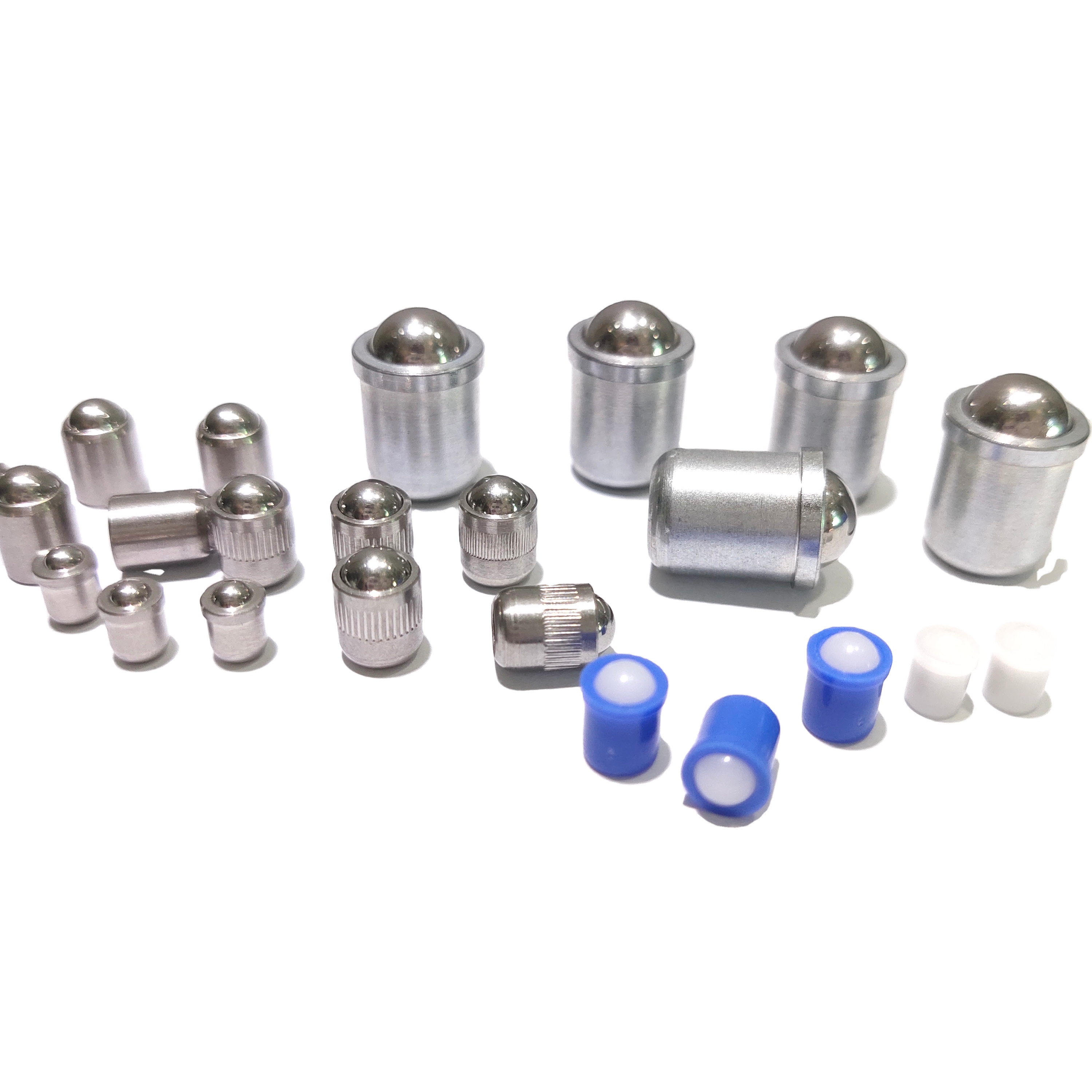
Ball Plungers consist primarily of three components: a metal body, a ball-bearing end cap, and an internal spring. By installing it into a threaded hole or locating hole, the user utilizes its spring force to drive the ball, pressing it firmly against the mounting surface or groove. This enables a cyclic operation of "locating—disengaging—re-locating."
Stainless Steel Series Metal Materials
Ball Plungers are commonly manufactured using four stainless steel grades, including:
• Stainless Steel 303: Stable strength, excellent machinability
• Stainless Steel 304: High corrosion resistance, most widely used in mechanical equipment
• Stainless Steel 316: Seawater-friendly, commonly used in chemical equipment
• Stainless Steel 17-4PH: Precipitation-hardening steel offering high strength and superior temperature resistance
Metal materials provide enhanced impact resistance and stable thrust performance, making them particularly suitable for complex environments and structures with frequent mechanical motion.
In high-temperature applications, among the above stainless steel grades:
• 304 and 316 exhibit oxidation resistance around 800°C–870°C, though practical use is constrained by internal springs
• 17-4PH delivers reliable mechanical performance at approximately 300°C due to superior structural stability
• Internal springs (typically steel) generally operate stably within the 150°C–250°C range
Therefore, the actual high-temperature tolerance of a metal ball plunger is primarily constrained by its internal spring, typically enabling stable operation between 150°C and 250°C (within common industrial application ranges).
Ball Plungers are commonly manufactured using four stainless steel grades, including:
• Stainless Steel 303: Stable strength, excellent machinability
• Stainless Steel 304: High corrosion resistance, most widely used in mechanical equipment
• Stainless Steel 316: Seawater-friendly, commonly used in chemical equipment
• Stainless Steel 17-4PH: Precipitation-hardening steel offering high strength and superior temperature resistance
Metal materials provide enhanced impact resistance and stable thrust performance, making them particularly suitable for complex environments and structures with frequent mechanical motion.
In high-temperature applications, among the above stainless steel grades:
• 304 and 316 exhibit oxidation resistance around 800°C–870°C, though practical use is constrained by internal springs
• 17-4PH delivers reliable mechanical performance at approximately 300°C due to superior structural stability
• Internal springs (typically steel) generally operate stably within the 150°C–250°C range
Therefore, the actual high-temperature tolerance of a metal ball plunger is primarily constrained by its internal spring, typically enabling stable operation between 150°C and 250°C (within common industrial application ranges).
Plastic Ball Plungers for Heat-resistant
Engineering plastic ball plungers have also gained market attention in recent years. They offer advantages such as lightweight construction, non-conductivity, low friction, and quiet operation, making them particularly suitable for electronic enclosures, light-duty equipment, and assembly structures sensitive to metal friction.
Common plastic materials include:
• POM (Acetal): Wear-resistant, fatigue-resistant, withstands temperatures around 100°C
• PA (Nylon): High toughness, typically withstands temperatures between 80°C–100°C
• PC (Polycarbonate): Excellent impact resistance, usable at temperatures around 110°C–120°C
Therefore, plastic materials are more suitable for positioning structures in weight-sensitive, noise-sensitive, and medium-to-low temperature operating conditions.
Common plastic materials include:
• POM (Acetal): Wear-resistant, fatigue-resistant, withstands temperatures around 100°C
• PA (Nylon): High toughness, typically withstands temperatures between 80°C–100°C
• PC (Polycarbonate): Excellent impact resistance, usable at temperatures around 110°C–120°C
Therefore, plastic materials are more suitable for positioning structures in weight-sensitive, noise-sensitive, and medium-to-low temperature operating conditions.
Installation Method
• Install the Ball Plunger into a pre-machined threaded hole or locating hole
• Screw it in to the appropriate depth, ensuring the ball protrudes by the correct amount
• Ensure the ball makes smooth contact with the locating surface or groove
• Install the Ball Plunger into a pre-machined threaded hole or locating hole
• Screw it in to the appropriate depth, ensuring the ball protrudes by the correct amount
• Ensure the ball makes smooth contact with the locating surface or groove
Typical Application Scenarios
1. Mechanical Equipment Positioning Points
Ball Plungers provide reliable fixed positions for sliding components, mechanical panels, or modules.
2. Fixture/Jig Rapid Positioning
Whether for CNC machining fixtures, welding jigs, or electronic test fixtures, Ball Plungers deliver precise positioning points for quick operation.
3. Automated Equipment Module Positioning
Suitable for assembly line module alignment, sensor module adjustment, and other structures requiring precise repeatable positioning.
4. High-Temperature Equipment Peripheral Applications
Near ovens and heating modules, stainless steel Ball Plungers maintain stable performance within their rated temperature range, serving as critical components in many thermal processing auxiliary mechanisms.
Ball Plungers provide reliable fixed positions for sliding components, mechanical panels, or modules.
2. Fixture/Jig Rapid Positioning
Whether for CNC machining fixtures, welding jigs, or electronic test fixtures, Ball Plungers deliver precise positioning points for quick operation.
3. Automated Equipment Module Positioning
Suitable for assembly line module alignment, sensor module adjustment, and other structures requiring precise repeatable positioning.
4. High-Temperature Equipment Peripheral Applications
Near ovens and heating modules, stainless steel Ball Plungers maintain stable performance within their rated temperature range, serving as critical components in many thermal processing auxiliary mechanisms.

FAQ
Q: Do ball plungers need thread locker?
A: Whether threadlockers are required for ball plungers depends on the application environment: For installations involving significant equipment vibration, loose hole-to-plunger fit, or long-term fixation without frequent adjustments, medium-strength threadlockers can effectively prevent loosening and enhance stability. However, for structures requiring repeated adjustments or ball plungers made of plastic materials, threadlockers are not recommended to avoid hindering disassembly or causing material damage.
Q: How to install a press-fit ball plunger?
A: Before installation, verify that the diameter and tolerance of the mounting hole meet the manufacturer's recommended specifications. Align the plunger with the hole, then slowly and evenly press it into place using a hand press or small press. Avoid hammering to prevent damage to the plunger housing, ball bearings, or internal springs. After pressing, ensure the plunger is flush with the surface or reaches the specified depth. After installation, verify that the ball can be smoothly ejected and that its spring force is normal.
Q: What is end force?
A: If the specification sheet for a ball plunger states:
• Initial End Force: 5N
• Final End Force: 12N
This means:
When the ball is first pressed down, you need 5N of force;
When the ball is fully compressed to the bottom, you need 12N of force.
• Initial End Force: 5N
• Final End Force: 12N
This means:
When the ball is first pressed down, you need 5N of force;
When the ball is fully compressed to the bottom, you need 12N of force.
Achieve clean, repeatable positioning with quality ball plungers crafted for stable operation and excellent wear resistance.
Wholesale Quick Release Pin
Indexing Plunger Tooless Adjustment Mechanism
Related Article
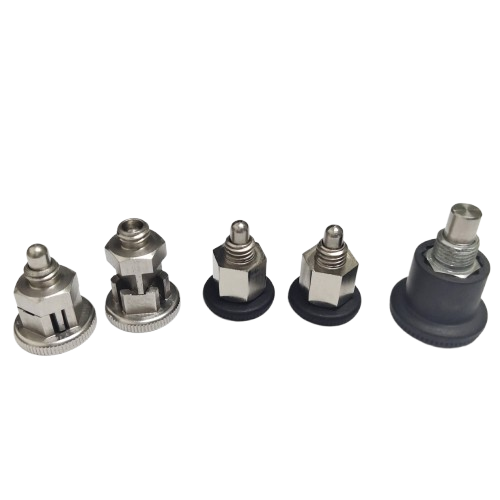
Explore the application of stainless steel materials for customizing mini indexing plungers based on specific operational environments and suitable spaces.
How To Make A Mini Indexing Plunger
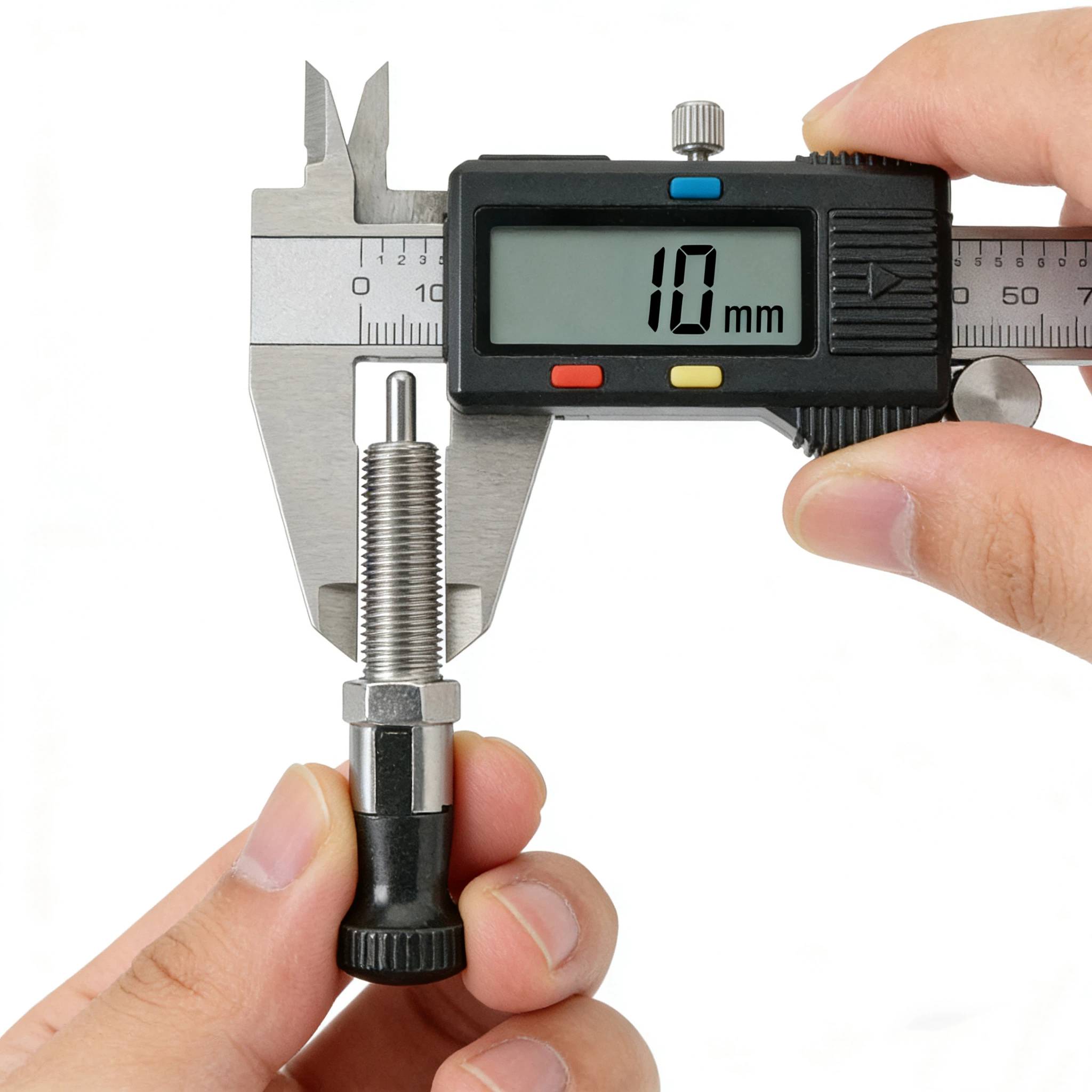
Discover how to choose correct size for indexing elements with confidence. Get precise recommendations that improve positioning accuracy, durability, and overall system performance.
How To Choose Correct Size For Indexing Elements