The Difference Between Ball Plungers And Spring Plungers
author: Lucia Liu
2025-09-05
The Difference Between Ball Plungers And Spring Plungers
Positioning and fixing components are critical elements for ensuring product precision and operational reliability. Among these, ball plungers and spring plungers are the two most commonly used types of ejector pins. This article will provide a detailed overview of the definitions, advantages, disadvantages, and key differences between these two types of center pins, helping engineers and procurement personnel make informed decisions during the selection process.
What is a Ball Plunger
Ball plungers typically consist of a small steel ball and an internal spring. The steel ball protrudes under spring force, enabling contact with mechanical component surfaces to achieve positioning or locking functions. Its operating principle is simple yet efficient: when the steel ball contacts the target surface, the spring provides sustained pressure, stabilizing the ball at the designated position.
Ball plungers typically consist of a small steel ball and an internal spring. The steel ball protrudes under spring force, enabling contact with mechanical component surfaces to achieve positioning or locking functions. Its operating principle is simple yet efficient: when the steel ball contacts the target surface, the spring provides sustained pressure, stabilizing the ball at the designated position.

Advantages:
High Positioning Accuracy: The small contact point of the ball minimizes friction resistance, enabling precise positioning.
Smooth Operation: The ball freely rolls under spring force, reducing mechanical wear.
Good repeatability: Suitable for applications requiring frequent insertion/removal or repeated positioning.
Disadvantages:
Limited load capacity: The small contact area of the steel ball prevents it from withstanding excessive lateral forces.
Relatively high cost: The precision structure results in slightly higher manufacturing and processing expenses.
The common material for ball plungers can be stainless steel(SS303/304/316/17-4PH), steel, pom,pa,pc
What is a Spring Plunger
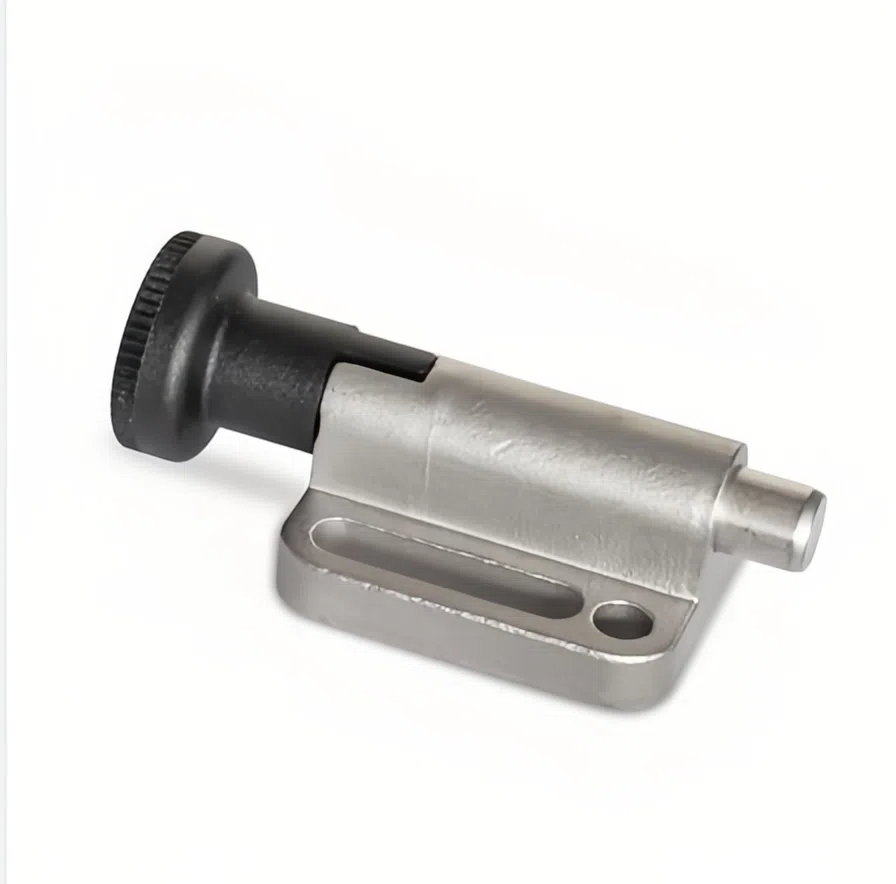
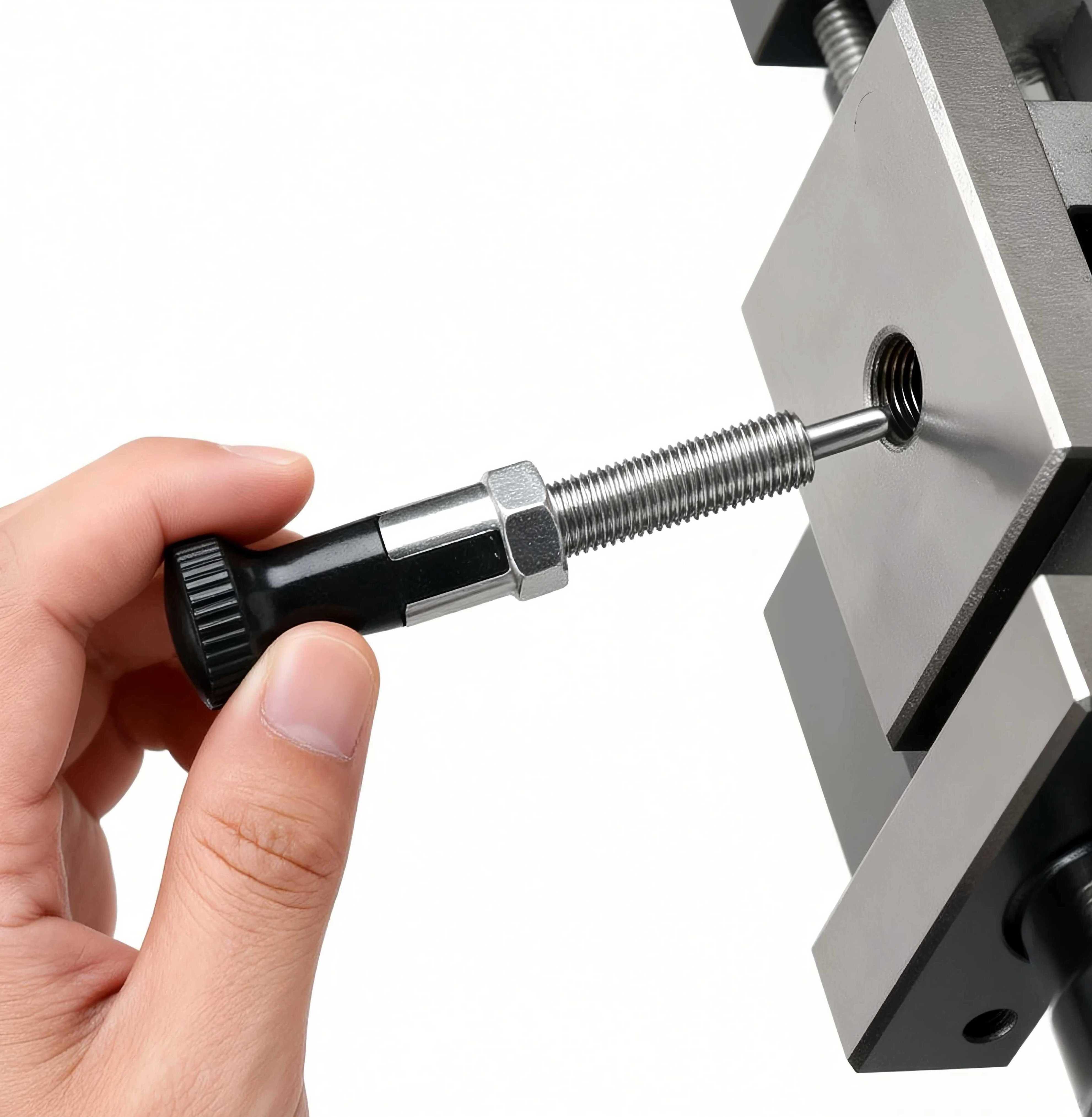
Spring plungers consist of a plunger rod and an internal spring. The plunger rod extends under spring force to achieve positioning, pressure application, or locking functions for mechanical components. They represent the most widely used type of plunger in industrial applications.
Spring plungers consist of a plunger rod and an internal spring. The plunger rod extends under spring force to achieve positioning, pressure application, or locking functions for mechanical components. They represent the most widely used type of plunger in industrial applications.

Advantages:
Simple structure: Easy to manufacture and install, with low maintenance costs.
High load capacity: Suitable for withstanding significant axial forces, ensuring secure component fixation.
Versatile Adaptability: Flexible for use across diverse mechanical systems.
Disadvantages:
Slightly Lower Positioning Accuracy: Higher friction compared to ball plungers results in marginally reduced positioning precision.
Noticeable Friction During Operation: High-frequency use may compromise smoothness.
Key Differences Between Ball Plungers and Spring Plungers
1. Structural Differences
1. Structural Differences
Ball plungers feature a steel ball at their core. The spherical surface contacts the part surface, while a spring provides pressure to achieve stable positioning.
Spring plungers primarily consist of a plunger rod and spring. The plunger rod directly pushes the part to achieve locking and pressure application.
Spring plungers primarily consist of a plunger rod and spring. The plunger rod directly pushes the part to achieve locking and pressure application.
Structurally, ball plungers prioritize precision positioning, while spring plungers emphasize load-bearing capacity and broad applicability.
2. Application Scenario Differences
Ball Plungers: Suitable for mechanical devices requiring high-precision positioning or repeatable locking, such as precision instruments, fixtures, and industrial automation equipment.
Spring Plungers: Applicable for general positioning, part securing, or pressure application scenarios, such as mechanical assembly, industrial door locks, and locating pins.
Comparatively, ball plungers are better suited for intricate tasks, while spring plungers prioritize practicality and strength.
When selecting components in practice, the choice between ball plungers and spring plungers should be determined based on the following factors:
- Positioning accuracy requirements: Opt for ball plungers for high precision; choose spring plungers for general accuracy.
- Load-bearing requirements: Use spring plungers in high-load environments.
- Operating frequency: Ball plungers are recommended for frequent insertion/removal or repeated positioning.
- Cost considerations: Spring plungers feature a simple structure and low cost, making them suitable for high-volume applications.
How To Choose The Right CNC Machining Service Provider
High-Precision CNC Machining Parts for Demanding Applications
Related Article
Explore the application of stainless steel materials for customizing mini indexing plungers based on specific operational environments and suitable spaces.
How To Make A Mini Indexing Plunger
Discover how to choose correct size for indexing elements with confidence. Get precise recommendations that improve positioning accuracy, durability, and overall system performance.
How To Choose Correct Size For Indexing Elements