


Magnetic Locking Pin
CX
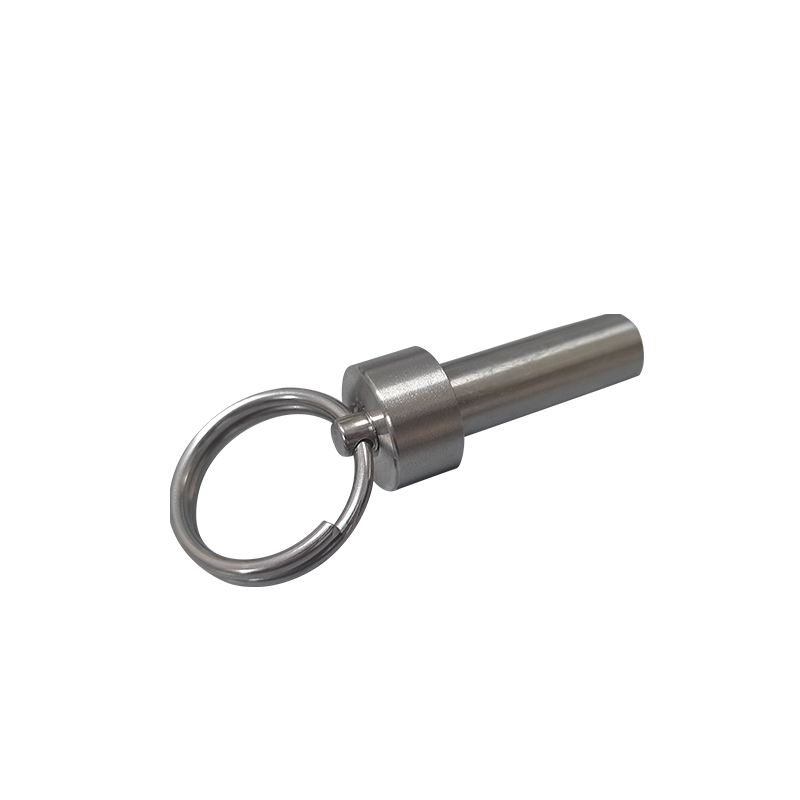
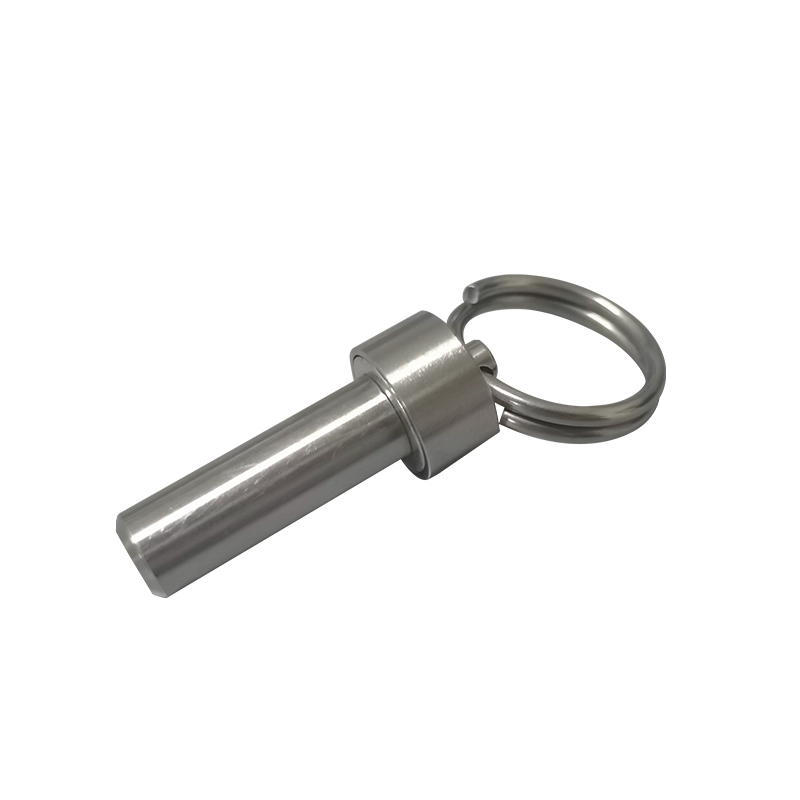
A Magnetic Locking Pin is a mechanical fastener that uses magnetism to achieve rapid positioning and locking, commonly used in applications requiring frequent assembly/disassembly or positioning.
Magnetic Locking Pin, commonly referred to in Chinese as a magnetic locking pin or magnetic positioning pin. It is a quick-release fastener that utilises magnetic force to achieve locking and unlocking functions.
Its core function is to provide a rapid, straightforward, tool-free method for connection and disconnection, whilst ensuring the connection remains secure against accidental loosening in vibratory environments through magnetic holding force.
Common Application
Magnetic Locking Pins are extensively employed in scenarios requiring frequent, rapid and secure connection and disconnection:
Tooling Fixtures and Moulds: Enabling swift replacement of moulds, fixture plates or robotic end effectors. Operators can effortlessly lock and release entire tooling modules.
Safety Guards on Machinery: For frequently opened/closed machine covers and protective doors. Locks automatically upon closure for reliable safety; deliberate force is required to pull open, preventing accidental release.
Automotive Manufacturing and Body Positioning: Rapid positioning and locking of body panels on welding fixtures.
Aerospace: Used for quick securing of aircraft access panels and internal parts
Key Features:
Magnetic Locking: Generates an adhesive force via built-in magnets, automatically locking the pin in place upon insertion without the need for traditional mechanical clips or springs.
Easy Operation: Installation and removal require no tools and can be completed with one hand, enhancing work efficiency.
Wear-Free Locking: Magnetic locking eliminates mechanical wear, extending service life and making it suitable for precision equipment or applications requiring frequent operation.
Common Materials: The body is typically made of stainless steel or high-strength alloy.
Magnetic Locking Pin, commonly referred to in Chinese as a magnetic locking pin or magnetic positioning pin. It is a quick-release fastener that utilises magnetic force to achieve locking and unlocking functions.
Its core function is to provide a rapid, straightforward, tool-free method for connection and disconnection, whilst ensuring the connection remains secure against accidental loosening in vibratory environments through magnetic holding force.
Common Application
Magnetic Locking Pins are extensively employed in scenarios requiring frequent, rapid and secure connection and disconnection:
Tooling Fixtures and Moulds: Enabling swift replacement of moulds, fixture plates or robotic end effectors. Operators can effortlessly lock and release entire tooling modules.
Safety Guards on Machinery: For frequently opened/closed machine covers and protective doors. Locks automatically upon closure for reliable safety; deliberate force is required to pull open, preventing accidental release.
Automotive Manufacturing and Body Positioning: Rapid positioning and locking of body panels on welding fixtures.
Aerospace: Used for quick securing of aircraft access panels and internal parts
Key Features:
Magnetic Locking: Generates an adhesive force via built-in magnets, automatically locking the pin in place upon insertion without the need for traditional mechanical clips or springs.
Easy Operation: Installation and removal require no tools and can be completed with one hand, enhancing work efficiency.
Wear-Free Locking: Magnetic locking eliminates mechanical wear, extending service life and making it suitable for precision equipment or applications requiring frequent operation.
Common Materials: The body is typically made of stainless steel or high-strength alloy.
Quantity:
Magnetic locking pins offer quick, reliable fastening with strong magnetic force—ideal for rapid assembly, fixture setups, and secure positioning.
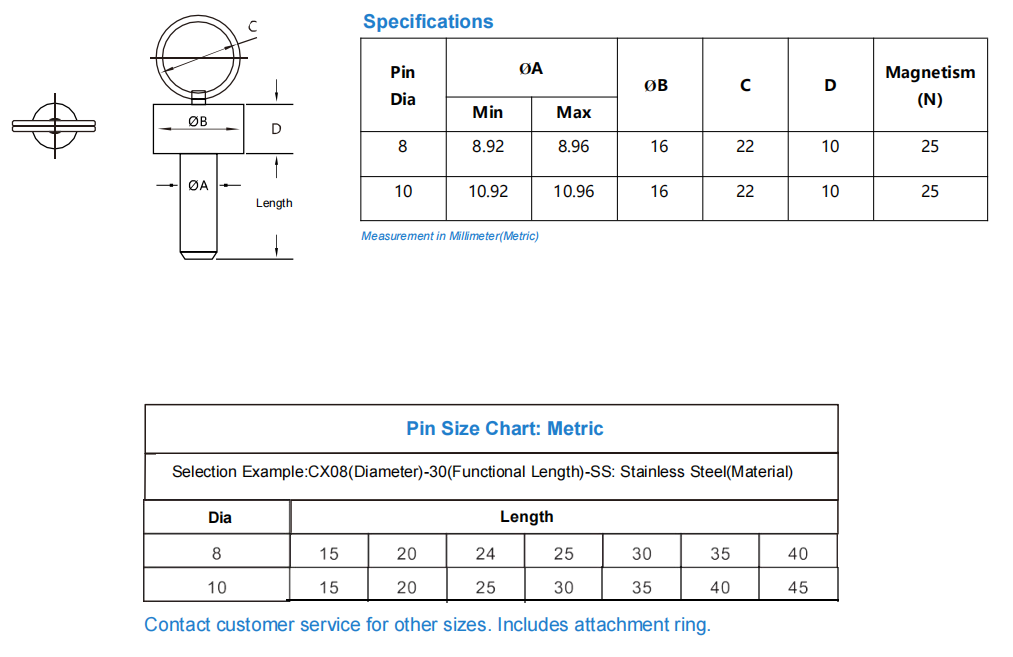
[Pull Ring] AISI 304 Stainless Steel.
[Handle]AISI 303/AISI 304 Stainless Steel.
[Magnet]N35 With Nickel-Copper-Nickel finish
[Pin]AISI 303/AISI 304 Stainless Steel.


Recommend Products


