What Is Stainless Steel 304
author: Lucia Liu
2025-09-05
What Is Stainless Steel 304
In industrial manufacturing and daily life, stainless steel materials are ubiquitous, with Stainless Steel 304 (commonly abbreviated as SS304) being the most widely used. Many people wonder when selecting materials: What is Stainless Steel 304? What are its advantages and disadvantages? Why is it so common in food processing, building structures, and household appliances? This article will address these questions, helping you gain a deeper understanding of this material's properties and value.

Basic Definition of Stainless Steel 304
What Is Stainless Steel 304? In short, 304 stainless steel is a typical austenitic stainless steel primarily composed of iron, chromium (approximately 18%), and nickel (approximately 8%). This composition grants SS304 excellent corrosion resistance and mechanical properties, making it the most widely used stainless steel type on the market.
What Is Stainless Steel 304? In short, 304 stainless steel is a typical austenitic stainless steel primarily composed of iron, chromium (approximately 18%), and nickel (approximately 8%). This composition grants SS304 excellent corrosion resistance and mechanical properties, making it the most widely used stainless steel type on the market.
Key Characteristics of Stainless Steel 304
High Corrosion Resistance: SS304 exhibits excellent corrosion resistance in most atmospheric environments and common chemical media.
Superior Strength and Toughness: Maintains stable performance at room temperature and in low-temperature environments.
Excellent Workability: Suitable for welding, stamping, drawing, and other processes, widely used in industrial manufacturing.
High Surface Finish: After polishing, it exhibits outstanding surface brightness and texture, making it ideal for decorative applications.
Food-Grade Safety: Non-toxic and harmless, commonly used in equipment directly contacting food.
High Corrosion Resistance: SS304 exhibits excellent corrosion resistance in most atmospheric environments and common chemical media.
Superior Strength and Toughness: Maintains stable performance at room temperature and in low-temperature environments.
Excellent Workability: Suitable for welding, stamping, drawing, and other processes, widely used in industrial manufacturing.
High Surface Finish: After polishing, it exhibits outstanding surface brightness and texture, making it ideal for decorative applications.
Food-Grade Safety: Non-toxic and harmless, commonly used in equipment directly contacting food.
Ss304 is an alloy designed for reliability—offering corrosion resistance, clean surface finish, and cost-effectiveness in everyday use.
Disadvantages of Stainless Steel 304
(1) Insufficient Resistance to Chloride Corrosion
Although SS304 exhibits corrosion resistance in general environments, it is prone to pitting and crevice corrosion in chloride-containing atmospheres (e.g., seawater, salt spray).
Although SS304 exhibits corrosion resistance in general environments, it is prone to pitting and crevice corrosion in chloride-containing atmospheres (e.g., seawater, salt spray).
(2) Limited Strength
Compared to precipitation-hardening stainless steels, SS304 has relatively low strength and is unsuitable for applications requiring extremely high strength.
Compared to precipitation-hardening stainless steels, SS304 has relatively low strength and is unsuitable for applications requiring extremely high strength.
(3) Moderate High-Temperature Performance
Under prolonged high-temperature exposure, 304 stainless steel may exhibit performance degradation, lacking the stability of certain heat-resistant stainless steels.
Under prolonged high-temperature exposure, 304 stainless steel may exhibit performance degradation, lacking the stability of certain heat-resistant stainless steels.
(4) Non-Magnetic Properties
SS304 is typically non-magnetic or weakly magnetic, making it unsuitable for applications requiring magnetic materials.
SS304 is typically non-magnetic or weakly magnetic, making it unsuitable for applications requiring magnetic materials.
What Is Stainless Steel 304? It is an austenitic stainless steel that combines corrosion resistance, workability, aesthetics, and cost-effectiveness, commonly abbreviated as SS304. Although it has certain limitations in chlorine-resistant environments and high-temperature conditions, it remains the most widely used and economical choice.
High-Precision CNC Machining Parts for Demanding Applications
Stainless Steel CNC Machining
Related Article
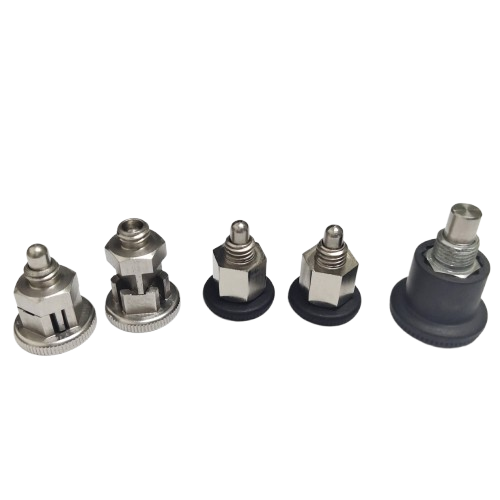
Explore the application of stainless steel materials for customizing mini indexing plungers based on specific operational environments and suitable spaces.
How To Make A Mini Indexing Plunger
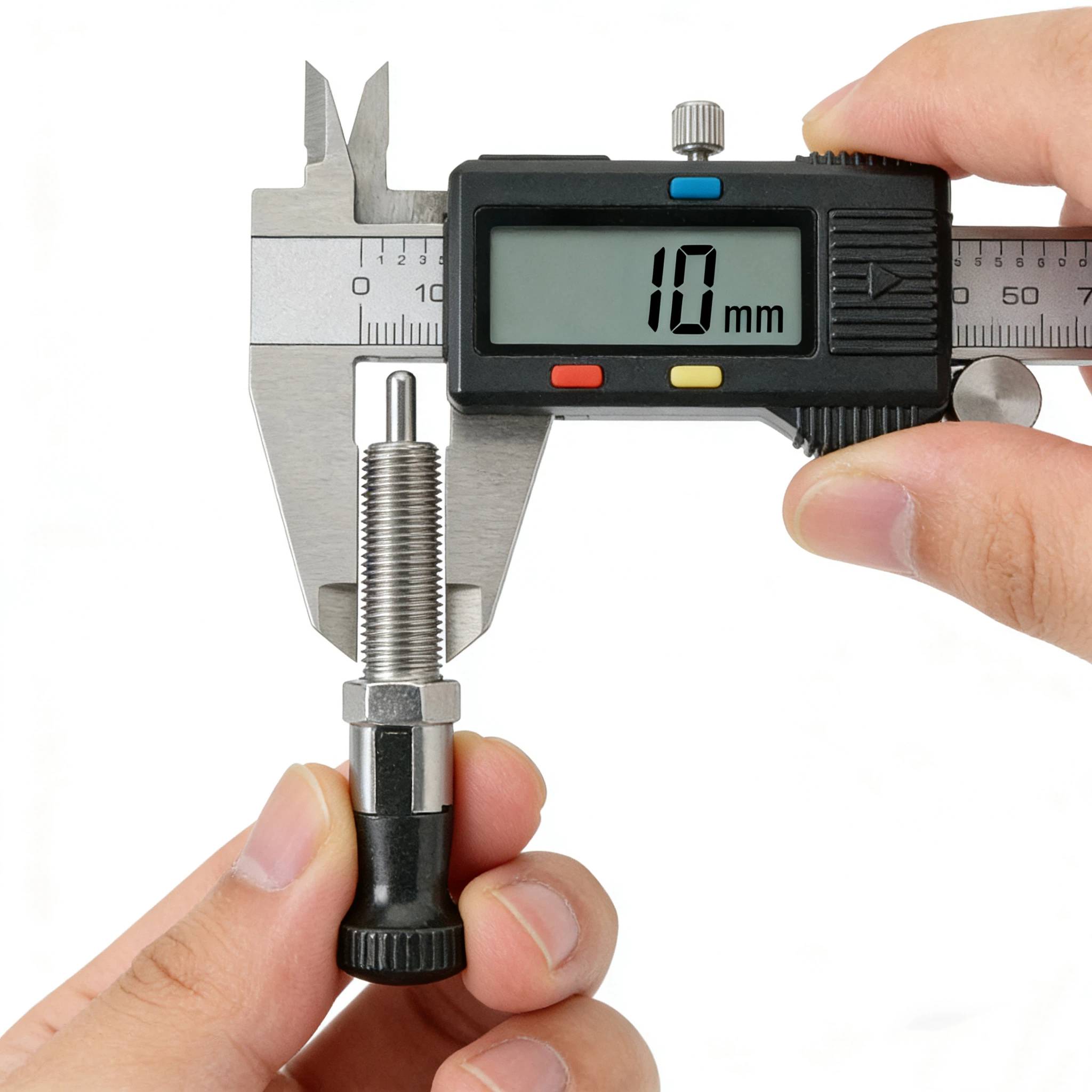
Discover how to choose correct size for indexing elements with confidence. Get precise recommendations that improve positioning accuracy, durability, and overall system performance.
How To Choose Correct Size For Indexing Elements